Read our Google Birdeye Reviews
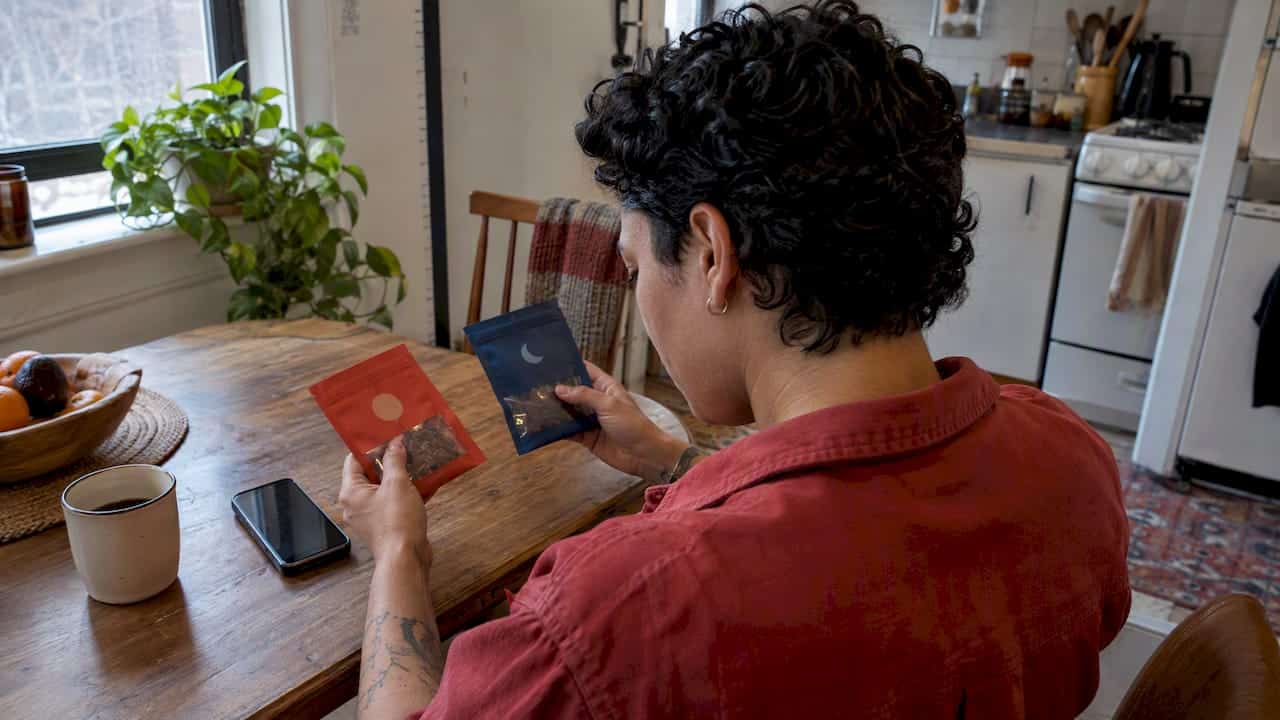
Check the label first: total THC and CBD per serving and per package, the serving count, and the delivery form, inhaled or oral. Then match the product to when you need to be sharp and when you want to wind down. If it’s an evening pick, order inside the delivery window or schedule ahead so it arrives before you need it.
TL;DR:
- For edibles, tinctures, and vapes, compare THC and CBD milligrams per serving, serving count, and package total; use the QR code to check lab results.
- Day menus favor low dose inhaled products with pinene or limonene; evening options may use CBD forward oral products, but terpenes offer hints, not promises.
- Retail flower commonly contains 20% to 30% THC, so a lower potency option is more suitable when you need to stay clear during workday activities.
- Oral products take longer and last longer than inhaled products, so wait before taking more and avoid driving if any effects remain.
- One insomnia trial found little next day impairment after a single oral dose of 10 mg THC plus 200 mg CBD, but individual effects vary.
Table of Contents
- How do you read a cannabis label before choosing from a day or night menu?
- What makes a product “day” or “night”: cannabinoids, terpenes, and delivery form?
- What is a simple checklist for choosing off a day or night menu?
- How much should you take at night, and what about next-day effects?
- Why do dispensaries split day and night menus, and how should you order for timing?
- Which strains and product types suit day use versus night use?
- How can you combine day and night products across a routine?
- What do real day and night scenarios look like?
- How do consumption methods change day and night effects?
- What we hear from shoppers every week
- How we make day vs night shopping easier
- FAQ
- Sources
How do you read a cannabis label before choosing from a day or night menu?
Labels are the fastest way to sort a menu. Health Canada’s guidance on reading a cannabis label explains that Total THC and Total CBD appear as milligrams or percentages, and that many labels add a QR code or link to terpene profiles and lab results. These are the items we look at first:
- Total THC and Total CBD: milligrams per serving and per package for edibles, tinctures and vapes; a percentage for flower.
- Serving size: a 100 mg package can hold ten 10 mg servings, so the package number alone tells you little about one sitting.
- COA or QR code: the certificate of analysis should confirm potency, list terpenes, and show contaminant testing.
- Required warnings and symbols: California’s labeling checklist for manufactured products calls for THC and CBD in milligrams per package and per serving, serving counts, ingredient lists and edible warnings. Missing pieces are a red flag.
Pro Tip: Do the serving math before you add to cart: divide package milligrams by servings, and compare that number to what you plan to take.
For a deeper walkthrough, see our guide to cannabis label checks.
What makes a product “day” or “night”: cannabinoids, terpenes, and delivery form?
Nobody regulates these labels, so “day” and “night” are shorthand shoppers and menus use. They rest on three cues.
- Cannabinoid balance: products leaning on THC are stronger psychoactively. CBD-forward products are the usual evening suggestion, though responses vary a lot from person to person.
- Terpenes: pinene and limonene are commonly linked with alertness. Myrcene and linalool are commonly linked with relaxation. Preclinical work shows some terpenes can modulate cannabinoid activity, which supports the entourage idea, but human evidence is still limited, so treat terpene names as hints, not promises. Our terpene guide covers the names you’ll see.
- Delivery form: inhaled products act quickly and let you adjust as you go, which suits daytime. Oral products take longer to arrive and last longer, which suits a night routine.
There is also some background chemistry. A study of a Hindu Kush flower found major cannabinoids rose over a 12-hour light period while certain terpenes, such as sesquiterpenes, generally fell. That is one reason two batches of the same strain can smell and feel a bit different.
What is a simple checklist for choosing off a day or night menu?
Work through these in order while you browse:
- Decide what you’re doing and when: errands, work, a movie, sleep.
- Read milligrams per serving, not just the headline potency.
- Confirm servings per package so you know how many sittings it holds.
- Match onset and duration to the form: fast and short for inhaled, slow and long for oral.
- Scan the terpene list and open the COA if there’s a QR code.
- Adjust for your tolerance, and when in doubt start low.
- Verify the label has warnings, serving counts and an ingredient list.
New to edibles? Begin with a small fraction of a package, wait well past the point you think it’s working, and only then consider more. Our safe use rules and edible dosing guide go further.
Pro Tip: Browse the menu for THC, CBD and form, and book your delivery slot early.
How much should you take at night, and what about next-day effects?
Research so far is reassuring but narrow. In a randomized, double-blind crossover trial in adults with insomnia, a single oral dose of 10 mg THC plus 200 mg CBD produced little notable next-day impairment on most cognitive and driving-related tests. A related pilot report noted that day and night effects are highly individual, and that trial context and limitations apply.
Little notable next-day impairment on most cognitive and driving tests after one oral dose of 10 mg THC plus 200 mg CBD (source). That is one dose in one study group, not a guarantee for you.
Several things can push next-day risk up:
- A higher THC dose
- Repeated dosing through the evening
- High-potency inhaled products
- Your own sensitivity
Practical safety habits we recommend:
- Skip driving or other safety-sensitive tasks if you still feel any effect.
- Pick lower-dose or CBD-forward options on nights before an early start.
- Leave plenty of time between doses.
More on this in our piece on cannabis and sleep quality.
Why do dispensaries split day and night menus, and how should you order for timing?
Splitting menus keeps browsing simple. It lets us feature items by suggested use, dosing range and what’s actually in stock at that hour, and it keeps customer flow manageable.
- Order earlier for evening items: Check delivery hours in NYC and delivery times by city.
- Filter by THC, CBD and form: it narrows a long menu in seconds.
- Schedule a slot and save favorites: repeat orders become easier.
Which strains and product types suit day use versus night use?
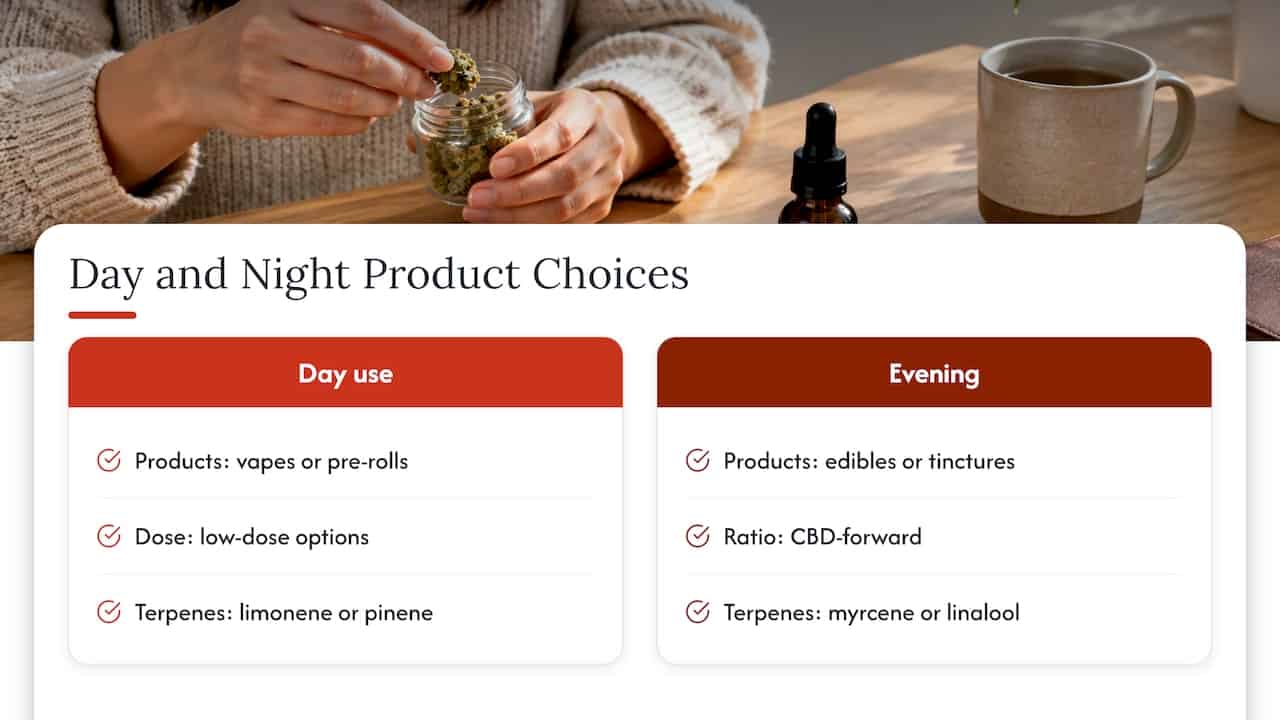
Think in product types first, strain names second, because batches differ. For daytime, shoppers often reach for vapes or pre-rolls with limonene or pinene on the terpene list, and for low-dose options so the effect stays light and short. High-THC flower commonly runs 20–30% THC in retail markets, which is a lot for a workday, so a gentler profile usually makes more sense. Our focus guide shows how small doses can work when you need to stay clear.
For evening, many people prefer edibles or tinctures with a CBD-forward ratio, plus myrcene or linalool on the label. Concentrates can suit experienced users in the evening, but read the percentage and start tiny. See our concentrates breakdown and live resin vs distillate.
Strain lore is a starting point, not a rule. If an “evening” strain keeps you wired, trust your own experience over the name.
How can you combine day and night products across a routine?
Treat your menu like a schedule. A common pattern is a small, fast-acting inhaled dose or a low-milligram edible in the daytime for a specific task, then a different form later when you want to relax.
A few combinations we see work:
- Workday plus wind-down: a light vape or low-dose product in the afternoon, a CBD-forward oral product at night.
- Social evening: inhaled for control early, nothing stacked on top as the night goes on.
- Early mornings ahead: a lower dose the night before, per the next-day evidence above.
Keep a simple note of what you took, when, and how you felt the next day. Doses stacked too close together are the usual cause of a rough morning. If you use both day and night products regularly, scheduled orders keep each item on hand when its time arrives. Our scheduled delivery page explains how.
What do real day and night scenarios look like?
These are composite scenarios based on common shopper questions, not individual customer testimonials.
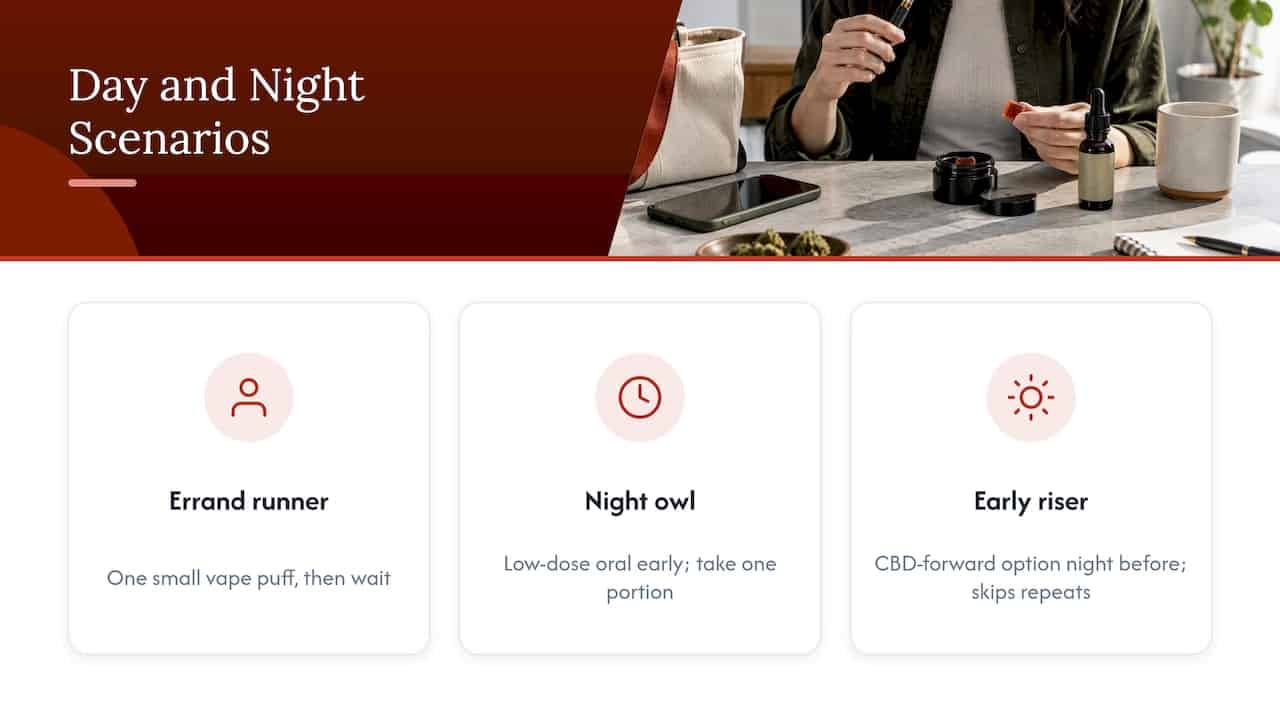
The afternoon errand runner. A shopper wants to stay sharp but take the edge off. They choose a low-milligram vape with a bright terpene list, take one small puff, and wait before deciding on another. Result: light effect, easy to stop.
The overthinking night owl. Someone who used to inhale late at night switches to a low-dose oral product taken early in the evening so the effect is settling in by bedtime. They check the serving count so they take one portion, not the whole package.
The early-riser. A person with an early start picks a CBD-forward option the night before and skips repeat dosing. This follows the logic of the insomnia trials above, with the same caveat: individual response varies.
The shared lesson is dull and effective: read the label, take less than you think you need, and give the product time.
How do consumption methods change day and night effects?
Method drives timing more than strain name does.
Inhaled (flower, vapes, pre-rolls): effects arrive fast and fade sooner, so you can stop when you’ve had enough. That control is why it fits daytime. The flower vs vapes comparison and cart vs disposable guide help you choose.
Oral (edibles, tinctures, drinks): onset is slower and the effect lasts longer, which suits sleep or a long evening. It also makes it easy to overshoot by taking more too soon. Tinctures allow smaller steps than gummies, as we explain in edibles vs tinctures.
Concentrates: high potency, so they need careful dosing and temperature care, covered in our dab temperature guide.
If you vape, battery handling matters too: see our vape battery safety rules.
What we hear from shoppers every week
The same confusion keeps coming up: people compare headline potency and skip serving size. That is why we curate separate day and night menus, verify age, and offer scheduled and same-day delivery windows, so the right product shows up when you need it. And here’s my plain advice: if you’re unsure, pick the lower dose and book a delivery slot ahead of time. Nobody ever regretted waiting a little longer.
— Jake
How we make day vs night shopping easier
We run curated day and night menus, carry lab-tested products, verify age at checkout, and offer same-day or scheduled delivery within set windows. Check our delivery hours or pick a slot that matches when you plan to use your order, and book at High Fashion Smokes & Prints.
This article is general information, not a substitute for advice from a qualified doctor. Consult a qualified healthcare professional about your own circumstances before acting on anything here.
FAQ
What is the difference between day and night cannabis products?
Day products are usually lower in THC, fast-acting and inhaled, often with alertness-linked terpenes. Night products tend to be CBD-forward or oral with relaxing terpenes. There is no official standard, so always check the label.
Can a nighttime cannabis dose affect you the next day?
It can, depending on dose and the person. In a randomized trial, one oral dose of 10 mg THC with 200 mg CBD caused little notable next-day impairment on most tests. Avoid driving if you still feel any effect.
How do I know a product’s potency is accurate?
Open the COA through the QR code on the package and compare it with the label. Our lab results guide shows what to check.
When should I order for evening use?
Order early or schedule a slot ahead of the evening rush, since delivery windows have cutoffs. Our delivery hours page lists when you can order.
Sources
- Canada
- Pubmed
- Effects of a cannabidiol/terpene formulation on sleep in individuals with insomnia: a double-blind, placebo-controlled, randomized, crossover study