Read our Google Birdeye Reviews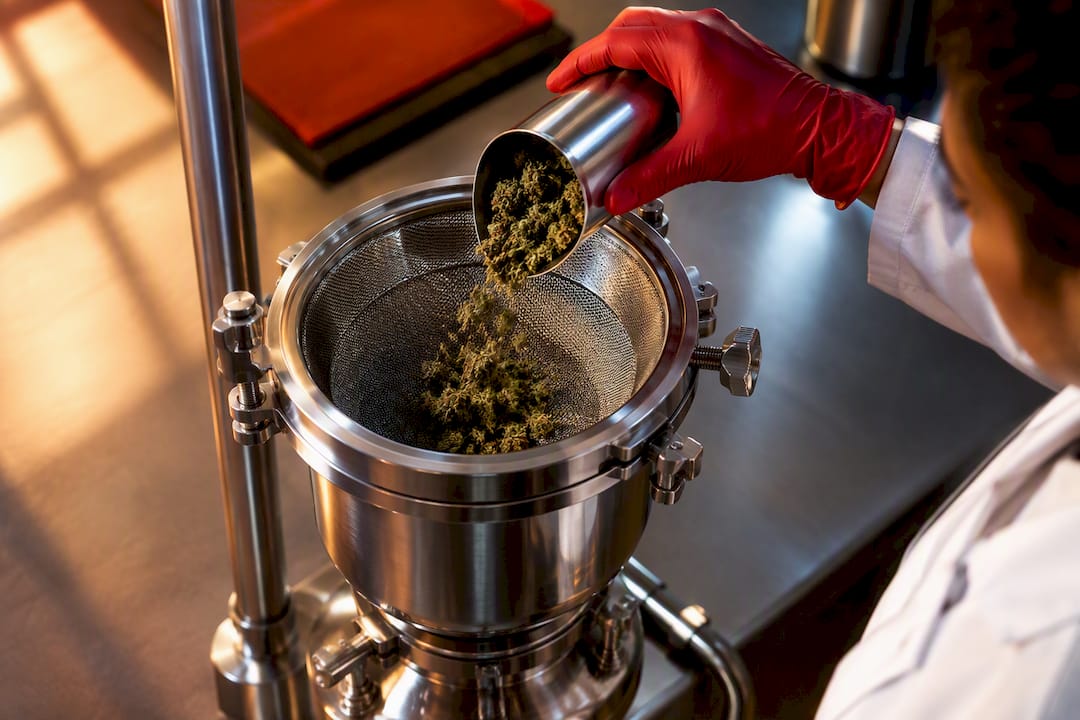
The main types of cannabis concentrates fall into three families: solvent-based extracts like shatter, wax, and distillate; solventless products like kief, hash, and rosin; and hybrids like live resin that combine techniques for maximum flavor. Texture and name matter less than you’d think. Before buying anything, check the batch certificate of analysis (COA) for potency and residual solvents, and start with a dose smaller than you think you need.
TL;DR:
- Potency varies widely; THC distillates and isolates often exceed 80%, but batch-to-batch differences can reach 30 percentage points even within the same product type.
- Extraction method and starting material influence the product more than the label or texture; “live” products require cold storage from harvest to preserve terpenes.
- Lab verification through a detailed certificate of analysis is essential to ensure safety, potency, and the absence of contaminants before purchase.
- Solvent-based and solventless concentrates can both present safety risks if not produced correctly, making lab-tested products a safer choice.
- Dabbing at low temperatures and starting with lower potency products helps minimize harshness and adverse effects, especially for beginners.
Table of Contents
- Types of Cannabis Concentrates: A Complete Catalog
- Extraction Method vs. Starting Material: What Actually Shapes the Product
- How to Use Concentrates: Dabbing, Carts, and Everything Between
- Safety, Testing, and Choosing Your First Concentrate
- How Highfashionsmokesandprints Vets Every Concentrate
- A Beginner’s Concentrate Recommendation From Jake
- Get Tested Concentrates Delivered Same Day in NYC
- Sources
- FAQ
Types of Cannabis Concentrates: A Complete Catalog
Every concentrate on a dispensary menu traces back to one of two production paths, and the differences show up in texture, price, and how the product actually smells and tastes. Solvent-based concentrates use a chemical solvent to strip cannabinoids and terpenes from plant material. Solventless concentrates rely on mechanical force, ice water, or heat and pressure instead. A third category, purified isolates, strips the plant profile down to nearly pure THC.
Solvent-based concentrates are the most varied group on the shelf, and texture here is mostly a function of how much whipping, purging, or agitation happens after extraction.
- Shatter is thin, glass-like, and translucent, snapping cleanly when you break off a piece. It comes from minimal agitation during purging, which leaves the extract stable and hard.
- Wax and budder (sometimes called badder or batter) start from the same base extract as shatter but get whipped during the purge, which introduces air and turns the material soft and opaque, similar to cake frosting.
- Crumble is drier and more brittle than budder, breaking into small chunks rather than smearing.
- Sauce, also called terp sauce, separates into a crystalline layer of THCA sitting in a pool of liquid terpenes. It’s prized for flavor because that terpene liquid is largely untouched by heavy processing.
- Diamonds are pure THCA crystals, often sold alongside a terpene sauce, delivering potency and aroma as separate components you experience together.
- Distillate is a clear, viscous oil refined through short-path distillation, stripping out plant lipids, chlorophyll, and most original terpenes. It’s the workhorse behind most vape cartridges and edibles precisely because it’s flavorless and easy to dose.
Solventless concentrates skip chemical solvents entirely and use physical separation instead.
- Kief is the simplest form: the powdery, resin-rich trichomes that collect in the bottom of a grinder or get sifted through a fine screen.
- Dry sift is a more refined version of kief, sifted through multiple screens to remove plant debris.
- Traditional hash is pressed kief or dry sift, compacted with heat and pressure into a dense block.
- Bubble hash, also called ice-water hash, uses ice, water, and agitation to knock trichomes off plant material, then filters them through mesh bags by micron size.
- Rosin takes hash or dry sift and presses it with heat and pressure, squeezing out a sappy, amber extract without any solvent at all.
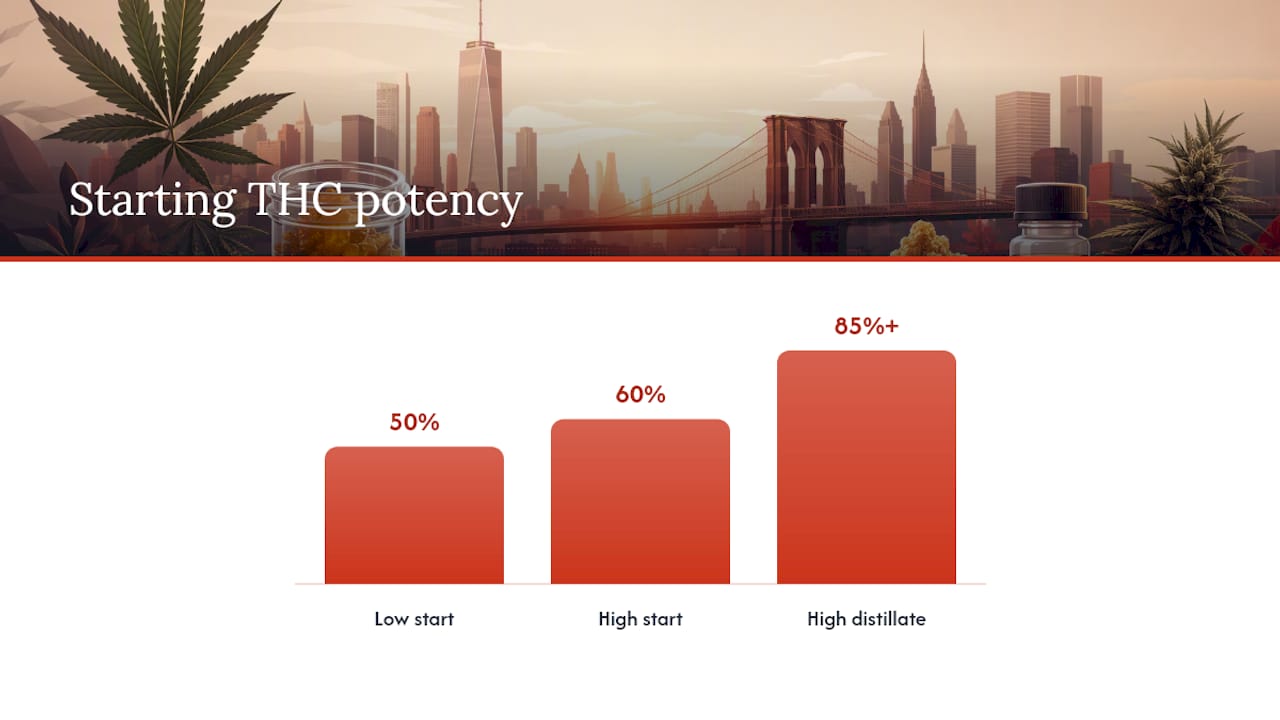
A peer-reviewed chemistry review of vaped cannabis concentrates found that commercial concentrates commonly run anywhere from 50% to 95% Δ9-THC, compared to roughly 10% to 30% in dried flower. That range alone should tell you why relying on a product’s name to guess its strength is a bad habit. Two jars labeled “wax” from two different batches can differ by 30 percentage points in potency depending on the starting material and how carefully it was processed.
Purified products like distillate and crystalline THCA isolate sit at the far end of the potency spectrum. Distillate can push into the 80% to 90% THC range, and isolates go even higher, but that purity comes at a cost. The refining process that removes plant lipids and chlorophyll also strips out most of the original terpenes, so distillate on its own tastes like almost nothing. That’s why most cartridges reintroduce terpenes afterward, often as commercial blends rather than the plant’s original profile, a distinction worth knowing before you assume a fruity-tasting cart came from a fruity strain.
Hybrid and infused products blend categories to chase specific effects.
- Live resin starts from fresh-frozen plant material rather than dried and cured flower, preserving volatile terpenes that would otherwise evaporate during drying. It’s typically extracted with solvent but processed to protect aroma.
- Moon rocks are cannabis buds dipped in concentrate (often oil or hash) and then rolled in kief, stacking three potency layers into one product. Case reports have linked extremely potent preparations like moon rocks to acute psychiatric episodes and new-onset seizures in susceptible users, which makes them a poor starting point for anyone new to concentrates.
- Infused flower is regular flower coated or injected with concentrate, oil, or kief, boosting potency well above what the flower alone would offer.
The names on a menu describe texture and marketing more than chemistry. Rosin and live rosin, for example, differ mainly in starting material, not in the pressing technique itself. If you remember one thing from this section, remember that the label tells you more than the name ever will.
Extraction Method vs. Starting Material: What Actually Shapes the Product
Two questions matter more than any product name: how was it extracted, and what was it extracted from? Everything else, including texture and flavor, follows from those two answers.
Solvent-based extraction pushes a solvent (usually butane, propane, CO2, or ethanol) through plant material to strip out cannabinoids and terpenes, then removes the solvent through winterization and a vacuum purge. Done correctly with proper equipment, this process is safe and produces clean concentrates. Done at home with a can of butane and no ventilation, it’s a fire and inhalation hazard, which is part of why professional lab processing exists in the first place.
Solventless extraction relies on mechanical force instead. Ice-water hash agitates plant material in cold water so trichomes snap off and sink, then filters them by size through mesh screens. Rosin pressing applies heat and pressure to hash, dry sift, or flower, squeezing the resin out directly. Neither method touches a chemical solvent, but that doesn’t automatically make either one safer or higher quality. Solventless is a manufacturing description, not a safety certificate. Plant inputs and handling still determine the final product.
The starting material distinction matters just as much as the extraction method. “Live” or fresh-frozen material is harvested and immediately frozen, skipping the drying and curing steps that cause monoterpenes (the compounds responsible for smell and much of the flavor) to evaporate. A solventless extraction study using a dry-ice cold-chain process found this approach preserved monoterpenes effectively and produced concentrates with cannabinoid concentrations up to roughly 60.7%. That’s the science behind why live resin and live rosin tend to smell and taste closer to the original plant than their cured counterparts.
Pro Tip: A “live” label only means something if the cold chain held from harvest through processing. If a product’s packaging or menu description doesn’t mention fresh-frozen material or cold storage, ask before assuming it earned the name.
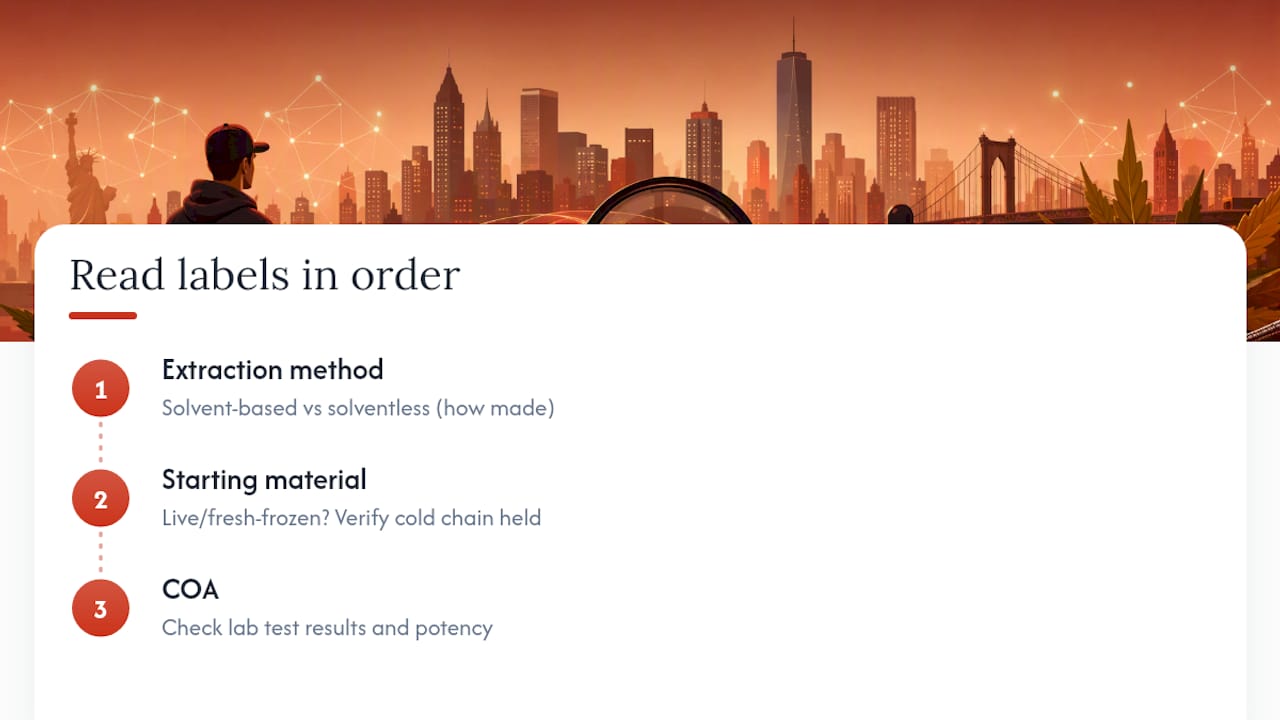
Read a label in this order: extraction method first, starting material second, then the COA. That sequence tells you more about what you’re about to consume than any texture description ever will, and it’s the same logic behind guides comparing live resin and rosin directly.
How to Use Concentrates: Dabbing, Carts, and Everything Between
Dabbing is the traditional method, using a rig (or an electronic “e-rig” with digital temperature control) to vaporize a small amount of concentrate on a heated surface called a nail. Temperature control matters more here than almost anywhere else in cannabis consumption. Too hot, and you burn off the terpenes that give the concentrate its flavor while also producing a harsher, less pleasant hit. Most experienced dabbers aim for lower temperatures specifically to protect flavor over raw vapor production.
Vape cartridges and pens are the low-effort alternative, prefilled with distillate or live resin oil and used with a battery. The tradeoff is that some cartridges get diluted with terpene blends or other excipients to adjust viscosity and flavor, and research on concentrate chemistry confirms ingredient lists and COAs are the only reliable way to know what’s actually in the oil. A comparison of live resin against distillate is worth a look if you’re deciding between the two for a cart.
Adding concentrate to flower or taking a tincture rounds out the common methods, both offering slower onset and gentler dosing curves than dabbing or vaping.
For a first try, follow these steps:
- Choose a low-potency option, ideally something in the 50% to 60% THC range rather than an 85%+ distillate or isolate.
- Use the smallest possible amount your device allows, a rice-grain-sized dab or a single short draw from a cart.
- Wait at least 15 minutes before deciding whether to take more.
- Track how you feel before increasing dose on a future session, not the same one.
Pro Tip: Battery-powered devices need the same respect as any electronic device. Check that your cartridge threading matches your battery, never charge overnight unattended, and stop using a battery that heats up unusually fast. If you want the full rundown on device care, the vape battery safety guide covers it in more depth.
Safety, Testing, and Choosing Your First Concentrate
Four label features separate a safe purchase from a guess: extraction method, starting material (live versus cured), a cannabinoid and terpene COA, and confirmation of contaminant and residual-solvent testing. Skip any one of these and you’re buying blind.
- Never attempt home solvent extraction. Butane and propane are flammable, and improper purging leaves dangerous residue behind.
- The 2019 EVALI outbreak was tied to vitamin E acetate used as a diluent in unregulated cartridges, and the CDC’s guidance on cannabis and lung health still flags unverified cartridges and cannabis smoke generally as respiratory risks.
- NIDA reporting on concentrate potency notes that some samples have tested very high in THC percentage, and higher potency combined with frequent use raises the risk of dependence and adverse reactions.
- Start low, wait between doses, and skip mixing concentrates with alcohol or other drugs.
Reading a COA takes under a minute once you know what to look for. Match the batch number on the packaging to the batch number on the COA, confirm the THC percentage and total terpene content, then check that residual solvents and contaminants show a clear pass. If any of that information is missing, that’s a red flag on its own. For a deeper walkthrough on why potency numbers alone don’t tell the full story, see what actually determines strength.
How Highfashionsmokesandprints Vets Every Concentrate
A reputable NYC dispensary ensures every concentrate on the menu undergoes lab verification before reaching customers. Same-day delivery is commonly combined with age verification and a checkout process emphasizing transparency. That means the batch information described above (extraction method, starting material, COA) isn’t an afterthought on a product page, it’s the baseline.
Beyond the menu itself, Highfashionsmokesandprints maintains educational breakdowns for readers who want to go deeper before ordering, including comparisons of live resin against rosin and a plain-language look at kief versus hash. Packaging accuracy is ideally checked against lab results before products go live, ensuring potency and terpene numbers on product pages reflect actual contents.
A Beginner’s Concentrate Recommendation From Jake
Live rosin gives you a truer sense of what the plant actually tastes like, since it skips both solvents and heavy drying, and a modest cartridge lets you dose in small, controlled hits. Potency numbers only mean something next to a COA you’ve actually read. Check the batch results before you buy, not after, and treat the publisher’s product pages as your first stop for that information.
— Jake
Get Tested Concentrates Delivered Same Day in NYC
Some dispensaries emphasize lab verification of concentrates to help customers avoid uncertainty from product names alone, and offer same-day delivery to improve convenience.
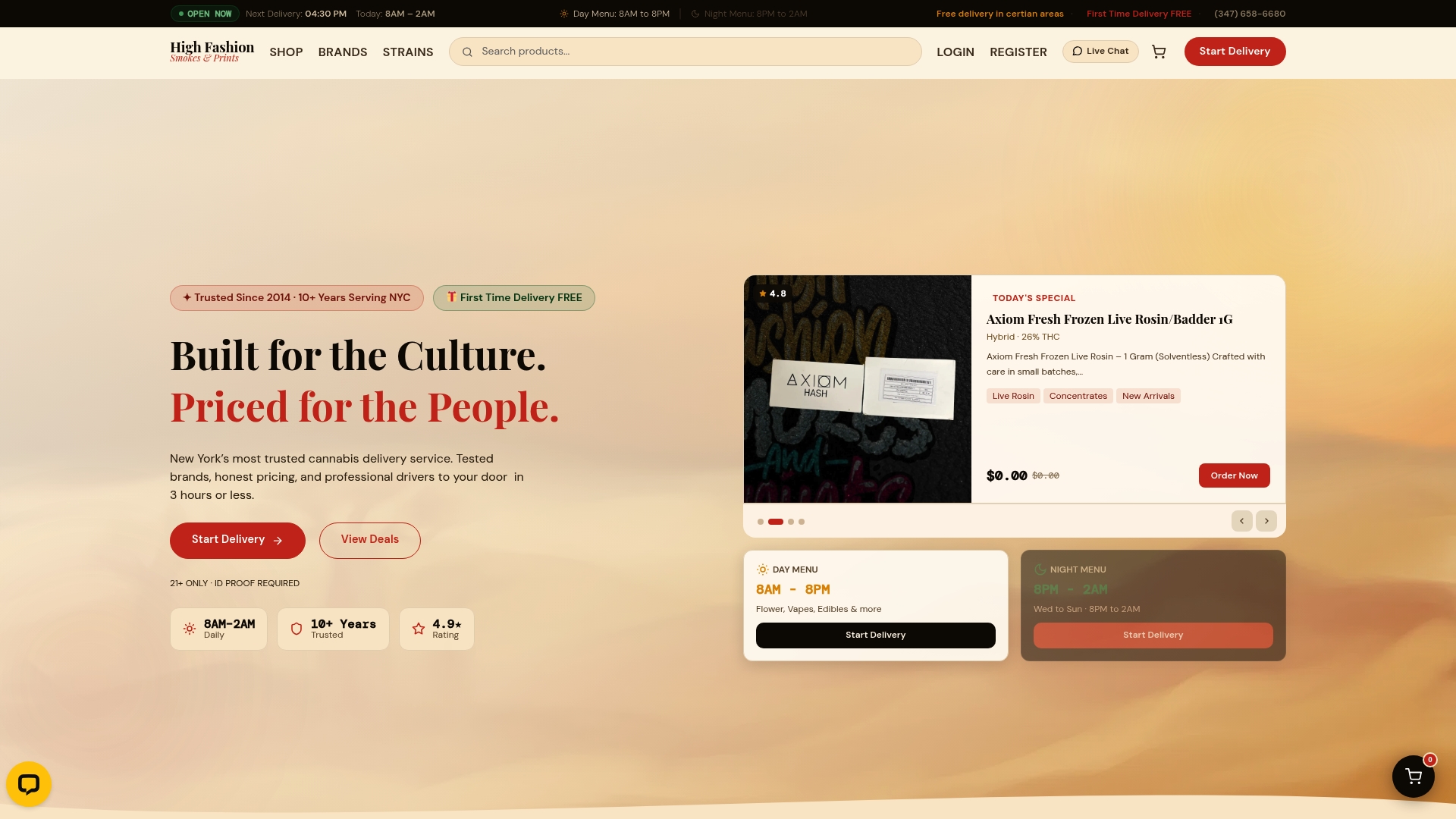
Ready to see what’s tested and available tonight? Start with the full concentrate menu and same-day delivery options, or browse the flower versus vape comparison if you’re still deciding which format fits your routine.
Sources
- Cannabis concentrate vaping chemistry – PMC
- NIDA — cannabis resources and concentration/potency guidance
- CDC — Cannabis and lung health
This article is general information, not a substitute for advice from a qualified doctor. Consult a qualified healthcare professional about your own circumstances before acting on anything here.
FAQ
What Is the Strongest Type of Cannabis Concentrate?
THC isolates and distillates typically test highest, sometimes exceeding 90% Δ9-THC, though commercial concentrates commonly range from 50% to 95% depending on the product and batch. A high number doesn’t guarantee a better experience, since purified products usually carry fewer original terpenes than live resin or rosin.
What’s the Difference Between Live Resin and Regular Resin?
Live resin is made from fresh-frozen plant material that skips drying and curing, which helps preserve the terpenes responsible for smell and flavor. Regular resin or distillate typically starts from dried, cured flower, resulting in a less aromatic but often more affordable product.
Is Wax Stronger Than Shatter?
Not inherently. Wax and shatter usually come from the same type of extract, differing mainly in how much they were whipped during purging, not in potency. Strength depends on the starting material and processing, which is why checking the COA matters more than comparing textures.
Are Solventless Concentrates Safer Than Solvent-Based Ones?
Not automatically. Solventless production skips chemical solvents, but plant quality and processing still determine the final product’s safety, and both categories require lab testing to confirm they’re free of contaminants and residual solvents. The CDC’s guidance on cannabis and lung health recommends avoiding any unverified product regardless of extraction method.
How Much Does Same-Day Delivery Cost in NYC?
Delivery fees vary by borough. Queens starts from $8, while Manhattan and The Bronx delivery fees start from $12, and current details are available on the Highfashionsmokesandprints ordering page.