Read our Google Birdeye Reviews
Sublingual tinctures typically work best when you want fast, controllable relief or precise microdosing, since you can feel effects within 15 to 40 minutes and adjust drop by drop. Edibles typically suit long, sustained symptom control better, but the slower onset raises the risk of accidental overconsumption. Whichever format you choose, start low and go slow.
TL;DR:
- Sublingual tinctures offer faster onset than edibles, typically within 15 to 40 minutes, and allow precise microdosing by drop measurement.
- Edibles produce stronger effects due to liver conversion creating 11-hydroxy-THC, with onset delayed to 30 minutes or more and effects lasting up to 8 hours.
- Dosing should start low at 2.5 mg or less THC, with wait times of 30 to 90 minutes for tinctures and at least 2 hours for edibles before redosing.
- Food intake, especially high-fat meals, significantly influences edible potency and timing, making effects less predictable.
- Both formats require careful storage, clear labeling, and cautious redosing to avoid overdose, with regulatory rules varying by location.
Table of Contents
- What tinctures are and how you take them changes everything
- What edibles are and why your liver changes the experience
- Edibles vs tinctures: timing, control, and predictability compared
- How to dose and titrate: start low, go slow, and measure your drops
- Safety, storage, and what to do if you take too much
- Quick checklist: matching the format to your goal
- Legal status and regulatory considerations for each form
- What years of customer orders have taught us about dosing
- Order tested tinctures and edibles with same-day delivery
- Sources
- FAQ
What tinctures are and how you take them changes everything
A tincture is cannabis extract suspended in a carrier, usually alcohol, MCT oil, or glycerin, and dispensed by dropper. How you take it determines how it behaves in your body.
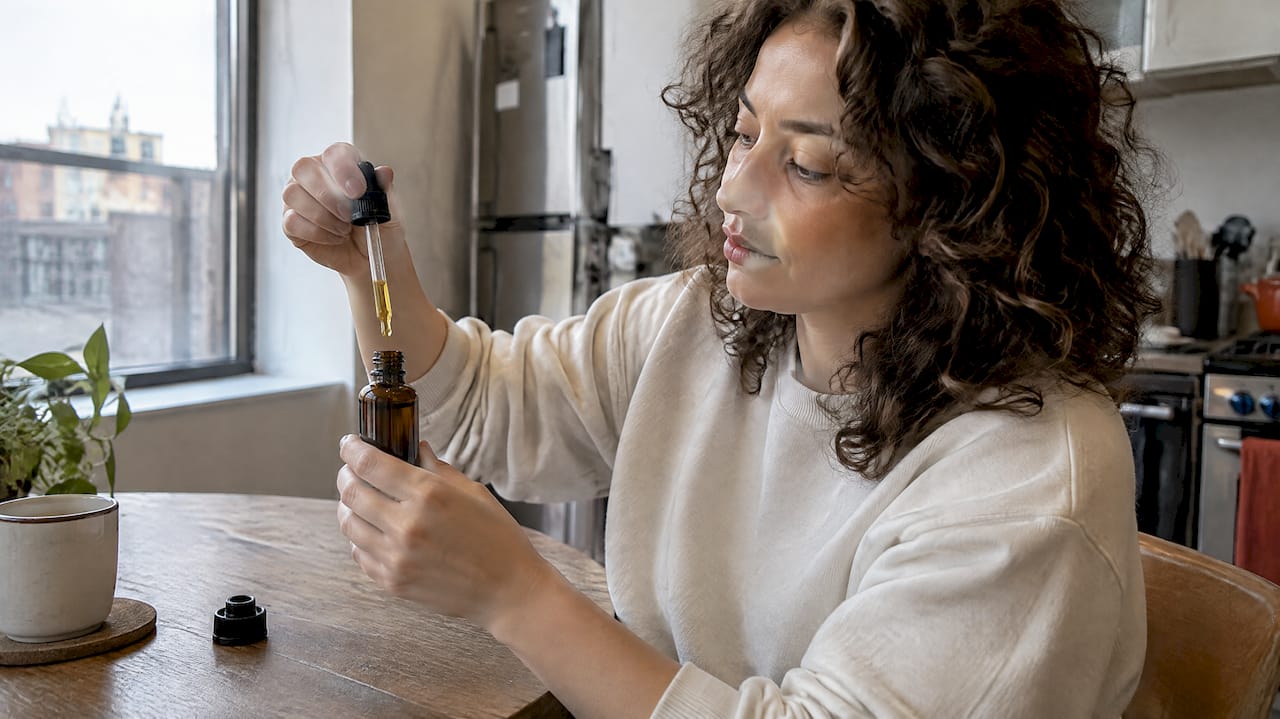
Hold the liquid under your tongue for 60 to 90 seconds and the cannabinoids absorb through tissue straight into the bloodstream, bypassing a chunk of digestion. Swallow it immediately instead, and it travels through your gut and liver like an edible, with a slower, less predictable curve. Sublingual absorption is what makes tinctures useful for people who want a fast-acting, adjustable option.
Common variants include:
- THC-dominant tinctures for stronger psychoactive effects
- CBD-only tinctures for non-intoxicating use
- Balanced THC:CBD ratios for moderated effects
- Flavored or unflavored bases, depending on the carrier
For a deeper look at formats and strengths, our tincture overview covers the practical differences between product lines.
What edibles are and why your liver changes the experience
Edibles cover a wide range of formats: gummies, chocolates, baked goods, beverages, and capsules. What they share is a trip through the digestive system before anything reaches your bloodstream.
That detour matters. Your liver converts delta-9-THC into 11-hydroxy-THC, a metabolite that crosses the blood-brain barrier more readily and often produces stronger, longer-lasting effects than the original compound. This is why a 10 mg edible can feel noticeably more intense than a 10 mg vape hit, even though the dose is identical on paper.
Timing is also food-dependent. High-fat meals can raise THC bioavailability and delay the time to peak effect, so the same gummy can hit differently on an empty stomach versus after dinner.
Edible products generally fall into:
- Single-dose gummies or chocolates with marked mg per piece
- Multi-serving packages requiring you to cut or measure a portion
- Beverages with mg per can or bottle
- Capsules for a no-taste, fixed-dose option
Labels typically state mg per serving rather than per package, which matters more than it sounds for dosing accuracy.
Edibles vs tinctures: timing, control, and predictability compared
The core trade-off comes down to speed versus duration. Tinctures act faster and wear off sooner; edibles take longer to kick in but can carry you through the night.
| Factor | Sublingual tincture | Edible |
|---|---|---|
| Onset | 15 to 40 minutes | 30 minutes to 2 hours |
| Peak effect | 2 to 4 hours | 2 to 4 hours |
| Duration | Up to 12 hours | 4 to 8 hours |
| Dose control | High, via calibrated dropper | Fixed per serving, harder to split finely |
| Predictability | Moderate, affected by hold time and swallowing habit | Lower, affected by food intake and metabolism |
| Best for | Acute symptoms, microdosing, daytime use | Overnight relief, sustained pain or sleep support |
A few practical patterns stand out:
- Tinctures suit sudden pain flares or anxiety spikes where you need relief within the hour.
- Edibles suit chronic pain or sleep support where a slow build and long tail work in your favor.
- Food timing shifts edible intensity more than most people expect.
Pro Tip: If you’re new to either format, take your first dose on an evening with no plans, so an unexpectedly strong or long effect doesn’t interfere with work or driving.
How to dose and titrate: start low, go slow, and measure your drops
Dosing mistakes usually come from skipping math or redosing too soon. Both formats call for restraint, especially early on.
- Start with 2.5 mg of THC or less for your first dose, the beginner guidance most health authorities recommend.
- Wait 30 to 90 minutes before redosing a tincture, or at least 2 hours for an edible before assuming it hasn’t worked.
- Calculate mg per drop by dividing total mg in the bottle by the total number of drops (a 30 ml bottle with roughly 600 drops and 300 mg THC works out to about 0.5 mg per drop).
- Log how each dose feels, then raise the amount in small increments over several days rather than jumping to a higher dose.
- Set a ceiling for your trial period and stick to it until you understand how your body responds.
Mixed THC:CBD products often feel gentler at the same THC dose, since CBD can moderate intensity. Older adults and anyone on multiple medications should titrate more conservatively and discuss dosing with a clinician first.
Pro Tip: Keep a small notebook or phone note with dose, time, and effect. Patterns show up fast once you have three or four entries to compare.
Safety, storage, and what to do if you take too much
The biggest risk with edibles is delayed onset tricking you into taking more before the first dose has registered. The CDC has documented this pattern as a leading cause of adverse reactions, and a Colorado case report that followed severe outcomes after redosing helped push several jurisdictions toward stricter 10 mg per serving labeling rules.
Good habits reduce most of the risk:
- Choose lab-tested products with clear mg-per-serving labeling, especially anything at or above 10 mg THC.
- Store tinctures and edibles in childproof containers, out of reach of kids and pets.
- Avoid edibles packaged to resemble ordinary candy or snacks.
- If you or someone else overconsumes, stay calm, hydrate, lie down if needed, and avoid driving; call poison control or emergency services if symptoms are severe.
Our safe use checklist covers these basics in more depth if you want a quick reference before your next order.
Quick checklist: matching the format to your goal
- Need relief fast or want to microdose precisely: choose a sublingual tincture.
- Need overnight relief or sustained pain control: choose an edible.
- Have unpredictable digestion or a sensitive stomach: start with small tincture doses and talk to a clinician first.
- Pregnant, managing a heart condition, or taking interacting medications: consult a clinician before trying either format.
Legal status and regulatory considerations for each form
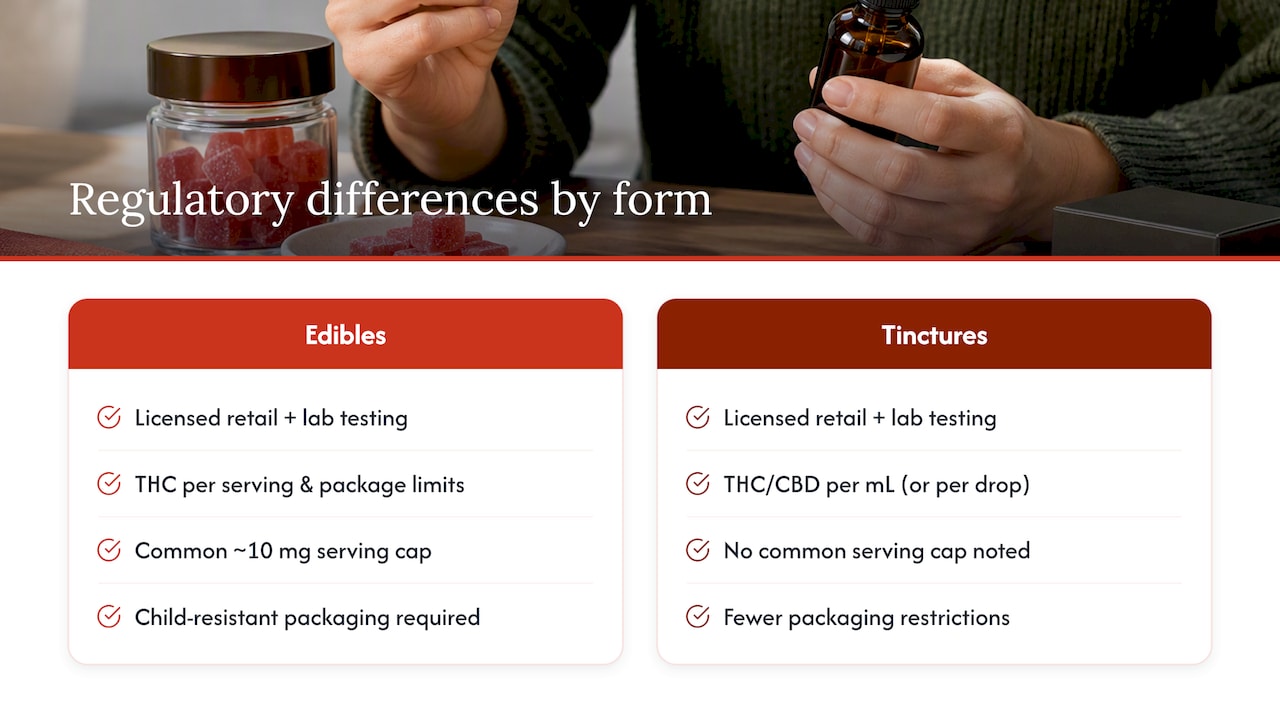
Cannabis tinctures and edibles are regulated as cannabis products wherever cannabis itself is legal, and the rules that apply depend heavily on where you live. In markets with legal adult-use or medical cannabis programs, both formats are typically sold through licensed retailers with lab testing and labeling requirements, including THC content per serving and total package THC limits.
Edibles tend to draw more regulatory attention because of overconsumption risk. Jurisdictions that allow edibles often cap serving size (commonly around 10 mg THC per serving) and require child-resistant packaging, partly in response to adverse event reports like the one documented in the CDC’s MMWR findings. Some markets restrict shapes, colors, or flavors that could make edibles appeal to children.
Tinctures face fewer packaging restrictions in most markets but still require accurate labeling of THC and CBD concentration per milliliter or per drop, since dosing precision depends on that number being correct.
None of this is legal advice, and rules differ by state, province, or country, including whether home delivery is permitted and what quantities an adult can purchase or possess. Check your local cannabis authority’s current regulations before purchasing either format, particularly if you’re traveling or new to a market’s specific rules.
What years of customer orders have taught us about dosing
The two mistakes we see most often are redosing too soon on edibles and eyeballing tincture drops instead of measuring them. Readers who track doses and wait out the full onset window report far steadier results.
— Jake
Order tested tinctures and edibles with same-day delivery
High Fashion Smokes & Prints carries lab-tested tinctures and edibles with clear mg-per-serving details on every product page, so you’re never guessing at strength before you order.
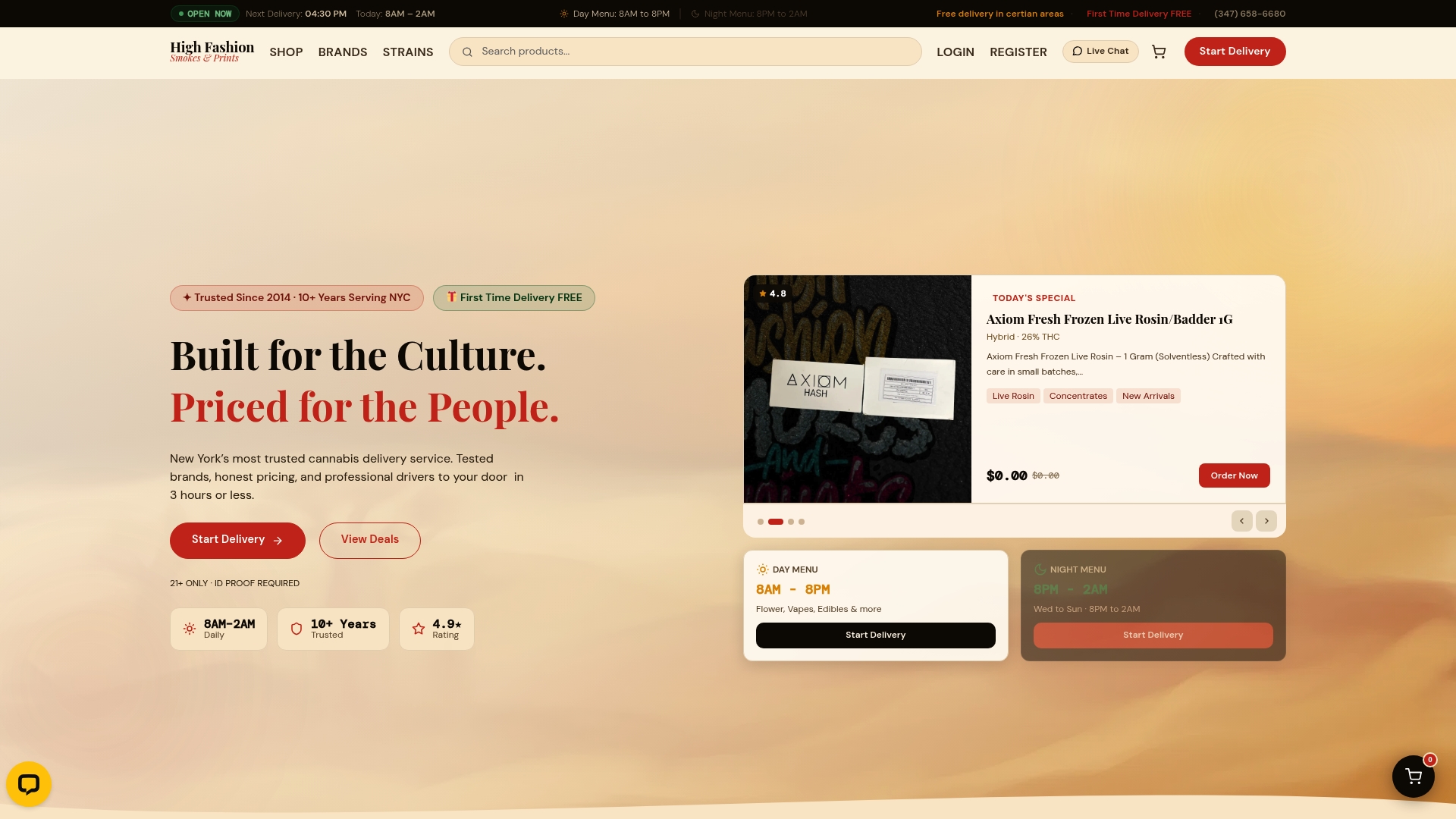
Ordering is simple: verify your age, browse the day or night menu, and place your order for same-day delivery across New York City. Manhattan and The Bronx deliveries start from $12, Queens starts from $8, and Brooklyn delivery has its own fee listed at checkout. If you’re still working out dosing, our guide to dosing edibles safely and delivery hours page will help you plan your first order with confidence. Browse the current menu and schedule your delivery window today at Highfashionsmokesandprints.
This article is general information, not a substitute for advice from a qualified doctor. Consult a qualified healthcare professional about your own circumstances before acting on anything here.
Sources
FAQ
Do tinctures get you higher than edibles?
Not necessarily. Edibles often produce stronger, longer-lasting effects per milligram because liver metabolism creates 11-hydroxy-THC, while sublingual tinctures act faster but with a shorter overall duration.
Which is better, tincture or gummies?
Neither is universally better; it depends on your goal. Tinctures suit fast, adjustable relief and microdosing, while gummies suit longer, sustained effects for sleep or chronic symptoms, according to Health Canada’s dosing guidance.
Will tinctures work on me if edibles don’t?
Possibly, since tinctures taken sublingually bypass much of the digestive process that affects how edibles metabolize in your body. People with sensitive digestion or inconsistent edible results sometimes find tincture effects more reliable, though individual response still varies.
What are the disadvantages of tinctures?
Tinctures require accurate drop measurement, and swallowing instead of holding the dose under your tongue turns them into a slower-acting, edible-like experience. They also wear off sooner than edibles, which can mean more frequent redosing for all-day or overnight relief.