Read our Google Birdeye Reviews
The safest choice is not using cannabis at all, but if you do, three rules cut most of the risk: start with a low dose and wait before taking more, never drive or operate machinery for at least six hours after use, and buy only lab-tested products from a licensed source. Health Canada’s Lower-Risk Cannabis Use Guidelines, the CDC, and state public-health agencies all converge on the same core advice. This guide covers dosing by method, storage and disposal, who should avoid cannabis entirely, and what to do if someone overconsumes.
TL;DR:
- Smoking cannabis poses the highest lung health risks, while edibles and tinctures offer safer alternatives but require careful dose adjustment and patience.
- Always buy from licensed sources, read product labels thoroughly, and keep track of THC milligrams to prevent accidental overconsumption.
- Avoid cannabis use before driving, working, or operating machinery, especially for at least six hours after use, and consider extra caution with edibles due to delayed effects.
- Certain groups, including pregnant people, those under 25, individuals with a family or personal history of psychosis, and those on specific medications, should abstain entirely.
- Proper storage, avoiding mixing with alcohol, and understanding dosage and effects significantly reduce the risk of adverse experiences and accidental ingestion.
Table of Contents
- Quick Safety Checklist for Responsible Cannabis Consumption
- Choosing a Safer Method and Getting the Dose Right
- Preventing and Handling a “Greening Out” Episode
- Driving, Work, and the Legal Reality of Impairment
- Who Should Avoid Cannabis Entirely
- Storing Cannabis Safely Around Kids and Pets
- Why Sourcing and Label Reading Actually Matter
- Mixing Cannabis With Alcohol and Medications
- When to Call for Help
- How Highfashionsmokesandprints Supports Safer Choices
- Mental Health and Cognitive Effects of Regular Use
- Setting Up a Safer Space to Use Cannabis
- An Editorial Take on Harm Reduction Over Abstinence-Only Messaging
- Sources
Quick Safety Checklist for Responsible Cannabis Consumption
Print this out, save it, or just reread it before your next session. These are the five actions that prevent almost every bad cannabis experience.
- Buy only from a licensed source and read the label before you consume anything.
- Start with a small dose and give it time to work before taking more.
- Do not drive or operate machinery for several hours after using.
- Keep products in their original child-resistant packaging, locked away from kids and pets.
- If you overconsume, stop, sit down, hydrate, and call poison control if symptoms feel severe.
Pro Tip: Keep a note on your phone with the exact THC milligrams you took and when. Cannabis memory gaps are real, and “how much did I actually take” is the most common panicked question during an uncomfortable high.
The Lower-Risk Cannabis Use Guidelines lay out ten specific behaviors, including avoiding smoking and limiting frequency to roughly one day a week or less, because both smoking frequency and high-THC products independently raise dependency risk. That single guideline document, built by reviewing decades of research, is the closest thing cannabis has to a nutrition label for behavior.
Choosing a Safer Method and Getting the Dose Right
Not all consumption methods carry the same risk, and the differences are bigger than most people assume.
Smoking sits at the top of the risk list. The CDC notes that smoked cannabis can damage lung tissue and small blood vessels, the same mechanical harm you’d expect from inhaling any combusted plant material. Vaping avoids combustion but isn’t risk-free. Contaminated cartridges and unregulated additives have caused real lung injuries, so sourcing matters more here than with almost any other method. Edibles skip inhalation entirely, but they trade that safety for unpredictability: onset can take anywhere from thirty minutes to over two hours, which is exactly why so many people redose too soon and end up overwhelmed. Tinctures land in between, working faster than edibles when held under the tongue while still avoiding smoke. Concentrates carry the highest THC potency by far and demand the smallest possible starting amount.
Harvard Health’s Dr. Peter Grinspoon specifically recommends tinctures and edibles over smoking for anyone concerned about long-term lung health, a view that lines up directly with the CDC’s findings.
Dosing rules by method:
- Edibles: Start with 2.5 to 5 mg of THC and wait a full two hours before considering more.
- Inhalation (vape or flower): Take one small inhalation, then wait 15 to 30 minutes before reassessing how you feel.
- Concentrates: Start with an amount smaller than you think you need. Potency here can exceed 70% THC.
- Tinctures: Begin with the lowest marked dropper amount and hold it under your tongue for full absorption.
If you’ve taken a break from cannabis, don’t pick back up where you left off. Tolerance drops fast, sometimes within a week or two, so a dose that felt mild three months ago can hit much harder now. Our guide to understanding cannabis tolerance and resetting it walks through how long that reset actually takes.
Reading a label matters as much as reading a nutrition facts panel. Look for total THC in milligrams per serving and per package, not just a percentage, and check the CBD:THC ratio if you want a gentler effect. Products with more CBD relative to THC tend to feel calmer and less anxiety-inducing for most people. For a deeper look at one lower-intensity option, see how cannabis tinctures compare to smoking or edibles for dosing control.
Preventing and Handling a “Greening Out” Episode
Greening out, the wave of nausea, dizziness, racing heart, and panic that comes from taking too much THC, is almost always preventable. It happens for a handful of predictable reasons: someone eats a second edible because the first “isn’t working yet,” someone drinks alcohol alongside cannabis, or someone jumps straight into a high-potency concentrate without easing in.
Prevention comes down to patience:
- Set a two-hour timer before you even think about a second edible dose.
- Eat a meal beforehand. An empty stomach speeds absorption and intensifies effects.
- Keep water nearby and sip it steadily throughout your session.
- Skip the alcohol. Combining the two can significantly raise plasma THC levels, which is a major driver of severe overconsumption.
- Begin any new product, especially a concentrate, at the smallest dose the label allows.
If it happens anyway, here’s the response sequence: stop consuming anything else immediately, sit or lie down somewhere quiet and familiar, and focus on slow breathing. Sipping water helps, and some people report relief from CBD or chewing black peppercorns, though neither is a proven treatment, just a low-risk comfort measure while the effects pass on their own.
Pro Tip: A racing heart during a green-out often feels far more dangerous than it is. Remind yourself out loud, “This will pass,” and time-box it: most peak discomfort fades within an hour.

Call poison control or emergency services if someone shows trouble breathing, chest pain, a seizure, or loses consciousness. Those symptoms go beyond a typical overconsumption episode.
Driving, Work, and the Legal Reality of Impairment
Cannabis impairment doesn’t clock out on your schedule, and the guidance here is specific for a reason. The Lower-Risk Cannabis Use Guidelines are direct on this point: do not drive for at least six hours after using cannabis. Edibles complicate that math because their effects can peak late and linger well past the six-hour mark, so give yourself extra buffer if you went that route.
Mixing alcohol into the equation makes everything worse. The combination amplifies impairment and raises measured THC concentrations in the blood beyond what either substance produces alone, which is exactly the kind of compounding risk that shows up in crash-risk data.
Plan around this instead of hoping willpower covers the gap:
- Arrange a ride home before you consume, not after.
- Avoid any cannabis use before a work shift, an on-call rotation, or anything requiring quick judgment.
- Understand your employer’s drug policy. Legal adult use in your state does not override workplace testing or federal restrictions that still apply in many jobs, especially federally regulated ones.
- Treat “I feel fine” as an unreliable gauge. Subjective feeling and actual motor impairment often don’t match up.
Who Should Avoid Cannabis Entirely
Some groups face risks that outweigh any potential benefit, and public-health guidance is consistent about naming them directly.
Pregnant and breastfeeding people top that list. Health Canada advises against cannabis use during pregnancy or breastfeeding because of documented risks to fetal and infant development. Anyone under 25 faces elevated risk too, since the brain is still developing key executive-function circuitry through the mid-twenties, and earlier, heavier use correlates with a higher chance of developing dependency later.
A personal or family history of psychosis is another firm line. Cannabis, particularly high-THC products, can trigger or worsen psychotic symptoms in people already predisposed to them. The same caution applies to anyone with a history of substance-use disorder, where cannabis can become another compulsive behavior rather than a controlled choice.
- Pregnant or breastfeeding individuals
- Adults under 25, due to ongoing brain development
- Anyone with a personal or family history of psychosis
- Anyone managing a substance-use disorder
- Anyone on medications with known interactions, who should consult a clinician first
If cannabis has ever made your anxiety worse rather than better, that’s worth exploring before you use it again. Does weed help with anxiety? breaks down why the effect varies so much from person to person.
Storing Cannabis Safely Around Kids and Pets
An edible gummy looks exactly like candy to a four-year-old, and that’s precisely the problem. Accidental ingestion by children and pets is one of the most preventable harms in the entire category, and it’s also one of the most common calls to poison control in states with legal markets.
The fix is straightforward: keep everything in its original, child-resistant, resealable packaging and lock it away, out of sight, not just out of reach. A lockbox or small safe works better than a high shelf, since curious kids climb and dogs have a nose for anything that smells like food.
Watch for these signs of accidental ingestion in a child or pet: unusual drowsiness, stumbling or loss of coordination, vomiting, or in more serious cases, slowed breathing or unresponsiveness. Ingestion can cause altered consciousness and respiratory depression in small bodies, so treat any of these symptoms as a reason to call poison control or a vet immediately rather than waiting to see if it passes.
- Store products in their original packaging, always, even if it’s bulky.
- Use a locked box or safe, not just a high cupboard.
- Never leave edibles out on a counter or in a bag within reach of visitors’ kids.
- For disposal, crush edibles, mix them with something unappealing like coffee grounds, and seal in a bag before trashing.
- Vape cartridges and batteries need hazardous-waste handling, not the regular trash, since the batteries pose a fire and environmental risk.
Why Sourcing and Label Reading Actually Matter
Buying from a licensed dispensary isn’t just about legality. It’s the single biggest lever you have over product safety. Licensed products go through contaminant testing and consistent labeling, plus seed-to-sale tracking that makes recalls possible if something goes wrong. Illicit-market products offer none of that. You’re trusting an unverified potency claim and hoping nothing was sprayed, cut, or contaminated along the way.
When you read a label, look past the marketing and check three things: THC milligrams per serving and per package (not just a percentage), the batch number tied to a Certificate of Analysis (COA), and the CBD:THC ratio if you want a milder experience. A legitimate product will make that COA available, often through a QR code on the packaging.
- Confirm the product carries a batch number and lab-test date.
- Compare THC mg per serving against the total package amount before you commit to a dose.
- Treat homemade edibles with real caution. THC doesn’t distribute evenly through batter, so one brownie can be far stronger than the one next to it. Our guide to making cannabis brownies covers how to dose a homemade batch more evenly if you go that route.
- Avoid concentrates or vapes with no visible lab testing information. That’s the biggest red flag in the illicit market.
Mixing Cannabis With Alcohol and Medications
Combining substances is where most serious cannabis incidents happen, and alcohol is the most common culprit. Drinking before or during cannabis use raises plasma THC concentrations and stacks two impairing substances on top of each other, which explains why so many overconsumption stories involve both.
Medications are a quieter risk. Cannabis is metabolized through the liver’s CYP450 enzyme system, the same pathway responsible for processing blood thinners, many sedatives, and several antidepressants. That overlap can change how strongly those medications work. If you take prescription medication regularly, bring your product’s label or COA to your next appointment and ask your pharmacist directly rather than guessing.
- Never combine cannabis with alcohol if you’re aiming for a controlled, predictable experience.
- Ask a pharmacist about interactions if you take blood thinners, sedatives, or antidepressants.
- Bring the actual product packaging to medical appointments, not just a verbal description.
- If you use CBD products for interaction-related reasons, review how CBD is used safely for wellness before combining it with other medications.
When to Call for Help
Most uncomfortable cannabis experiences resolve at home with rest, water, and time. A racing heart, nausea, and anxiety during a green-out episode, while unpleasant, is not typically a medical emergency.
That changes if someone shows trouble breathing, chest pain, a seizure, or loses consciousness. Those symptoms require immediate emergency care, not a wait-and-see approach.
- Call your regional poison control center for guidance on non-life-threatening overconsumption.
- Call 911 or local emergency services for chest pain, breathing trouble, seizures, or unresponsiveness.
- For ongoing concerns about dependency or frequency of use, SAMHSA’s National Helpline offers free, confidential referrals to local treatment.
- Talk to a primary care provider if cannabis use is affecting your sleep, relationships, or work on a regular basis.
How Highfashionsmokesandprints Supports Safer Choices
Highfashionsmokesandprints has operated as a same-day cannabis delivery service in New York City since 2011, built around lab-tested products and straightforward, transparent service. Every product listed on the day and night menus goes through testing and verification before it reaches a customer’s door, which is the same principle behind the licensed-market guidance covered above.
Beyond delivery, the goal has always included education. Readers who want a deeper walk-through of a specific product category can check the dosing edibles safely guide or the breakdown on cannabis tinctures for a lower-intensity, non-smoking option…
If you’re in New York City and want delivery built around tested products and age-verified checkout, same-day cannabis delivery on Long Island is available through Highfashionsmokesandprints’s day and night menus, with clear delivery windows and discreet service.
Mental Health and Cognitive Effects of Regular Use
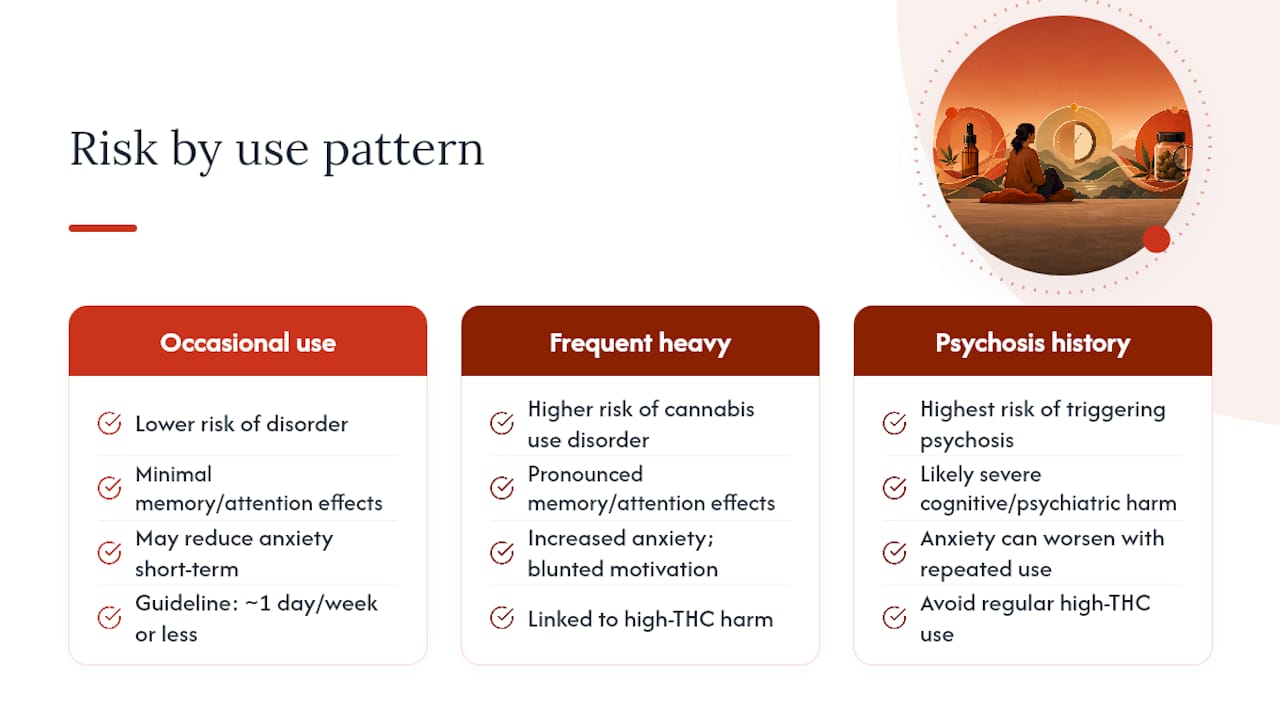
Occasional, moderate cannabis use affects most adults differently than daily, heavy use does, and the gap between those two patterns is where most of the real risk lives. Frequent use, especially of high-THC products, is linked to a higher likelihood of developing cannabis use disorder, and some users report increased anxiety or blunted motivation over time rather than the calm they were originally chasing.
Cognitive effects tend to track closely with frequency and age of first use. People who start young and use heavily show more pronounced effects on memory and attention than adults who use occasionally and start later in life. This is part of why the Lower-Risk Cannabis Use Guidelines specifically recommend delaying initiation and limiting frequency to around one day a week or less. It’s a frequency-based risk model, not a total ban, and it treats moderation as the actual lever that matters.
A personal or family history of psychosis raises the stakes further, since regular high-THC use can trigger or worsen psychotic symptoms in people already predisposed. If you’ve noticed cannabis making anxiety worse rather than better over repeated use, that pattern is worth paying attention to rather than pushing through.
Setting Up a Safer Space to Use Cannabis
Where you use matters almost as much as what you use. A cannabis experience that goes sideways in an unfamiliar, chaotic environment can stay perfectly manageable in a familiar, low-pressure one.
Pick a space you already associate with comfort, ideally somewhere you can sit or lie down if effects hit harder than expected. Have water within reach before you start, not after you need it. Tell at least one sober person what you’re doing and roughly how much, especially the first time you try a new product or method. If you’re new to a specific strain or edible batch, skip the party and skip the first date. Save the experiment for a quiet evening at home instead.
Lighting, temperature, and noise all matter more than people expect. A too-bright or too-loud environment can turn manageable anxiety into something overwhelming. Keep your phone charged, keep snacks and water nearby, and remove yourself from any situation, driving, work calls, childcare, that requires sharp judgment for the next several hours.
An Editorial Take on Harm Reduction Over Abstinence-Only Messaging
Most cannabis advice still swings between two extremes: total prohibition messaging or breezy “it’s basically harmless” marketing. Neither holds up. The Lower-Risk Cannabis Use Guidelines get this right by borrowing the same logic as low-risk drinking guidelines: abstinence is the safest option, full stop, but for the millions of adults who are going to use cannabis regardless, specific behavioral rules meaningfully cut the risk. That’s a more honest, more useful framework than either extreme.
Where I think most consumer advice still falls short is dosing patience. Everyone tells you to “start low, go slow,” but almost nobody explains why the two-hour edible wait matters biologically, or that your tolerance resets faster than you’d expect after even a short break. Those specifics are what actually prevent a bad night, not the vague warning itself.
If you take one thing from this guide, make it the timer. Set it before you consume, not after you start wondering if the first dose worked.
— Jake
This article is general information, not a substitute for advice from a qualified doctor. Consult a qualified healthcare professional about your own circumstances before acting on anything here.
Sources
- Lower-Risk Cannabis Use Guidelines — Health Canada
- Cannabis health effects — CDC
- Safe & Responsible Consumption — New Jersey Cannabis
- How to avoid greening out: dosing, tolerance, and prevention — RethinkTHC