Read our Google Birdeye Reviews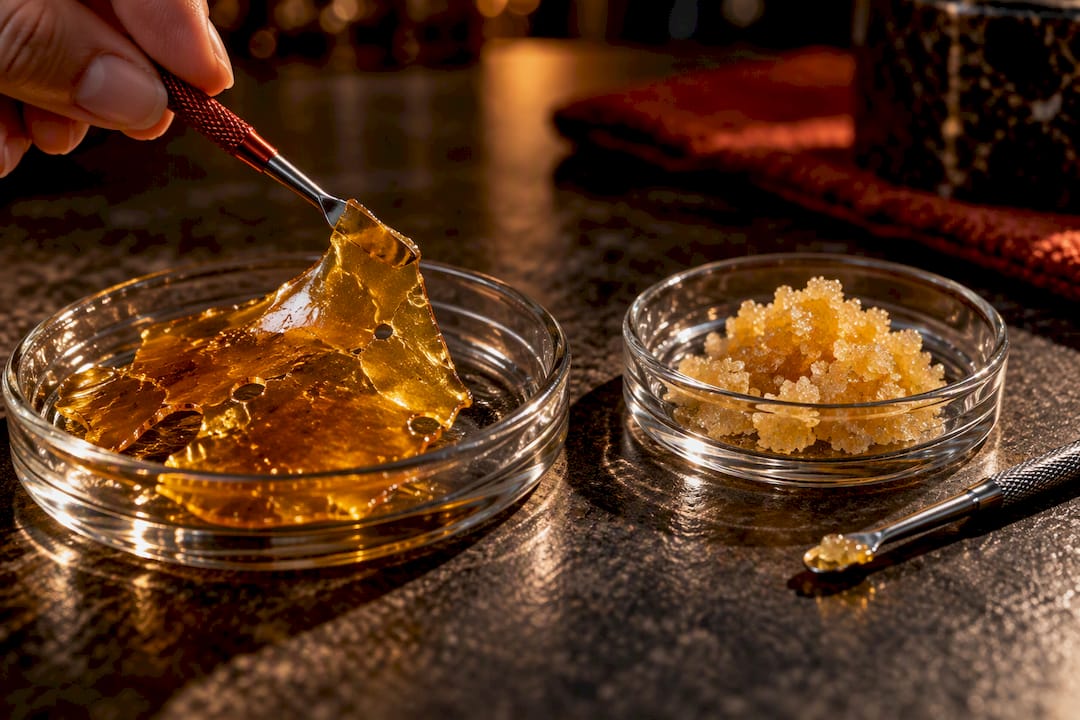
Shatter is the glass-like, shelf-stable concentrate that snaps like amber candy, while sugar wax is the grainy, scoopable concentrate favored for flavor and easier dosing. Both come from the same starting material and often the same extraction method, so the choice usually comes down to how you like to handle your dab, not which one gets you higher. Potency in either type can be high, so pace yourself and check the section on dosing before you dab.
TL;DR:
- Sugar wax is easier to scoop and dose accurately, making it more practical for consistent intake, especially for beginners.
- Shatter maintains its shape and is more resilient to storage conditions, which is ideal for travel and long-term shelf stability.
- Both concentrates can have similar potency levels, but THC content varies significantly based on extraction quality and plant material rather than texture alone.
- Lab testing and clear potency reports are crucial, as appearance and texture do not reliably indicate THC level or purity.
- The choice between shatter and sugar wax ultimately depends on handling preference, flavor preservation, and storage needs, not potency differences.
Table of Contents
- What shatter and sugar wax are and why they look different
- Practical differences: texture, handling, flavor, potency, and storage
- How to consume and dose sugar wax and shatter safely
- Which one should you pick: an easy decision checklist
- High Fashion Smokes & Prints: how we help you get tested concentrates
- Author perspective: why handling and ritual can matter more than the label
- Where to find lab tested sugar wax and shatter from High Fashion Smokes and Prints
- Sources
- FAQ
What shatter and sugar wax are and why they look different
Shatter and sugar wax start from the same place: cannabis plant material stripped of its cannabinoids and terpenes using a solvent or a solventless method. What happens after extraction is what determines the final texture. Shatter is left undisturbed during the purging stage, when residual solvent evaporates out of the concentrate under low heat and vacuum. Left alone, the extract cools into a thin, translucent sheet that snaps cleanly, almost like glass.
Sugar wax gets a different treatment. During or after purging, the extract is agitated, stirred, or allowed to crystallize in a way that breaks up the smooth structure. The result is a wetter, grainier texture that looks closer to wet sand than glass. This isn’t a different starting product, it’s a different post-processing choice.
The extraction method itself also shapes the outcome:
- BHO (butane hash oil): the most common method for both shatter and sugar wax, prized for high yields and strong flavor retention when purged properly.
- CO2 extraction: uses pressurized carbon dioxide instead of a hydrocarbon solvent, though the process can alter terpene content and produce a flavor profile that doesn’t fully match the original flower, according to research comparing flower to SC-CO2 concentrate.
- Rosin: a solventless method that uses heat and pressure alone, appealing to consumers who want to avoid hydrocarbon solvents entirely.
Whichever method starts the process, the texture you end up holding is mostly a story about what happened after extraction, not before.
Practical differences: texture, handling, flavor, potency, and storage
Texture drives handling. Shatter’s rigid sheet has to be broken or scraped with a dab tool, which can make portioning tricky since a chipped-off piece might be bigger or smaller than intended. Sugar wax scoops easily with a dab tool, and its looser consistency makes it simpler to measure out small, consistent amounts, a real advantage if you’re trying to keep doses steady.
Flavor tends to favor sugar wax, though not universally. Because sugar wax production often involves less aggressive heat exposure during the final curing stage, more of the original terpene profile can survive intact. Shatter’s extended purge under heat and vacuum can drive off some of the more volatile terpenes, though a well-made batch from a skilled extractor can still taste sharp and true to the strain. Extraction method matters here too: hydrocarbon methods like BHO generally preserve more of the flower’s flavor than CO2 extraction, which can shift the terpene balance, per the flower-to-concentrate comparison. Readers who want a deeper look at how extraction shapes aroma can check our terpenes guide.
Potency is where assumptions get people into trouble. Neither texture is a reliable stand-in for THC percentage. A glassy, clear shatter and a wet, granular sugar wax can carry similar THC levels, or wildly different ones, depending on the plant material and the skill of the extractor. Solvent-based concentrates in general run far higher than flower.
Concentrates can deliver large doses of THC quickly, and solvent-based products often carry much higher THC levels than plant material, according to the National Institute on Drug Abuse. That gap means a small dab can equal several hits of flower, which is exactly why dose control matters more with concentrates than with any other form.
Storage needs differ too:
- Shatter holds its shape at room temperature and resists melting into itself, making it easier to store flat in parchment paper without sticking.
- Sugar wax is stickier and more prone to absorbing moisture, so it does better in a cool, dark spot in an airtight, non-stick container.
- Both degrade faster with heat, light, and air exposure, losing potency and flavor over months if left out.
Portability follows the same pattern. Shatter’s firmer structure travels a little better without smearing, while sugar wax is easier to scoop directly into a vape’s dab attachment or onto a bowl of flower for an extra kick, a common way people combine concentrates with traditional smoking.
How to consume and dose sugar wax and shatter safely
Concentrates are not the place to guess. Because THC is so concentrated, a dose that feels reasonable in flower can be overwhelming in wax or shatter form.
- Start with a dab the size of a grain of rice, especially if you’re new to concentrates or trying a new batch. Wait at least 15 to 20 minutes before considering more, since inhaled effects build faster than edibles but still take a few minutes to peak.
- Use lower-temperature or cold-start dabbing techniques when your rig allows it. Research on concentrate vaping chemistry found that heating concentrates at high temperatures increases the formation of volatile organic compounds and degradation byproducts, while lower-temperature approaches reduce some of that toxicant exposure and preserve more of the terpene profile, per peer-reviewed research on dabbing chemistry.
- Match your device to the concentrate. A traditional rig with a banger works for both textures, though sugar wax’s looser consistency scoops more cleanly with a metal dab tool. E-nails offer steadier temperature control than a torch, which helps with the low-and-slow approach. Vape pens built for concentrates can work for smaller sugar wax portions but aren’t designed for shatter’s rigid pieces without pre-loading.
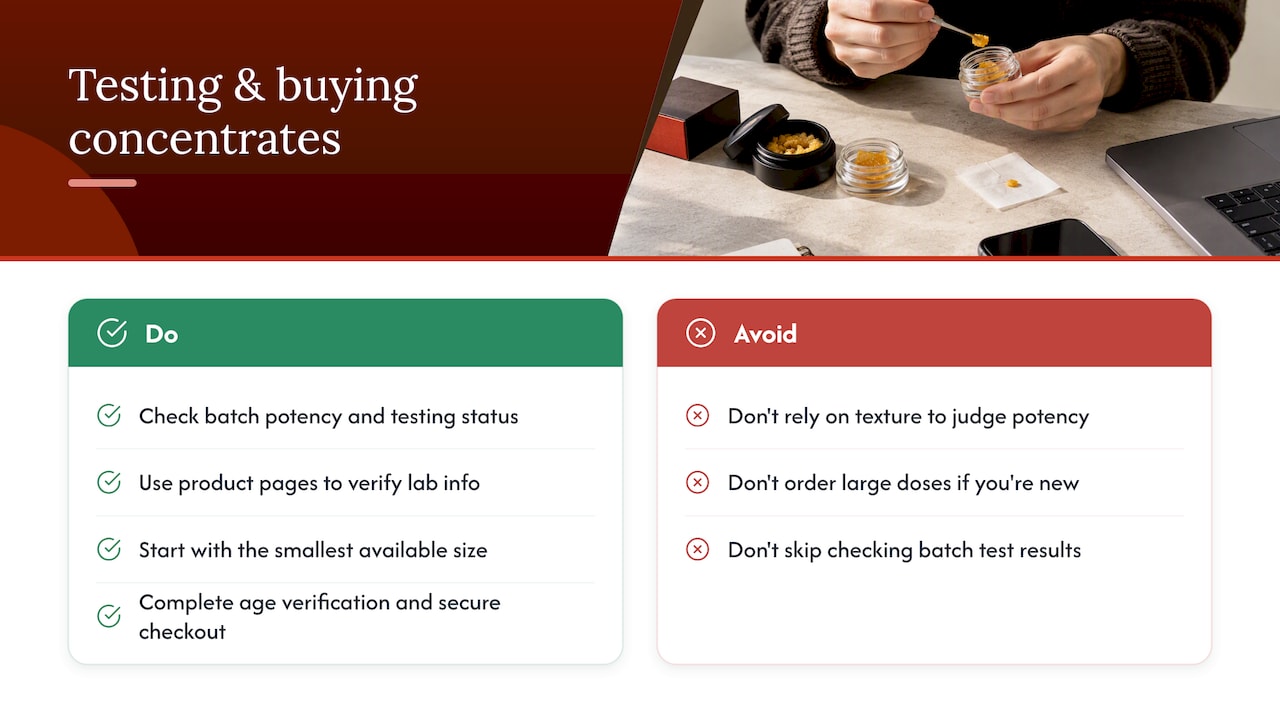
- Check for lab results before you buy. Look for a certificate of analysis that confirms THC percentage and screens for residual solvents. NIDA notes that incomplete purging and unregulated additives have been tied to serious health issues, including the outbreak linked to vitamin E acetate in illicit vape products, underscoring why tested, transparent sourcing matters.
- Store away from children. Public-health guidance from the CDC recommends childproof, opaque containers kept out of reach, since accidental ingestion of high-potency products is a documented risk.
Pro Tip: Keep a small notebook or note on your phone logging dose size and effects for the first few sessions with a new batch, since potency can vary even within the same product line.
For readers weighing concentrates against other methods entirely, our guide on flower versus vapes covers the tradeoffs in more depth.
Which one should you pick: an easy decision checklist
Neither concentrate is universally “better.” The right pick depends on what you’re optimizing for.
- If flavor and easy scooping matter most to you, sugar wax is the more forgiving choice, but confirm the batch has a current lab report before buying.
- If you want a shelf-stable product that holds its shape and travels well, shatter’s firmer texture is the more practical option.
- If you’d rather avoid hydrocarbon solvents altogether, a solventless option like rosin or live resin is worth a look. Our live resin versus distillate comparison breaks down how those options compare on flavor and potency.
- Walk away from any product missing lab results, showing unclear extraction methods, or displaying odd colors, additives, or an off chemical smell.
For a side-by-side look at device options once you’ve settled on a concentrate, this outside breakdown of dabbing versus vaping methods covers the practical tradeoffs between rigs and vape attachments.
High Fashion Smokes & Prints: how we help you get tested concentrates
High Fashion Smokes & Prints has served adult cannabis consumers in New York City since 2011, with a focus on lab-tested and verified products delivered the same day. Every product listed on our day and night menus goes through the verification process before it reaches a customer, and product pages are built to make checking that information straightforward before you commit to an order.
If you’re comparing sugar wax and shatter, the practical move is to look at the listed potency and testing status for the specific batch in front of you, since texture alone won’t tell you what you’re getting. Age verification and secure checkout are part of every order, keeping the process discreet and straightforward from browsing to delivery. If you’re new to concentrates, start with the smallest available size and a modest dose, then adjust once you know how a specific product affects you.
Author perspective: why handling and ritual can matter more than the label
Most people get too focused on which concentrate is “stronger” and skip the more useful question: which one fits how you actually consume. A dry, glassy shatter that’s a pain to portion accurately isn’t a better choice just because it looks impressive on the dab tool. A wet, scoopable sugar wax that lets you nail the same dose every time is doing more for you practically, even if the THC numbers are close.
Tolerance creeps up fast with concentrates, so consistency in dose size matters more than which texture you’re using. What doesn’t change is the value of a transparent lab report. Appearance is a production artifact, not a potency signal, and any vendor unwilling to show current testing isn’t worth your money regardless of how the product looks in the jar.
— Jake
Where to find lab tested sugar wax and shatter from High Fashion Smokes and Prints

Once you know which texture fits your habits, the next step is finding a batch you can trust. Same-day delivery services with searchable day and night menus and integrated lab verification help ensure potency and purity information is transparent. Delivery fees vary by borough: Queens and the Bronx start at $8 to $12 per order, and Manhattan starts at $12, with details on the ordering page.
Start with a small dab, especially with a new batch, and check the delivery windows on our NYC delivery hours page before placing an order.
This article is general information, not a substitute for advice from a qualified doctor. Consult a qualified healthcare professional about your own circumstances before acting on anything here.
Sources
- Cannabis (Marijuana) | National Institute on Drug Abuse (NIDA)
- Cannabis concentrate vaping chemistry and toxicant formation (Frontiers, 2025)
- Evaluation of cannabinoid and terpenoid content: flower vs SC-CO2 concentrate
FAQ
Is sugar wax better than shatter?
Neither is objectively better since both come from the same plant material and often the same extraction process. Sugar wax tends to be easier to dose and scoop, while shatter offers more shelf stability, so the right pick depends on your handling preference and confirmed lab results.
Which is better, shatter or wax?
It depends on what you value: shatter holds its shape and travels well, while sugar wax’s grainy texture makes portioning small doses simpler. Potency between the two varies by batch, not by texture, so check the lab report rather than the appearance.
Why do dispensaries not sell shatter?
Some dispensaries limit shatter because it can be harder to produce consistently without cracking or degrading during transport and storage compared with sturdier concentrate formats. Availability varies by retailer and depends on supplier relationships and testing requirements, not a blanket rule.
Does shatter get you higher than wax?
Not inherently. Both are concentrated forms of THC and potency depends on the specific batch and extraction quality rather than the texture, and concentrates in general deliver THC more intensely than flower, regardless of which texture you choose.