Read our Google Birdeye Reviews
Stop using cannabis now, move to a quiet, familiar space, and sit or lie down. Sip water slowly, breathe in a steady rhythm, and eat a small snack if your stomach allows it. There’s no shortcut to sobering up from weed. Time clears THC from your system, but these steps make the wait far less miserable and considerably safer.
TL;DR:
- Removing remaining cannabis products prevents stacking doses and worsening intoxication through re-redosing.
- Sitting or lying down in a quiet space while practicing slow, deliberate breathing helps stabilize your nervous system.
- Water, light snacks, and a sober person present can significantly reduce discomfort and detect warning signs early.
- The effects of smoked or vaped THC typically last 2 to 3 hours, while edibles can cause effects for 5 to 12 hours or more.
- Kitchen remedies like black pepper, lemon, or CBD lack reliable clinical evidence to reverse a high, so focus on supportive care instead.
Table of Contents
- How Do You Come Down From a Weed High?
- Do Home Remedies Like Black Pepper or CBD Actually Work?
- How Long Does a Weed High Actually Last?
- When Should You Call Poison Control or 911?
- How Can You Avoid This Happening Again?
- Where Can You Learn More About Safe Cannabis Use?
- Can You Take Anything Over the Counter to Feel Better?
- What Is Actually Happening in Your Body During a High?
- How Do You Manage Anxiety or Paranoia While You Wait?
- How Do You Deal With Nausea, Headache, or Dizziness?
- Why Does Sleep Matter So Much for Recovery?
- When Does This Cross Into Something More Serious?
- It Happens to Almost Everyone Once
- Sources
- FAQ
How Do You Come Down From a Weed High?
The fastest relief comes from removing yourself from whatever triggered the spike and settling your nervous system. Here’s the order that actually works, based on how acute cannabis intoxication is managed in clinical settings.
Stop and secure your stash first. Put away any remaining flower, vape, or edible. Redosing while you’re already too high is the single biggest mistake people make, since it stacks a fresh dose on top of THC your body hasn’t processed yet.
Get somewhere calm. A quiet bedroom beats a crowded party every time. Dim the lights, lower the noise, and put your phone on silence if the buzzing feels overwhelming.
Sit or lie down. Standing up increases the odds of dizziness turning into a fall, especially if your blood pressure dips. Lying on your side is smart if you feel like you might be sick.
Breathe on purpose. Try a 4-4-4 pattern: inhale for four counts, hold for four, exhale for four. Grounding techniques help too. Name five things you can see and four you can hear. It sounds simple because it is, and it works by giving your brain something concrete to latch onto instead of the racing thoughts.
Hydrate, don’t overdo it. Small sips of water or an electrolyte drink help far more than gulping a full bottle. Skip alcohol entirely and avoid caffeinated energy drinks if you’re already anxious, since both can amplify a racing heart.
Eat something light if you’re not nauseated. Crackers, toast, or a banana settle the stomach without demanding much digestion. If nausea is already present, don’t force food. Wait it out.
Don’t be alone if you can help it. A sober, trusted person nearby does more good than almost anything else on this list. They can talk you down, stop you from doing something risky, and watch for warning signs you might miss yourself.
- Stop consuming and put products out of reach.
- Move to a quiet, dim, familiar space.
- Sit or lie down, especially if dizzy.
- Breathe slowly using a 4-4-4 count.
- Sip water; skip alcohol and energy drinks.
- Eat a light snack only if you’re not nauseated.
- Ask someone sober to stay with you.
Pro Tip: Keep a notes app open and jot down what you took, how much, and when. If things get worse, that timestamp and dose estimate is exactly what a poison control specialist or ER doctor will ask for first.
Do Home Remedies Like Black Pepper or CBD Actually Work?
Short answer: not reliably. There’s no clinical evidence that any kitchen-cabinet trick flushes THC out faster or reverses a high on command. Acute cannabis intoxication is treated with supportive care in a quiet environment while the effects wear off naturally, not with a specific antidote.
Here’s how the popular fixes actually stack up:
- Black pepper: The terpene theory sounds plausible (caryophyllene has some receptor activity), but there’s no solid human trial showing it cuts a high short.
- Lemon: One study found vaporized limonene reduced some THC-related anxiety when inhaled together with cannabis, but that’s not the same as reversing a high that’s already peaked. Chewing on a lemon peel after the fact hasn’t been shown to do much.
- CBD: Evidence is mixed. Some people report it eases anxiety, others notice no difference, and dosing matters. It’s not a guaranteed off switch, and taking a large unfamiliar dose mid-panic isn’t the moment to experiment. If you want to understand why CBD and THC behave so differently in the body, this breakdown of THC vs CBD explains the mechanism.
- Cold showers: A shock to the system can interrupt spiraling thoughts, but standing in a slippery shower while dizzy is a fall risk. Sit on the shower floor or have someone nearby if you try this.
- Pine nuts, naps, exercise: All anecdotal. Some people swear by them; none have real data behind them.
The honest takeaway: pick the lowest-risk option (slow breathing, a seated shower, a familiar snack) and skip anything that adds a new substance or physical risk on top of an already altered state.
How Long Does a Weed High Actually Last?
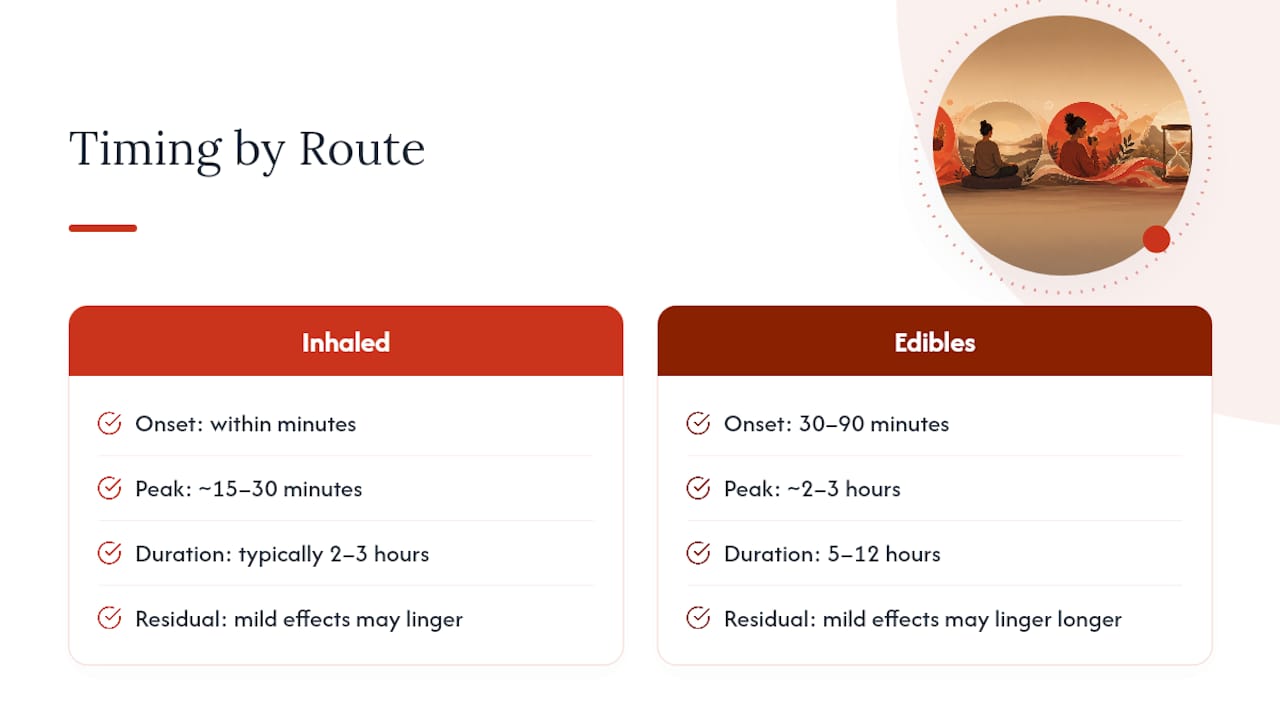
Route of administration changes everything about timing. Smoking or vaping hits within minutes, peaks around 15 to 30 minutes in, and typically fades over 2 to 3 hours. Edibles behave completely differently.
Ingested THC can take 30 to 90 minutes just to kick in, peaks around the 2 to 3 hour mark, and the total experience can stretch anywhere from 5 to 12 hours depending on dose, what else you ate that day, and whether alcohol is involved. Concentrates, high-dose products, and empty-stomach dosing all extend the timeline further.
Here’s the rough clock: in the first 30 minutes after inhaling, you’ll feel the effects building fast. With edibles, that same 30 minute mark might feel like nothing happened yet, which is exactly why redosing during that delayed window causes so many accidental overintoxication cases. Between 1 and 3 hours, inhaled THC is usually already softening while edibles are just hitting their peak. For the rest of the day, mild residual effects like grogginess or slower reaction time can linger even after the intense part passes. Don’t drive, bike, or operate machinery until you feel completely back to your normal baseline. For a full breakdown of edible timing, this guide on how long edibles last covers the variables in more depth.
When Should You Call Poison Control or 911?
Most uncomfortable highs resolve with rest and time. Some don’t, and knowing the difference matters.
- Call 911 immediately if you or someone else has severe trouble breathing, chest pain, a seizure, loses consciousness, can’t be woken up, is severely confused or hallucinating, is vomiting repeatedly, or becomes dangerously agitated.
- Call Poison Control at 1-800-222-1222 for adverse reactions that aren’t immediately life-threatening but feel wrong. They’re staffed by specialists who handle cannabis-related calls regularly and can advise on next steps without an ER visit.
- If someone is unconscious but still breathing, place them in the recovery position (on their side, head tilted back slightly) and stay with them. Do not force water or food into someone who’s drowsy or confused. Aspiration is a real danger.
- Save the packaging. If you know what product was used, hang onto it. Clinicians and poison control specialists can act faster with a product name, estimated dose, and timestamp than with vague descriptions.
Unknown or unregulated products deserve extra caution. Synthetic cannabinoids can cause far more severe and unpredictable reactions than regular THC, including seizures and cardiovascular problems. If you’re not sure what was in something, escalate sooner rather than later.
How Can You Avoid This Happening Again?
Prevention comes down to one phrase: start low, go slow. That’s especially true with edibles, where the delayed onset tricks people into thinking a dose “isn’t working” and taking more before the first one has even peaked.
- Wait the full onset window (up to 2 hours for edibles) before considering a second dose.
- Choose lab-tested products from a source you trust, so you actually know the potency you’re consuming.
- Keep a simple note of what you took, how much, the method, and the time. It takes ten seconds and becomes critical information if things go sideways.
- Never mix cannabis with alcohol or other drugs. The combination is unpredictable and raises risk significantly.
- Be extra cautious with concentrates and unfamiliar products. Potency varies wildly between them.
Aftercare matters too. Once you’re through the acute phase, hydrate, eat something real, and get a full night’s sleep. Check in with yourself the next day. If anxiety or brain fog lingers, that’s usually temporary, but if you notice a pattern of repeated overintoxication, that’s worth addressing directly rather than brushing off. For dosing specifics before your next purchase, this beginner’s guide to dosing edibles safely walks through practical starting amounts.
Where Can You Learn More About Safe Cannabis Use?
Highfashionsmokesandprints publishes educational resources specifically because too many people learn dosing the hard way. Guides covering edible timelines, THC beverage dosing, and next-day recovery exist so customers can make informed choices before they consume, not just after something goes wrong.
Every product sold through the platform is lab-tested, which matters more than most people realize. Knowing the actual potency of what you’re consuming is the single biggest lever you have over avoiding an uncomfortable high in the first place. Combined with age verification and same-day delivery windows across New York City, the goal is straightforward: get people real products with real information attached, not guesswork.
If you’ve made it through this article because tonight went sideways, the weed hangover remedies guide is worth bookmarking for tomorrow morning.
Can You Take Anything Over the Counter to Feel Better?
For most physical symptoms, plain over-the-counter basics work fine. A standard dose of ibuprofen or acetaminophen handles a headache without complicating things. Anti-nausea options like ginger candies or ginger tea are gentler choices than reaching for a stronger medication you haven’t tried before.
Avoid combining anything sedating, including sleep aids or antihistamines, since cannabis already slows reaction time and adding another depressant compounds that effect unpredictably. Melatonin in a normal dose is generally fine if you’re trying to fall asleep and ride out the rest of the high overnight.
Skip the temptation to self-medicate anxiety with someone else’s prescription antianxiety medication. Mixing benzodiazepines or other prescription drugs with THC without medical guidance adds real risk rather than removing it. If you take regular medications, especially anything affecting the heart or central nervous system, be aware that cannabis can interact with them in ways that aren’t always predictable. When in doubt, plain water, rest, and time outperform most pills you’ll find in a medicine cabinet.
What Is Actually Happening in Your Body During a High?
THC works by binding to cannabinoid receptors in the brain and body, and your liver has to metabolize it before the effects fade. That metabolism takes time no matter what you do. THC is fat-soluble, which is part of why edibles behave so differently than smoking. Once THC passes through your liver, it converts into 11-hydroxy-THC, a metabolite that’s actually more potent and longer-lasting than the original compound, which explains why edible highs often feel heavier and last longer than a joint or vape session.
Heart rate typically rises during the peak, blood vessels dilate (which is part of why eyes get red), and blood sugar regulation can shift, which is one reason people get intensely hungry. None of this is dangerous on its own for most healthy adults, but it does explain the physical sensations that can feel alarming in the moment: a racing pulse, warmth, or lightheadedness. Your body isn’t malfunctioning. It’s processing a compound that takes hours to fully clear, and the uncomfortable peak you’re feeling right now is not the same as the state you’ll be in three hours from now.
How Do You Manage Anxiety or Paranoia While You Wait?
Anxiety and paranoia are among the most common uncomfortable effects, and they tend to feed on themselves if you let your mind spiral. The fastest interrupt is shifting your attention to something concrete outside your own head.
Try the 5-4-3-2-1 grounding technique: name five things you see, four you hear, three you can touch, two you smell, one you taste. It forces your brain out of anxious loops and into the present moment. Slow breathing helps for the same reason. It gives your nervous system a physical signal that you’re safe.
Remind yourself, out loud if it helps, that this feeling is temporary and chemical, not a sign that something is actually wrong. Paranoid thoughts during a high are common and they pass as THC levels drop. Having a sober person nearby to say “you’re okay, this will pass” often does more than any technique alone. If panic escalates to chest tightness or a feeling of losing control entirely, that crosses into territory worth calling Poison Control about, just to be safe.
How Do You Deal With Nausea, Headache, or Dizziness?
Nausea usually responds to small sips of water, ginger, or simply lying still until it passes. Forcing food when you’re nauseated tends to backfire, so wait until your stomach settles before eating anything.
Headaches often stem from dehydration, so water is your first move before reaching for medication. A dark, quiet room helps more than most people expect, since bright light and noise both worsen head pain during a high.
Dizziness calls for sitting or lying down immediately rather than trying to push through it standing up. If you feel lightheaded in the shower or bathroom, sit down on the floor or edge of the tub instead of risking a fall. These physical symptoms are uncomfortable but they’re not dangerous on their own. They’re your body’s normal response to a compound working its way through your system, and they fade as THC levels drop.
Why Does Sleep Matter So Much for Recovery?
Sleep is genuinely one of the most effective tools available, because your body continues metabolizing THC while you rest, and unconsciousness removes you from the anxious thought loops that make a high feel worse than it is.
If you’re able to fall asleep safely (not in a dangerous location, not alone if you’re in genuine distress), doing so often means waking up feeling significantly more normal than you did a few hours earlier. Keep water nearby for when you wake up, and don’t set an alarm that will yank you out of sleep too early. Waking up naturally tends to leave you in a better state than being startled awake mid-recovery.
If sleep won’t come because your mind is racing, that’s where the breathing and grounding techniques matter most. Lying in a dark room with your eyes closed, even without falling fully asleep, still gives your nervous system a chance to settle.
When Does This Cross Into Something More Serious?
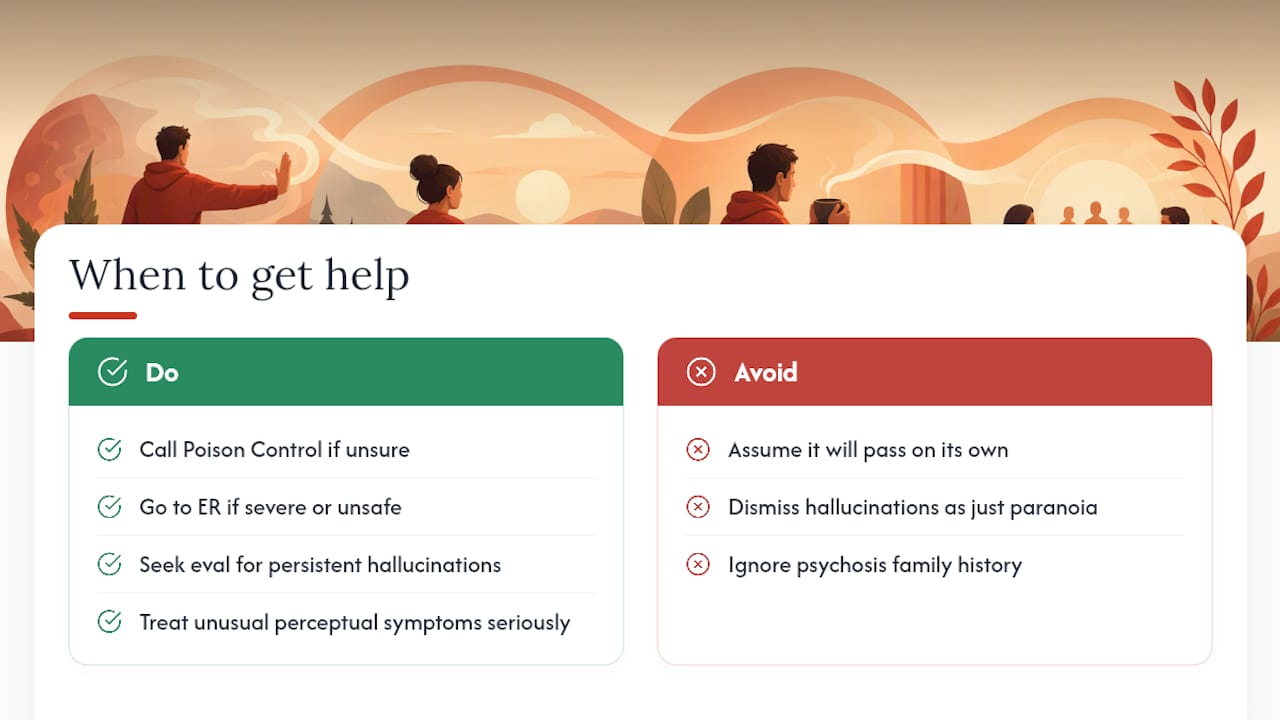
Occasionally, cannabis intoxication tips into something beyond ordinary anxiety or paranoia: full-blown panic, disorientation that doesn’t lift, or in rare cases, symptoms resembling psychosis (hearing things, seeing things, or losing touch with reality in a way that feels genuinely frightening rather than just uncomfortable).
If someone is experiencing hallucinations that persist, severe confusion, or behavior that seems disconnected from reality, that warrants professional evaluation. This is different from typical paranoid thoughts during a high, which tend to be fear-based and rooted in reality, even if exaggerated. Genuine psychosis symptoms are a break from reality altogether.
Call Poison Control first if you’re unsure whether what you’re seeing counts as an emergency. If symptoms are severe, escalating, or the person can’t be kept safe, go to an emergency room. Cannabis-induced psychosis is rare but real, and it resolves faster with professional support than by waiting it out alone. People with a personal or family history of psychotic disorders face higher risk and should treat any unusual perceptual symptoms seriously rather than assuming it will pass on its own.
It Happens to Almost Everyone Once
Getting too high isn’t a personal failing. It happens to first-timers and longtime users alike, often because a product was stronger than expected or a stomach was emptier than usual. There’s no shame in it, and there’s no need to overcorrect by swearing off cannabis entirely afterward.
If you remember nothing else, remember this: stop, sit, sip, wait. Those four words cover most of what actually helps. When you’re back to baseline, the resources on dosing and edible timing are worth a read before your next session, and if this keeps happening more than occasionally, that pattern is worth paying attention to rather than shrugging off.
— Jake
This article is general information, not a substitute for advice from a qualified doctor. Consult a qualified healthcare professional about your own circumstances before acting on anything here.
Sources
- The emergency department care of the cannabis and synthetic cannabinoid patient: a narrative review
- How to get unhigh: Tips to “sober up” from weed
- Cannabis (Marijuana) and edibles — CDC guidance on poisoning
- Marijuana — Poison Control articles
FAQ
Can You Have a Comedown From Weed?
Yes, a cannabis comedown is real and often includes fatigue, mild headache, grogginess, or low mood as THC clears your system. It’s typically mild and resolves within a day, especially with rest, hydration, and food.
How Long Does It Take to Come Down From a Weed High?
Inhaled THC usually fades within 2 to 3 hours, while edibles can last 5 to 12 hours depending on dose and what you ate. Residual grogginess can linger a few extra hours beyond the main effects.
How Do You Come Down Off a High Fast?
There’s no way to speed up THC metabolism, but stopping use, sitting in a calm space, breathing slowly, sipping water, and eating a light snack all reduce distress while you wait. Supportive care like this is the standard approach used in medical settings too.
What Does Coming Down Off Weed Feel Like?
Most people describe it as a gradual return to normal alertness, sometimes with mild fatigue, hunger, or a slight headache. For some, especially after a strong edible, mental fog or low energy can stretch into the next day before fully clearing.