Read our Google Birdeye Reviews
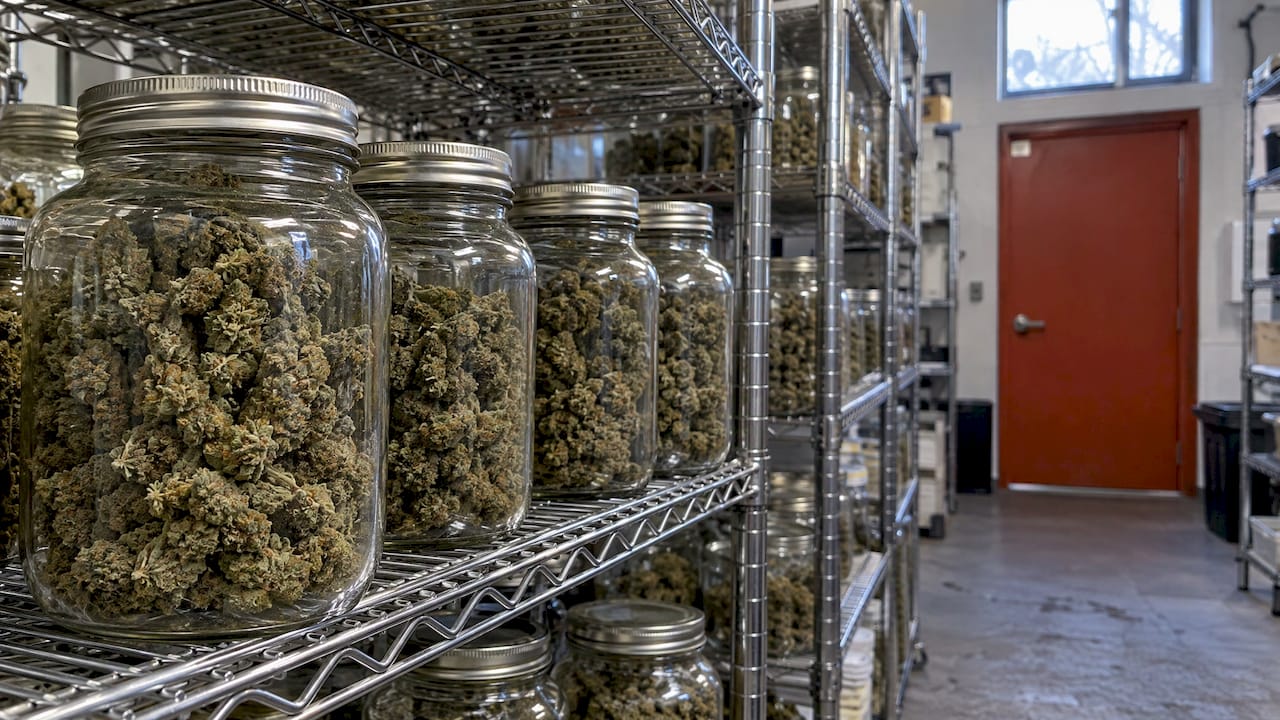
Curing is the slow aging step that follows drying. Dried buds rest in a controlled, low-oxygen environment while the last moisture evens out and harsh compounds fade. It is the reason well-made flower smells rich, burns smoothly and tastes like the strain it came from instead of cut grass. It mostly changes how flower tastes and feels, not how strong it is, and you can judge the result yourself with a few simple checks. We deliver lab-tested flower across New York City, and this guide shows what to look for in any jar.
TL;DR
- Curing is the slow maturation of dried buds, which lets chlorophyll and sugars break down and moisture settle evenly.
- It improves flavor, aroma and smoothness and helps flower stay shelf-stable. Research does not show it raising total THC.
- Typical cures run from a couple of weeks to a few months, with 4 weeks or more often cited for preserving cannabinoids and terpenes.
- Well-cured flower smells rich and specific to the strain, feels dry outside and slightly spongy, and never smells musty or like ammonia.
- Moldy flower cannot be saved. Store what you buy airtight, cool and dark.
Table of Contents
- What curing actually is
- Drying vs. curing: two different steps
- What happens inside the jar
- How long does curing take?
- Does curing make weed stronger?
- Can you smoke weed that was not cured?
- How to tell when flower is well cured
- Keeping cured flower in good shape at home
- Our view on curing
- Order tested flower in NYC
- FAQ
- Sources
What curing actually is
When a grower harvests cannabis, the buds are full of water. They are first dried, then cured. Curing is the aging or drying of harvested plant material to fine-tune its moisture and allow sugars and chlorophyll to decay before anyone consumes it. Chlorophyll is the green pigment in plants, and it is a big part of that grassy, hay-like taste in rushed flower.
The usual comparison is wine. The University of Saskatchewan’s gardening program describes curing as an optional but common final step in which the flavor profile matures, much like aging wine. Nothing is added. Time, air and moisture do the work.
Curing is not a separate product or a treatment. It is a stage of the flower’s life, and the quality of that stage shows up in everything you notice at the point of use: the smell when you open the jar, the way the bud breaks apart, the taste of the smoke and how harsh it feels in your throat.
Drying vs. curing: two different steps
People often use the words as if they mean the same thing. They do not.
Drying comes first. Freshly cut plants are hung or racked in a cool room so most of the water leaves. A common recommendation is 60 to 65 °F and 60 to 65% relative humidity. The Hawaii Department of Health’s medical cannabis registry says buds take about 7 to 14 days to dry, and some cultivars need three weeks or longer.
Curing begins once the buds are dry enough to be stable. They go into sealed containers, and the moisture left deep inside the bud slowly moves outward and evens out. Fat Nugs Magazine’s grower column frames the whole sequence as stabilizing and then maintaining water activity, which is a measure of how much of the water in flower is available to microbes. It also notes that once flower is water-stable, the real curing starts: carbohydrates break down into sugars, chlorophyll breaks down, and esters form. Esters are aromatic compounds, which is part of why cured flower smells more layered.
If drying is rushed, the cure cannot fix it. If drying is too aggressive, the flower ends up brittle and flat. The same column warns that overdrying halts the enzymatic processes that make weed smooth, which is why over-dried flower is harsh and flavorless.
What happens inside the jar
Three things matter for the person who eventually buys and uses the flower.
Harsh compounds fade
Chlorophyll keeps breaking down during the cure. Leafly explains that this removes the vegetal taste: without curing, weed would taste like a freshly cut lawn. That is the quality most people mean when they call a smoke smooth.
Terpenes are preserved
Terpenes are the aromatic molecules that give strains their citrus, pine, fuel or berry notes. They are fragile. According to Leafly, terpenes can degrade and evaporate at temperatures as low as 50 °F, so a slow, cool cure holds on to more of them than a fast, warm one. A 2024 Italian study found that storing flower in glass seemed to retain the original volatile profile better than open-air tray storage or a closed plastic box.
Moisture settles into a safe range
This is the part that protects you. Moisture that is too high invites mold. Greenhouse Grower notes that curing ensures a moisture level that prevents mold and pathogens and extends shelf life, since uncured cannabis can become moldy or develop mildew. Fat Nugs describes a water activity of 0.6, roughly 60% relative humidity, as the threshold at or below which microbes cannot propagate, and says most quality flower sits between 10% and 12% water content. Oregon State University Extension, writing about hemp, gives a similar picture: flowers kept at 55 to 65% moisture content with water activity below 0.65 during the cure.
How long does curing take?
There is no single number, because the answer depends on the strain, the starting moisture and what the grower wants the flower to taste like. The published guidance gives ranges:
| Source | Reported cure time | Notes |
|---|---|---|
| Leafly | About two weeks to a month | Container humidity of 55 to 65% |
| GreenState | 10 to 30 days in ideal conditions | Buds enter at 11 to 12% moisture and finish at 8 to 11% |
| Hawaii OMCCR | 4 weeks or longer | To preserve cannabinoids and terpenes while stopping mold and bacteria |
| University of Saskatchewan | Roughly 3 to 5 weeks of active jar care | Most bud is fully cured and storable for up to a year |
| Greenhouse Grower | Two weeks to six months | Longer cures for deeper development |
The differences make sense. A grower who wants flower that is pleasant after a couple of weeks and a grower aiming for a deep, aged profile are not trying to do the same thing. Fat Nugs says each cure depends on strain and preference, from flower that is smokable almost immediately to flower aged for six months.
What “burping” means
Small-scale growers cure in airtight glass jars and open them regularly, called burping, to release moisture and bring in fresh air. One schedule from Greenhouse Grower has growers burp twice daily in weeks 1 and 2, once every 48 hours in weeks 3 and 4, and not at all in weeks 5 to 8. The University of Saskatchewan suggests opening jars two or three times a day in week one, then once or twice a week for two to four more weeks. Fat Nugs advises filling containers about 70% full, leaving an air gap, so that each container can stabilize at 0.6 water activity.
You do not need to do any of this to enjoy flower. It is useful because it explains what a good grower is doing on your behalf and why a jar of flower can smell so different from another.
Does curing make weed stronger?
This is one of the most common questions, and the research points to a clear answer: curing mainly changes flavor, aroma and smoothness, not potency.
A January 2025 study of hemp by Baek, Grab and Chen found that curing did not significantly change total cannabinoid content. What it did change was the form of some cannabinoids. Plants make cannabinoids in an acidic form, such as THCA, and heat or light convert them to the neutral form, such as THC, through a process called decarboxylation. Under mild curing conditions that conversion was generally below 2% except for hot-air-dried samples. The Italian team behind the 2024 storage study likewise notes that light and heat favor decarboxylation.
What this means in practice: a higher number on a label does not tell you how pleasant the flower will be, and a long cure does not turn a mild strain into a strong one. If strength is your question, our guide on what actually determines cannabis strength goes through terpenes, cannabinoid ratios and how you consume it.
One caution from the research: the Baek team points out that most published curing research consists of reviews with limited experimental data, and they call for more studies. Treat any exact day count as a guideline, not a law.
Can you smoke weed that was not cured?
Yes. The University of Saskatchewan states there is nothing wrong with using cannabis as soon as it is dried, and adds that some strains are best used right away because of their terpene and volatile sulphur compound content. Curing is a quality choice, not a safety switch.
What you should expect from a rushed product is a grassier smell, a sharper taste and a harsher draw. Fat Nugs says rushed or over-dried flower tends to be harsh and flavorless. The safety side is different: flower that was never dried to a stable level can grow mold, and that is why moisture control, not just flavor, is the real reason professionals care about the cure.
How to tell when flower is well cured
When you order flower, you are looking at the result of someone else’s drying and curing. These checks work for any jar or bag, and they follow the signs described by the Hawaii registry, Greenhouse Grower and GreenState.
- Smell it. Properly cured buds smell rich and specific to the strain, and the Hawaii registry says they should not smell musty or moldy. A grassy or hay-like smell means more time was needed.
- Squeeze gently. The outside should feel dry, and the bud should be slightly spongy. Greenhouse Grower describes the same feel and gives 9 to 13% moisture as a target.
- Watch for ammonia. An ammonia smell on opening is a sign of excess moisture. GreenState calls it an early sign of mold, and Leafly says it means anaerobic bacteria are at work.
- Look at the bud. It should look intact and its color should be natural, with no fuzzy patches or white webbing.
- Read the label and test results. Moisture and microbes are things a lab can measure. Our guide to cannabis labels covers the checks to do before ordering, and our explainer on microbial testing shows what that part of a certificate screens for.
One rule has no exceptions. According to the Hawaii registry, moldy cannabis cannot be fixed and must be thrown out. Do not try to dry it or smoke around it. If you ever have a respiratory condition or a weakened immune system and are unsure about a product, talk to your doctor before using cannabis.
Keeping cured flower in good shape at home
Curing ends once the flower reaches you, but its quality depends on what you do next. Oregon State’s guidance recommends long-term storage in a cold, dry place around 18 °C and 45 to 55% relative humidity, since light, air and high temperature can reduce cannabinoid concentrations. Leafly says well-cured flower in an airtight container in a cool, dark place can keep for up to two years without significant potency loss, and the University of Saskatchewan says most cured bud stores for up to a year.
In a New York apartment, that means an airtight glass jar in a cabinet away from the stove, the radiator and the window. Our full guide on how to store cannabis flower covers containers and humidity, and if a jar has dried out, rehydrating dry weed explains how to do it without damaging the flower.
Our view on curing
We have been serving New York City since 2011, and the question we hear about flower comes down to the same thing: does it smell and smoke the way it should?
Curing is a big part of the answer. It is where flower gets its smoothness and its character, and it is the stage you can least fix after the fact. That is why we think the right way to shop is to look at the whole picture: how the jar smells, how the bud feels, what the label says and whether the product was tested and verified.
Our menu is built around tested brands and fair pricing, and we want you to be able to read a jar the way a connoisseur does. Strength is only one number. A strain’s smell, its terpene character and how it was handled matter just as much to how it feels.
If you are new, start with the checks above. If you already have favorites, use them to compare. Either way, order from a source that tells you what you are getting.
Jake
Order tested flower in NYC
If you would rather skip the guesswork, our menu has tested and verified flower, pre-rolls, vapes, edibles, concentrates, THC beverages, CBD products and accessories, with day and night menus, age verification and delivery tracking. You can order same-day or schedule a delivery window. Delivery fees start from $8 for Queens and from $12 for Manhattan and the Bronx. Browse the menu and place an order when you are ready.

If you want to plan around busy evenings, our page on weed delivery times explains how to schedule ahead, and the Manhattan delivery page has local details. You must be 21 or older to order.
FAQ
What is the point of curing weed?
Curing improves flavor, aroma and smoothness by letting chlorophyll and sugars break down and letting moisture settle evenly. It also brings flower into a stable moisture range, which helps prevent mold and extends shelf life. It is the step that separates grassy, harsh flower from smooth, aromatic flower.
Does curing make weed more potent?
Not in a meaningful way. A 2025 study found that curing did not significantly change total cannabinoid content, though it can slightly shift acidic cannabinoids toward their neutral forms. What you notice after curing is mainly a smoother, more flavorful experience.
How long does curing take?
Published ranges run from about 10 to 30 days at the short end to several months for a long, deliberate cure. The Hawaii registry says proper curing takes four weeks or longer to preserve cannabinoids and terpenes. The right length depends on the strain and the grower’s goal.
How do I know if flower is bad or moldy?
Musty, moldy or ammonia smells are warning signs, and so are fuzzy or webbed patches on the buds. Well-cured flower smells rich and clean and feels dry outside and slightly spongy. Moldy cannabis cannot be fixed and should be thrown away.
Sources
- Post-harvest processing of hemp flowers, Oregon State University Extension
- Why Curing Cannabis Is Critical to Plant Quality, Greenhouse Grower
- 5 Steps to Cannabis Curing Success, Greenhouse Grower
- OMCCR November 2024 Newsletter, Hawaii Department of Health
- Curing Cannabis, University of Saskatchewan
- Homegrown with Jim Berry: Drying and Curing Cannabis, Fat Nugs Magazine
- Drying and Curing Bud for the Best Taste, Smell, Potency, Leafly
- How to cure cannabis: patience key for perfect pot, GreenState
- Postharvest Drying and Curing Affect Cannabinoid Contents, PMC
- Postharvest Drying and Curing Affect Cannabinoid Contents, Plants (MDPI)
- The influence of drying and storage conditions, PubMed