Read our Google Birdeye Reviews
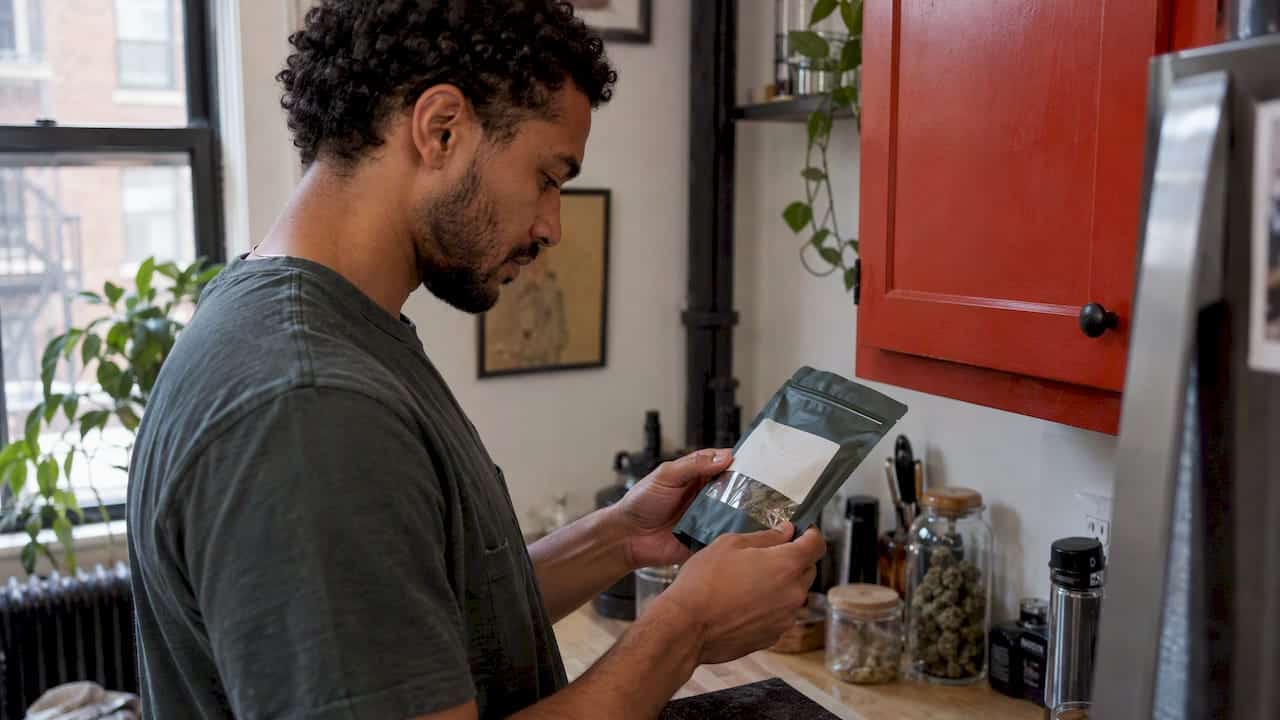
A terpene percentage tells you how much of a product’s weight is aromatic terpene compounds. A 2.5% reading means roughly 2.5 grams of every 100 grams of the tested material are terpenes. It is a measure of aromatic intensity, not of strength. It says nothing about how high you will get. THC percentage covers that.
The number is useful, but only if you know what it leaves out. This guide covers what the figure means, what counts as low, average and high, how New York labs report it, and where it misleads.
TL;DR
- Terpene percentage is the weight of terpenes as a share of the tested product, reported as % w/w on a lab Certificate of Analysis (COA).
- For flower, under 1% is generally read as low, 1 to 2% as average, and above 2 to 3% as strong. These are shopper rules of thumb, not legal categories.
- Total percentage tells you how loud a product smells. The ranked list of individual terpenes tells you what kind of product it is.
- Vapes and concentrates run higher than flower by design, and extraction can change the profile, so compare within a product type.
- In New York, terpene testing is mandatory for adult-use products, and inhaled products are capped at 10% total terpenes (with a variance allowance).
Table of Contents
- What a terpene percentage actually measures
- Terpene percentage vs. THC percentage
- What counts as a high or low terpene percentage
- Total terpenes is only half the label: read the ranking
- How New York tests and reports terpenes
- Why the same percentage means different things by product type
- Why the number on the label may not match what you smell
- A simple way to use terpene percentages when you shop
- Our perspective: smell first, then the number
- Browse by profile, delivered across the city
- FAQ
- Sources
What a terpene percentage actually measures
Terpenes are the volatile aromatic molecules behind the smell of citrus peel, pine, pepper or fuel in cannabis. Research on cannabis aroma identifies them as the most prominent contributors to the plant’s scent, with well over 100 distinct compounds described.
A lab measures them with gas chromatography and reports each one as a share of the sample’s weight. Add those shares up and you get the total terpene percentage. The unit on a New York COA is % w/w, meaning weight of terpene per weight of product. You can see the format on a published flower COA: a list of compounds such as alpha-pinene and beta-pinene, each with a result and a reporting limit (MRL), the smallest amount the lab can reliably report. Anything below that limit is shown as “< MRL”.
Two things follow from this:
- The percentage is small by nature. Terpenes are a minor fraction of dried flower. Most lab results land in the low single digits, so a difference of 0.5 points is a big relative difference.
- It is a snapshot. The number describes the sample tested on a specific date. Terpenes are volatile, so the jar you open weeks later may not match.
Terpene percentage vs. THC percentage
The two numbers answer different questions.
| THC percentage | Terpene percentage | |
|---|---|---|
| What it measures | Potency of the main psychoactive cannabinoid | Aromatic compounds in the product |
| Typical scale for flower | Often above 20% | Often 1 to 3% |
| What it predicts | How strong the product is | How it smells and tastes, and what profile it belongs to |
| What it misses | Flavor, aroma, character | Potency |
A 30% THC flower with 0.4% terpenes may hit hard but taste flat. A 22% flower with 3% terpenes may smell like a bag of lemons and feel more rounded. Shoppers who chase THC alone often end up disappointed for this reason. Our own terpenes guide goes deeper on the chemistry of individual compounds.
One caution on “feel”: the idea that terpenes and cannabinoids combine to shape the experience is the entourage hypothesis. The published review describes the evidence for synergy at the receptor level as still evolving. We covered why in our entourage effect piece. Treat terpene data as a guide to flavor and character first, and a rough hint about effects second.
What counts as a high or low terpene percentage
There is no official scale. Retail sources converge on a similar ladder for flower. One packaging industry explainer puts it this way:
| Total terpenes (flower) | Common reading |
|---|---|
| Below 1% | Low |
| 1 to 2% | Average |
| 2 to 3% | High |
| Above 3% | Exceptional |
Consumer forums and other guides shift the bar slightly. Some call anything above about 1% respectable and above 2% loud; others say 2 to 4% is what quality flower lists. Treat the ladder above as a range of opinion, not a rule.
A few practical notes:
- Under 1% often means a mild nose. It can come from the strain, from a harvest and cure that lost aromatics, or from age.
- 1 to 2% is where much good flower sits. Do not write it off.
- Above 3% will usually smell strong from across the room. Whether you like it is personal.
- Very high numbers are not automatically better. A heavy terpene load can taste sharp or feel harsh to some people.
The average profile also matters. Studies report that a handful of compounds, commonly myrcene, pinene, limonene and caryophyllene, often make up about 72% of a strain’s total terpene profile. So a high total usually means a big dose of a few familiar compounds, not dozens of exotic ones.
Total terpenes is only half the label: read the ranking
Two jars can both read 2.2% and be nothing alike. What separates them is which terpenes make up that 2.2%.
On a COA, look at the top three or four compounds by percentage:
- Myrcene dominant: earthy, musky, fruity notes. Often associated with relaxing, heavier strains. See which strains run highest in myrcene.
- Limonene dominant: bright citrus. Often associated with an uplifting reputation.
- Beta-caryophyllene dominant: peppery, spicy.
- Pinene dominant: pine and fresh herbs.
The research summary we rely on lists myrcene as commonly described as relaxing, limonene as uplifting, and caryophyllene as anti-inflammatory. These are descriptions of tendencies in the literature, not promises about what a product will do for you. If you want to understand how this plays out for stress, our terpenes and anxiety article looks at what holds up and what does not.
A good habit: pick the product’s top two terpenes first, then check the total. If you like lemony, peppery flower, you now have a repeatable way to find it.
How New York tests and reports terpenes
If you shop in New York, the percentage on your label has a regulated backbone. The state’s Office of Cannabis Management publishes testing limits that cover terpenes among other analytes. The key points from that document:
- Terpene testing is part of the required testing for final adult-use products.
- Results are reported as a percentage by weight on the Certificate of Analysis for each batch.
- For vaporized or inhaled products, total terpenes may not exceed 10% by volume, with a 15% variance allowance that stretches the ceiling to 11.5%.
Packaging rules matter too. State training material on packaging and labeling says the principal display panel must carry a terpene profile if terpenes are marketed. “Marketed” there includes a label that names a specific terpene, or a vape oil to which terpenes were added. So if a label brags about limonene, it should back that up with a profile.
That is why we tell customers to ask for or look up the COA instead of relying on a strain name or an Instagram caption. The COA is where the percentage becomes verifiable. For the bigger legal picture, see is cannabis legal in New York.
A worked example from a real vape COA
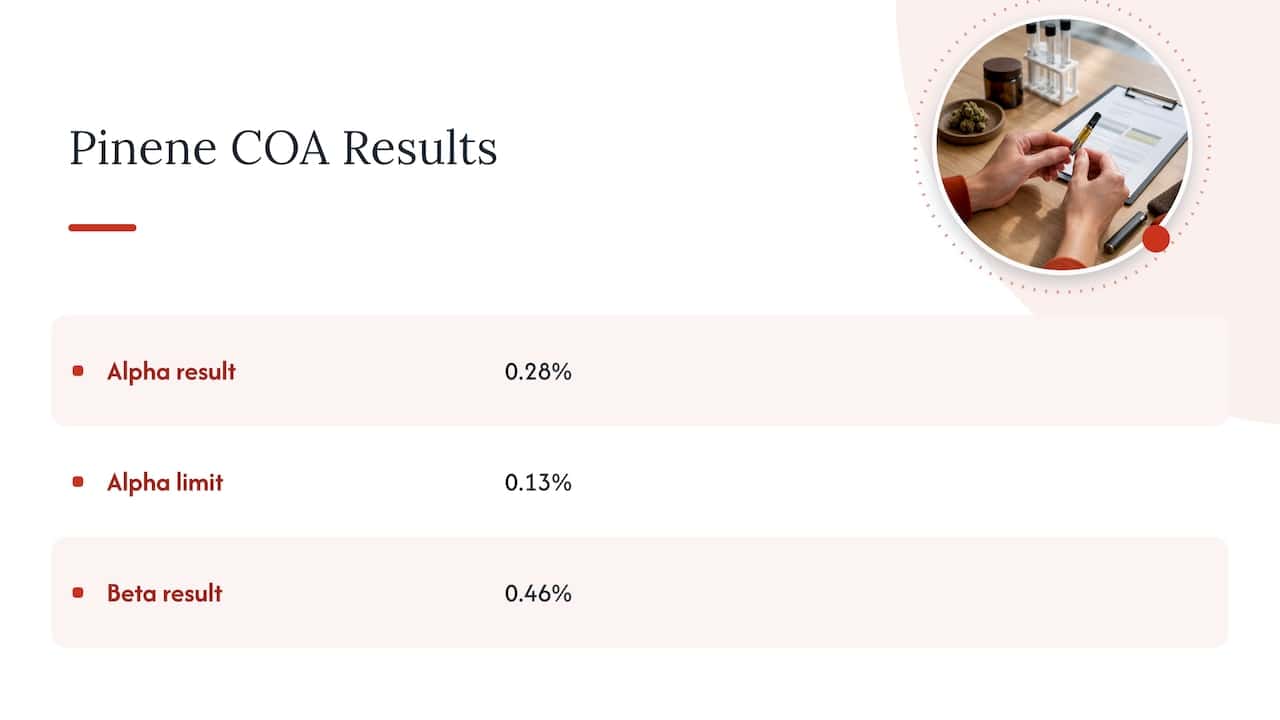
A published COA for an OG Kush vape from a New York lab lists compounds line by line. Alpha-pinene is reported at 0.28% against a reporting limit of 0.13%, and beta-pinene at 0.46%. To get the total, you add up every listed compound that came in above its limit. Do the same on any COA you are handed: the line items, not a single headline number, show the character of the product.
Why the same percentage means different things by product type
Do not compare a flower’s 2% to a vape’s 8% and conclude that one is richer in a meaningful way. Different forms behave differently.
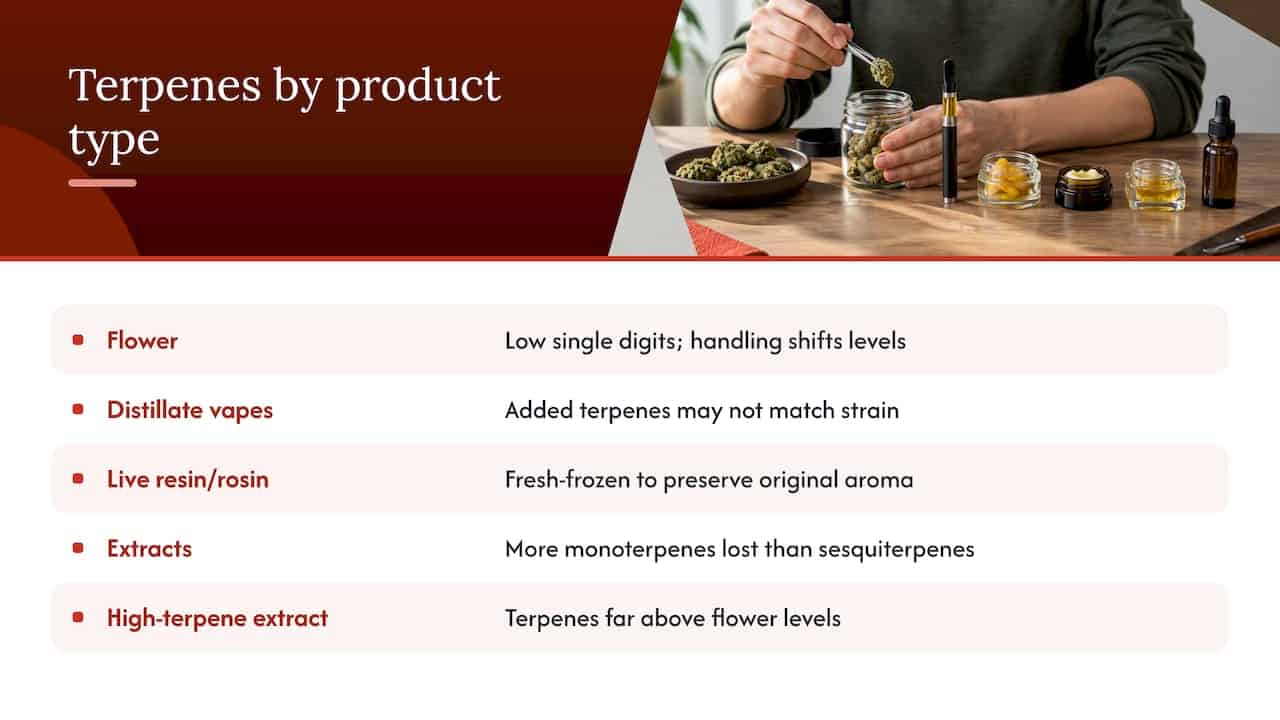
Flower. Terpenes sit in the trichomes. Low single digits is normal. Handling, drying and storage all shift the number.
Distillate vapes. Distillate is stripped nearly bare during refinement, so terpenes are often added back in. That is why the label rules treat added terpenes as marketed terpenes. The percentage can be high, but it reflects what was put in, which may or may not mirror the named strain.
Live resin and rosin. These start from fresh-frozen or carefully handled material to keep more of the original aroma. Our concentrates guide explains the label basics for each type.
Extracts generally. Experts note that extraction can change the chemical fingerprint: monoterpenes are highly volatile and often lost in greater proportion than sesquiterpenes, so a finished oil may not match the aroma of the original flower.
High terpene extract. If you see the phrase on a product, it generally means a terpene-rich concentrate, with total terpenes far above anything flower reaches. It is a different product category, not a stronger flower.
If you are choosing between forms, flower vs. vapes lays out the tradeoffs.
Why the number on the label may not match what you smell
Three things can open a gap between the COA and your experience.
- Age and storage. Terpenes are the fragile fraction of cannabis. A storage study summary found terpenes declined across conditions, and that extraction cut terpene content before storage even started. The same source reports that refrigerator temperature (4°C) is a better-supported compromise for whole flower than deep freezing, which can make brittle trichomes shed.
- Heat, light and air. All three speed up loss. A jar left on a sunny shelf will fade faster than one kept cool and dark.
- Batch variation. The COA belongs to one batch. A different batch of the same strain can read differently.
So a high number tells you what the product was when it was tested. How the retailer stored and moved it afterward is up to the seller. Look for recent batch dates and sealed, intact packaging.
A simple way to use terpene percentages when you shop
Here is the routine we suggest:
- Start with the form you want: flower, vape, edible, pre-roll or concentrate.
- Set a floor. For flower, many shoppers treat roughly 1.5 to 2% as a comfortable target, but your own nose decides.
- Read the top three terpenes, not just the total. Match them to flavors you enjoy.
- Check THC next, so you know the strength. If you are cautious about dose, our piece on low-dose THC for focus covers terpene-first picks at 1 to 2.5 mg.
- Check the batch date and pick the freshest.
- Keep notes. After a few purchases, you will see which compounds you keep coming back to.
If you are new, ignore the perfect number and aim for a profile you like in a modest dose.
Our perspective: smell first, then the number
We have been serving New York adults since 2011, and the most common mistake we see is shopping by THC alone. People pick the highest percentage on the menu, then wonder why one 28% jar is delightful and another is dull.
Our advice is to treat the terpene total as a loudness knob and the terpene ranking as a flavor map. We care about tested, verified products precisely because these numbers are only worth reading if the lab behind them is real. We also push back on any claim that a single terpene percentage guarantees a particular effect. The evidence for that is not there yet, and it is better to be straight with you.
When customers ask us what to buy, we ask what they like to smell. Citrus, pine, pepper, earth: that answer narrows the menu faster than any potency figure. After that, we look at the total and the batch.
— Jake
Browse by profile, delivered across the city
If you want to put this into practice, our menus cover flower, vapes, edibles, pre-rolls, concentrates, THC beverages, CBD and accessories, with same-day delivery in New York City. Delivery fees start from $8 in Queens and from $12 in Manhattan and the Bronx. You can check the full menu and delivery options or see our Manhattan delivery page. You must be 21 or older, and we verify age at checkout.
FAQ
What is a good terpene percentage for cannabis flower?
Most retail guides treat 1 to 2% as average, 2 to 3% as high and above 3% as exceptional, though forums and brands draw the lines a little differently. Anything under 1% usually means a faint aroma. There is no official standard, so use the range as a guide and trust your nose.
Does a higher terpene percentage mean a stronger high?
No. Potency is measured by THC and other cannabinoids. Terpenes shape aroma and flavor, and the idea that they change the effect is still being studied. A high-terpene, moderate-THC product can feel quite different from the reverse, but the label cannot promise how.
What does “high terpene extract” mean?
It refers to a concentrate made from cured cannabis that is very rich in terpenes, with far higher percentages than flower. It is a separate product type, not a measure of flower quality. In New York, inhaled products are capped at 10% total terpenes, with a variance allowance up to 11.5%.
Where do I find the terpene percentage on a New York product?
Check the batch’s Certificate of Analysis, which lists each terpene as % w/w. State packaging rules also require a terpene profile on the principal display panel when terpenes are marketed. If you cannot find it, ask the seller for the COA.
Sources
- New York OCM testing limits (May 2025)
- New York OCM packaging and labeling training (2026)
- Exploring Aroma and Flavor Diversity in Cannabis sativa L. (PMC)
- Extraction and chemotypic fingerprint research (PMC)
- How to Store Cannabis: What Research Actually Shows
- Sample flower Certificate of Analysis
- Sample vape Certificate of Analysis
- THC and terpene percentages in cannabis flower