Read our Google Birdeye Reviews
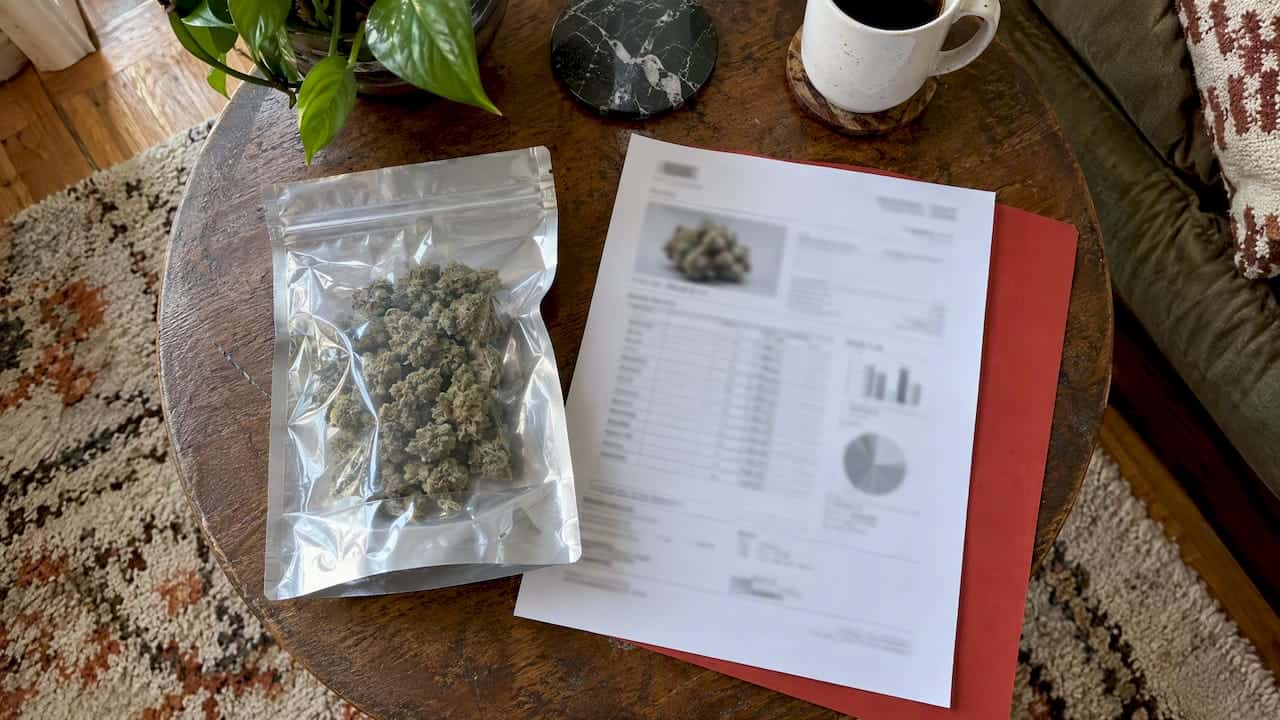
A cannabis COA, or Certificate of Analysis, is the lab report for one specific batch of a product. It shows how much THC and other cannabinoids the batch contains, which terpenes it carries, and whether it passed testing for contaminants such as pesticides, metals and microbes. In New York you can reach it from the QR code or link on the label, and reading it takes about two minutes once you know where to look.
TL;DR
- A COA is a third-party lab report for one batch. It confirms potency and safety for the sample tested, not for every product with the same name.
- In New York, licensed products must carry a link or QR code that leads to the COA. No link, no verification.
- Match the batch or lot number on your package to the COA first. Then check the safety panels, then the cannabinoid numbers, then the terpenes.
- Labeled THC can legally drift by 15% either way, so 24% on the jar and 22% on the report is not a red flag by itself.
Table of Contents
- What a COA is and why it exists
- Where to find the COA for a New York product
- Read it in five steps
- Special cases: concentrates, vapes and edibles
- Red flags that should make you pause
- COA vs. COC vs. SDS
- Our perspective
- Ready to order?
- FAQ
- Sources
What a COA is and why it exists
Think of a COA as a receipt from the lab. A licensed, independent laboratory takes a sample from a finished batch, runs a set of required tests and reports the numbers. The document lists the lab, the brand, the product and the results.
The point is that a label is a claim and a COA is evidence. Two jars can both say “hybrid, 25% THC.” Only one may have a report that backs that up. Research reviewing commercial products has found labeled potency and actual potency can diverge, which is why independent testing matters as a check on the market.
A COA also has limits. It describes the sample the lab received, so it is a snapshot of that batch rather than a guarantee about every gram. Results can vary between labs and between batches, which is why you want the report that matches your lot, not a generic one from the brand’s homepage.
Where to find the COA for a New York product
New York’s Office of Cannabis Management (OCM) requires licensed products to have a label with a link or QR code that takes you straight to the COA. OCM’s regulations also say the QR code providing COA access must stay available on the finished unit, and that distributors link the COA to the retail item in the state’s track-and-trace system.
In practice:
- Find the QR code on the retail package, not just on an outer box or sleeve.
- Scan it with your phone camera. It either opens the PDF or a page where you pick the right report.
- Keep the package handy so you can compare the batch number.
If a product has no QR code or link, treat that as a reason to stop. It may not come from a licensed, tested source. Our guide to label checks before you order covers the rest of what a compliant label should show.
Read it in five steps
COAs from different labs look different, but OCM notes they all contain the same kind of information. Work through them in this order.
Step 1: Match the report to your product
Start at the header. You will see the producer’s name and license number, a sample name and type (flower, pre-roll, edible), collection, received and reported dates, a report status, and a batch or lot identifier.
The batch or lot number is the one that matters. It should match your package exactly. One missing digit or prefix means the COA belongs to a different batch and tells you nothing about what you are holding. Also confirm the status is complete and final, and that the report date is plausible for the product’s age.
It is worth checking the lab’s license number against an official state database too, as independent researchers recommend.
Step 2: Scan the safety panels
Before you look at potency, check that the batch passed. Required testing for adult-use products in New York covers cannabinoid profiles, microbial contaminants (Salmonella, E. coli, Aspergillus), metals, pesticides, residual solvents and water activity or moisture. OCM publishes the permitted analytes and limits for each in that same document.
On the report, each panel shows a result and a status. A “PASS” means regulated contaminants fell below the state’s action limits. You will often see “ND,” meaning not detected. Anything other than ND must still sit well under the limit to pass.
| Panel | What it screens for | What you want to see |
|---|---|---|
| Pesticides | Residues from growing | ND or PASS |
| Heavy metals | Lead, mercury and similar | PASS, below limits |
| Microbials | Salmonella, E. coli, Aspergillus | ND or PASS |
| Mycotoxins | Toxins from mold | PASS |
| Residual solvents | Leftovers from extraction (concentrates) | PASS, or ND if solventless |
| Water activity / moisture | Mold risk and storage stability | PASS |
A failed panel on a product sold at retail is a serious problem. Do not argue with it: skip the product.
Step 3: Read the cannabinoid profile
This is the number most people look for. The report lists each cannabinoid as a percentage by weight, or in milligrams for edibles and beverages. THC and CBD come first, but you may also see CBG, CBN, CBC and minor compounds.
With flower, pay attention to two lines: THCA and delta-9 THC. Raw flower contains mostly THCA, which converts into THC when heated. Reports usually calculate a “total THC” line. The common convention multiplies THCA by 0.877 and adds the delta-9 THC, according to lab methodology described in plant patent filings. So a flower showing 28% THCA and 0.3% delta-9 works out to about 24.9% total THC, not 28%. If you see a label that promotes only the THCA figure, look for the total.
That difference also explains many “will 30% THCA get you high?” questions. Yes, THCA at that level converts to a strong product once heated, and the effective THC figure is lower than 30%. For the legal side, see our explainer on whether THCA is legal in New York.
Step 4: Check the potency variance
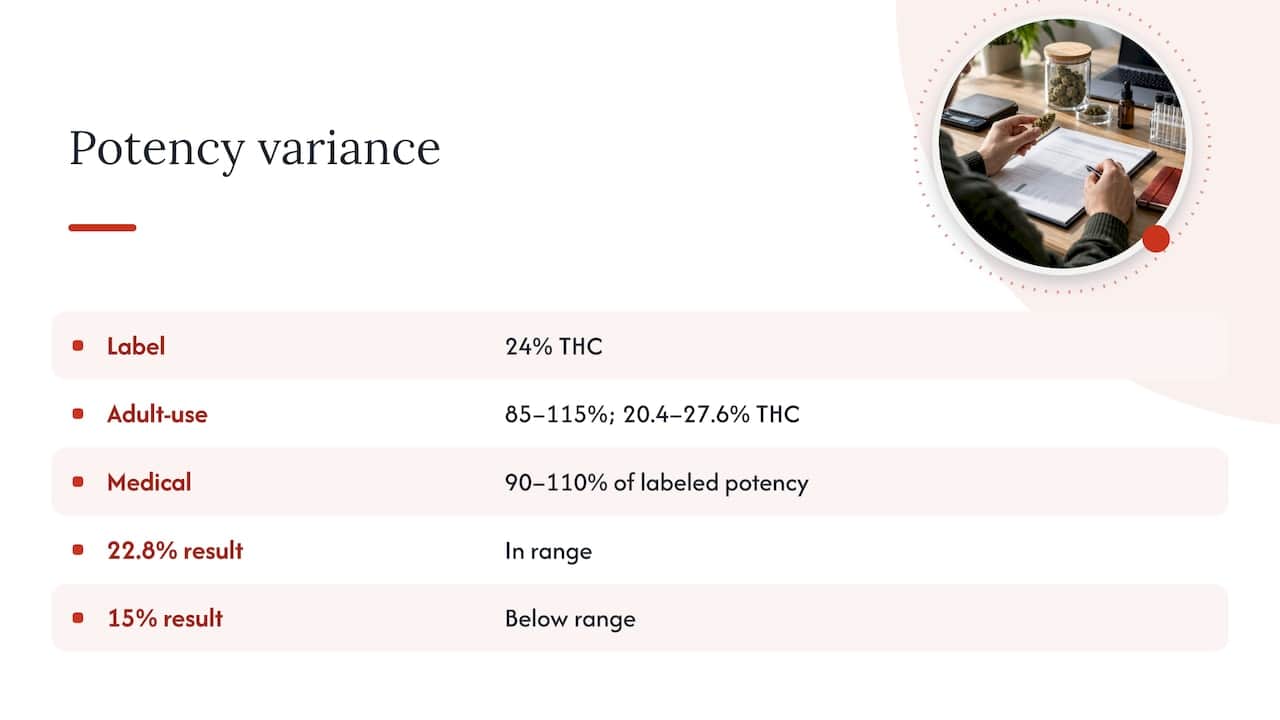
Labels are not exact. OCM’s testing guidance sets adult-use products to within 85-115% of labeled THC and CBD potency, a variance of plus or minus 15%. Medical products are held to a tighter 90-110%.
Worked example: a jar labeled 24% THC can legitimately test anywhere from 20.4% to 27.6% and remain in range. If the COA says 22.8%, that is normal. If it says 15%, the label is off and you should question the brand. Our post on spotting lab variability walks through quick checks for this.
Step 5: Look at the terpenes
Terpenes are the aromatic compounds that shape flavor and, many people feel, the character of the effect. A terpene panel lists each compound and its percentage, with the dominant ones at the top. Common ones include myrcene, limonene and caryophyllene.
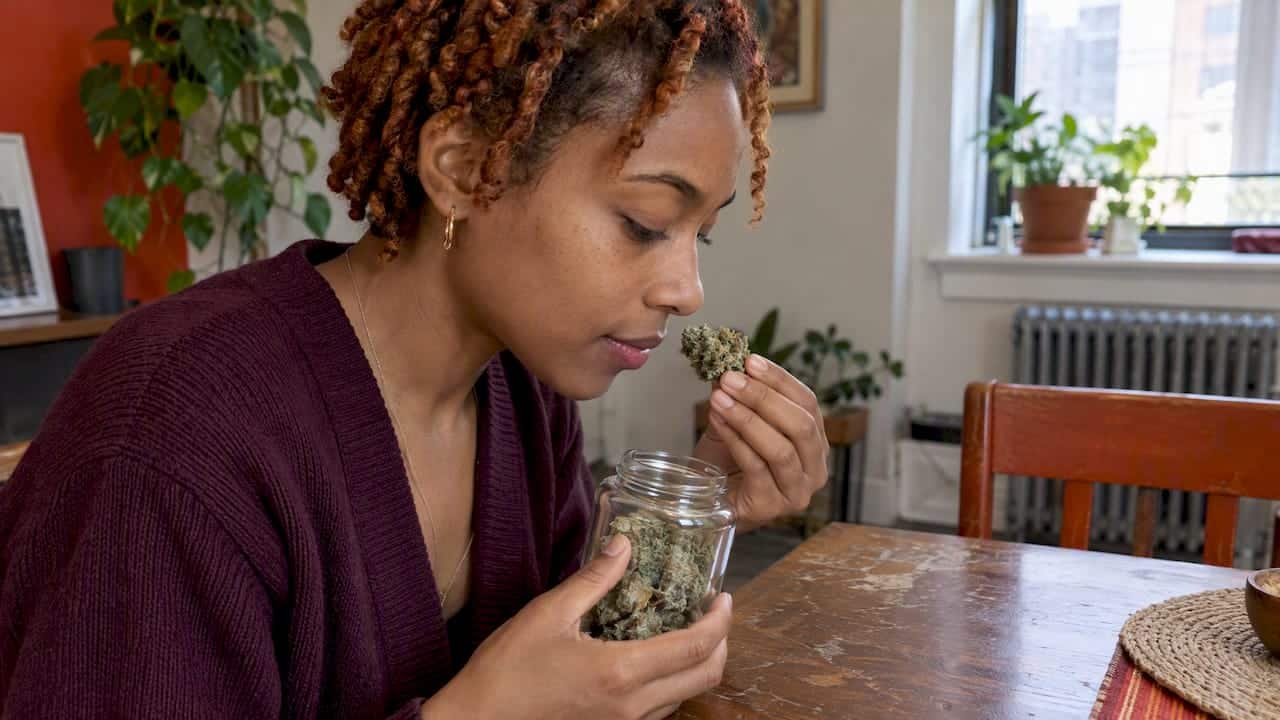
Terpenes are not a safety panel, so they will not make a product pass or fail. They help you compare. Two flowers with similar THC can feel and smell very different, and the terpene total (often one to three percent in good flower) hints at how fresh and well cured the batch is. If you shop by aroma, this is the section to read. For a quick routine that includes terpenes and freshness, see how to verify craft cannabis in NYC in under five minutes.
Special cases: concentrates, vapes and edibles
Concentrates. Extraction can concentrate whatever was in the starting material, so pesticide and solvent panels deserve extra attention. Practitioners advise looking for ND in the contaminant panels, and for solventless products like live rosin the solvent panel should read ND. A positive solvent reading on something sold as solventless is a major red flag. If you are new to extracts, start with our guide to reading concentrate labels.
Vapes. The same panels apply, and the cannabinoid total tends to be high. Check that the report names the actual product format (cartridge or disposable) and that the batch number is the one printed on the device packaging.
Edibles and beverages. Potency is reported per package and per serving in milligrams. Check that the per-serving dose matches the label, since an uneven mix can mean one gummy hits harder than the next.
Red flags that should make you pause
- No QR code or link on a retail package.
- Batch number mismatch between package and report.
- No third-party lab named, or a lab license you cannot verify.
- Missing panels. A report showing only THC and nothing on pesticides, metals or microbials is incomplete.
- Any solvent detected in a product marketed as solventless.
- Potency far outside the 15% window compared with the label.
- An old report attached to a product that has clearly been repackaged or renamed.
- A screenshot instead of the source. Open the report through the package’s QR code, not a file someone sends you.
A COA can also be faked or edited, so the lab name, license, date and batch number all have to line up. Don’t rely on a single element.
COA vs. COC vs. SDS
These three get mixed up. A COA reports test results for a product. A certificate of compliance (COC) is a statement that something meets a standard or specification, without necessarily listing the results. A safety data sheet (SDS) describes handling hazards of a material, mostly for workers and manufacturers. For choosing what to buy, the COA is the document you want.
Our perspective
We have been delivering in New York City since 2011, and one habit we try to build in customers is simple: read the lab report, not just the percentage on the front. A high THC number makes a good headline, but it says little about whether the batch is clean, fresh or consistent. We would rather you ask for a QR code and spend two minutes than buy on hype.
We sell lab-tested and verified products, and we publish plain guides like this one because a transparent market is better for everyone, including us. Our rule of thumb is to check the batch number first, the safety panels second and potency third. If anything about a product does not line up, tell us before you order and we will help you choose something that does.
— Jake
Ready to order?
If you are 21 or older and in New York City, you can browse our day and night menus of flower, vapes, edibles, concentrates, pre-rolls, THC beverages and CBD at High Fashion Smokes & Prints. Delivery fees start from $8 in Queens and from $12 in Manhattan and the Bronx. If timing matters, our page on weed delivery times by city shows how to schedule before the evening rush. Age is verified at delivery, and you can read what to expect in our NYC delivery rules guide.
FAQ
How do I know if a COA is real?
Open it through the QR code on the product package, then check that the batch number matches exactly and that the lab name and license number are listed. Confirm the lab’s license in an official state database. If the report is missing panels, dates or a batch ID, treat it as unverified.
Does a COA guarantee my product is safe?
No. It shows that the sample tested met the state’s limits, and it only describes that batch. It is strong evidence, and a clean report from an accredited lab is exactly what you should expect, but it is not a universal guarantee. If you have a medical condition or take medication, talk to your doctor before using cannabis.
Is a lower THC number on the COA than on the label a problem?
Not necessarily. In New York, adult-use products may fall within 85-115% of the labeled potency, so a modest gap is normal. A large gap, or a missing potency result, is worth questioning.
Do all cannabis products in New York have a COA?
Licensed products sold at adult-use and medical dispensaries must be tested and carry a link or QR code to the report. Every product form must be tested, with no exceptions, according to OCM. A product without a link may not come from a licensed source.
What is the difference between a COA and a COC?
A COA lists actual lab results for a batch. A COC only certifies that a product meets a stated standard. When you want to see what is in the product, ask for the COA.
Sources
- OCM: How to Read a Certificate of Analysis (CoA)
- OCM: Required testing and limits for adult-use and medical cannabis products (2025)
- OCM: Parts 128 and 129 packaging, labeling and COA access regulations
- Commercial Cannabis Product Testing: Fidelity to Labels and Regulations (PMC)
- Journal of Testing and Evaluation: independent cannabis lab testing research
- How to Read a Cannabis COA: Complete Guide (ZenWeedGuide)
- Plant patent PP31917, THCA conversion method