Read our Google Birdeye Reviews
Cannabis before a workout tends to make the session feel better, not perform better. A 2024 CU Boulder study found most users report higher enjoyment and lower pain, while a randomized crossover trial found no measurable gains in power output. If you try it, start with a low dose, pick a low-risk activity, and never drive while impaired.
TL;DR:
- Most users report increased enjoyment and decreased pain from cannabis, but only about 28.6% see any actual improvement in performance.
- Controlled studies find no significant physiological gains from pre-workout cannabis, though subjective experiences of focus and mood improve.
- Impairment from THC can raise injury risk, particularly during heavy lifts or technical sports, and may increase heart rate in individuals with cardiovascular issues.
- Smoking cannabis before exercise can irritate lungs, especially for those with respiratory conditions, while edibles or tinctures offer a lower-irritation alternative.
- Safe experimentation recommends starting with low doses, inhalation formats, and activities like walking or yoga, avoiding high-risk sports or technical movements while impaired.
Table of Contents
- Research snapshot: surveys and clinical trials on pre-workout cannabis use
- Why cannabis can make exercise feel different: biology and psychology
- Risks, contraindications, and safety rules for exercising while high
- How to try cannabis before a workout (if you choose to)
- Potential impact on respiratory health when smoking before workouts
- Interaction of cannabis with hydration and nutrition during exercise
- Effects of cannabis on different types of workouts
- Legal considerations around using cannabis in athletic contexts
- Safe, tested products and a straight answer on what the evidence shows
- If you decide to buy: where to get lab-tested, low-dose options quickly
- Sources
- FAQ
Research snapshot: surveys and clinical trials on pre-workout cannabis use
The evidence on cannabis and exercise splits cleanly into two camps: how people feel and what their bodies actually do. Self-reported surveys consistently show a mood and motivation boost, while controlled lab trials show almost nothing changes physiologically.
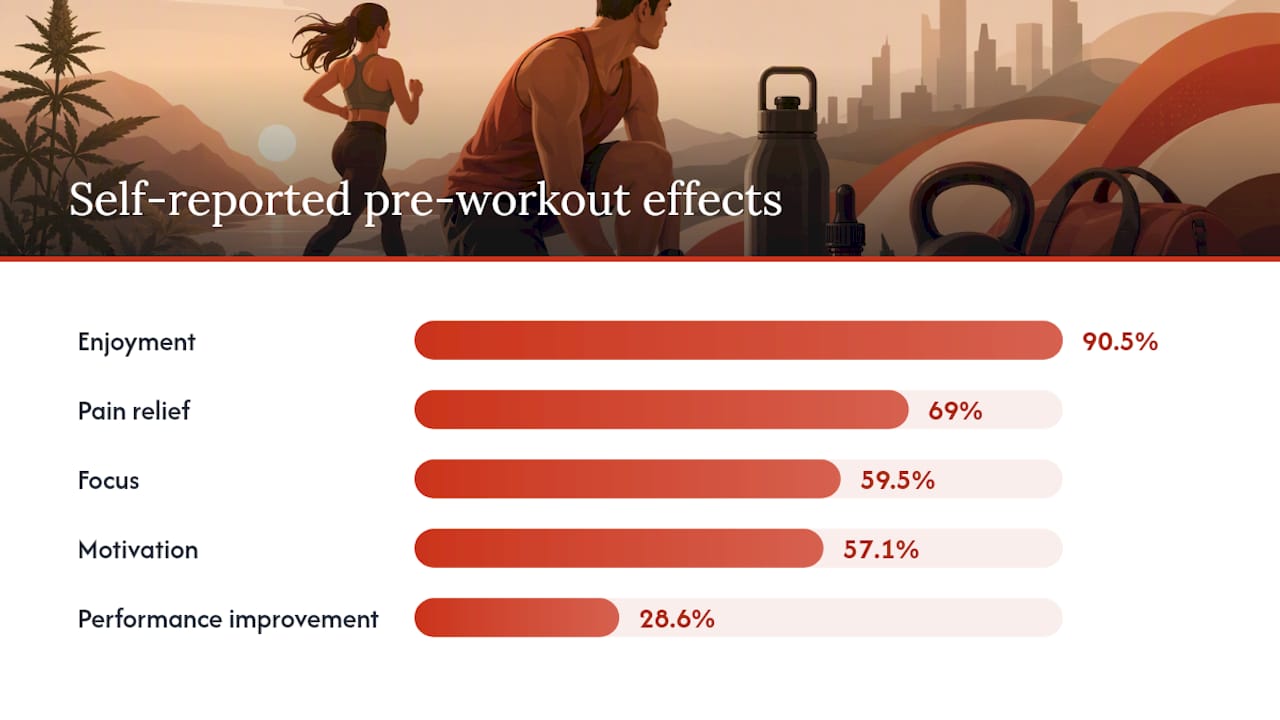
The CU Boulder summary of a Sports Medicine study surveyed cannabis users about their exercise habits and found striking self-reported patterns.
- 90.5% said cannabis increased their enjoyment of exercise.
- 69% reported decreased pain during activity.
- 59.5% noted increased focus.
- 57.1% reported increased motivation.
- Only 28.6% said their actual performance improved.
28.6% of surveyed users reported a real performance improvement from cannabis, according to the CU Boulder summary, while enjoyment and pain relief were reported far more often. That gap between feeling and function is the central finding of this whole research area.
A randomized crossover trial published on PubMed tested this directly. Habitual users took a 10 mg THC edible before cycle ergometer exercise, and researchers found no significant change in maximal power output or cardio-respiratory markers compared to a placebo.
A large survey hosted on PMC adds context on real-world habits: smoking flower was the most common method before activity, and people cited focus, enjoyment, and a stronger mind-body connection as their top reasons for combining cannabis with movement. These are convenience surveys of self-selected cannabis users, not randomized samples of the general population, so the reported percentages describe this specific group’s experience rather than a universal effect.
Why cannabis can make exercise feel different: biology and psychology
Your body already makes its own cannabinoids during exercise. Researchers at Wayne State University have pointed to endogenous cannabinoids as a likely driver of the so-called runner’s high, the same receptor system that THC and CBD interact with from outside the body.
THC binds to those receptors and tends to increase intoxication, which can also raise how hard a workout feels even when your heart rate and oxygen use haven’t changed. That mismatch between perceived and actual effort is part of why lab trials keep finding no physiological gains despite people feeling like they worked harder or enjoyed it more.
CBD works differently. It doesn’t produce the same intoxicating effect, so some users reach for it to potentially support mood or take the edge off soreness without the impairment that comes with THC. A CBD-focused resource on pre-training use covers this comparison for people weighing THC against CBD before a session.
Beyond the biology, cannabis changes subjective experience: time can seem to slow or speed up, focus narrows or wanders, and body awareness shifts. That can make a mundane walk feel absorbing, but it also makes your response harder to predict from one session to the next.
Risks, contraindications, and safety rules for exercising while high
Being high changes your coordination and judgment, and that matters more in a gym or on a trail than almost anywhere else.
- Balance and coordination drop under impairment, so heavy lifts, technical movements, or high-risk sports carry more injury risk while high.
- THC can raise heart rate, which is a real concern for anyone with heart disease or uncontrolled high blood pressure.
- Getting to your workout is its own hazard: never drive or operate machinery after consuming, and plan transportation before you use anything.
- Some people should skip this combination entirely, including first-time users, anyone on medications that interact with cannabis, pregnant people, and those with certain anxiety or psychotic disorders.
Health organizations including the Harvard T.H. Chan School of Public Health and the NHS both point to limited evidence and real safety concerns around coordination and cardiovascular strain, and recommend caution rather than routine use. If you manage chronic discomfort and are considering cannabis to stay active, a look at what the science says about cannabis and chronic pain covers that use case in more depth.
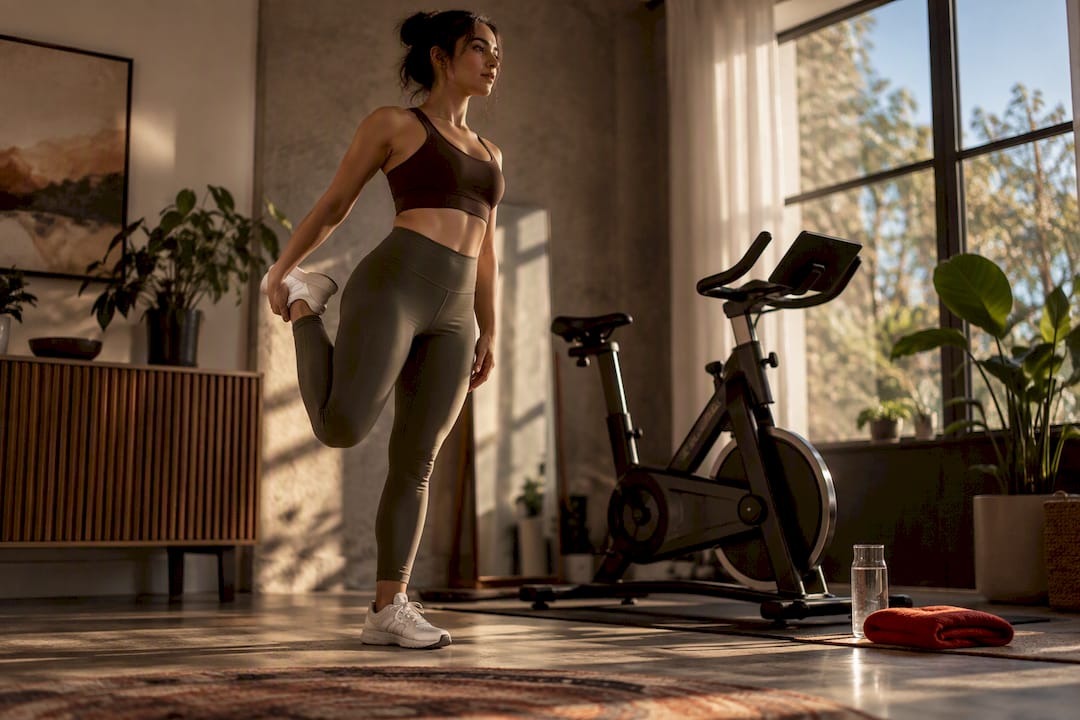
Pro Tip: If you’re new to combining cannabis and exercise, do your first session at home on a stationary bike or with light stretching, never on a trail, a heavy barbell, or behind the wheel.
How to try cannabis before a workout (if you choose to)
If you want to experiment, treat it like any new supplement: small dose, familiar activity, and a clear plan for how you’ll get home.
- Pick your format first. Inhalation (smoking or vaping) hits fast, often within minutes, which makes the effect easier to gauge before you start moving.
- Start with a low dose. New users should try somewhere in the 2.5 to 5 mg THC range, while habituated adults might test 5 to 10 mg, always with a low-THC or CBD-forward option first.
- Time it to your workout. Inhaled effects arrive in minutes, but edibles typically peak between 35 and 90 minutes after consumption, so plan your onset window well before you start rather than during warmup.
- Match the activity to the effect. Choose low-skill, aerobic, or mindful movement.
- Walking, hiking, or yoga suit an altered, unhurried state well.
- HIIT, heavy lifting, and sports requiring fast reactions are poor matches for impairment.
A comparison of flower versus vape formats breaks down onset speed and convenience if you’re deciding between inhalation methods, and a beginner’s guide to dosing edibles is worth reading before trying the slower-onset route. If you also rely on pre-workout caffeine, a rundown on mixing weed and caffeine is worth a look before combining the two.
Potential impact on respiratory health when smoking before workouts
Smoking anything, cannabis included, introduces combustion byproducts into your lungs, and doing that right before you ask your lungs to work harder is worth thinking through. Exercise increases breathing rate and depth, which means any airway irritation from smoke gets pulled deeper and faster during a workout than it would at rest.
People with asthma, exercise-induced bronchospasm, or any chronic respiratory condition are the most likely to notice this, sometimes as coughing, tightness, or a harder time hitting a normal cardio pace. Vaporizing is often chosen as a lower-irritation alternative to combustion, though it isn’t free of respiratory effects either.
If lung comfort during cardio is a concern, non-inhaled formats such as low-dose edibles or tinctures sidestep the smoke exposure question entirely, at the cost of slower, less predictable onset. For anyone with an existing respiratory condition, that trade-off is worth discussing with a doctor rather than guessing at the gym.
Interaction of cannabis with hydration and nutrition during exercise
Cannabis is well known for causing dry mouth, and that sensation can make it harder to judge how hydrated you actually are during a workout. A dry mouth is not the same as dehydration, but it can prompt either overdrinking or under-drinking if you’re using thirst as your only cue, so a normal hydration schedule based on time and sweat rate is more reliable than how thirsty you feel while high.
Appetite is the other piece. THC is well known for stimulating hunger, and that urge can show up before a workout is even finished, which may tempt you to cut a session short or skip a planned cool-down. It can also complicate pre-workout fueling: eating too much right before exercising while impaired adds a gastrointestinal discomfort risk on top of the usual advice against training on a full stomach.
Neither of these interactions is dangerous on its own, but both add friction to routines that normally run on habit and instinct. Planning your water and pre-workout snack the way you normally would, rather than reacting to cravings or dry mouth in the moment, keeps a cannabis-influenced session closer to a normal one.
Effects of cannabis on different types of workouts
Cardio and strength training respond to cannabis differently, mostly because of how each depends on steady pacing versus explosive output. Aerobic activity like walking, cycling, or hiking tends to tolerate cannabis use reasonably well: the PMC survey found hiking and aerobic machine use among the most common activities paired with cannabis, and the altered time perception and focus some users report can make steady-state cardio feel less tedious.
Strength training is a tougher fit. Heavy lifts demand precise coordination, tight bracing, and split-second attention to form, all of which are exactly what impairment degrades. The cycle ergometer trial that found no change in power output was testing habitual users at a modest 10 mg dose, not a novice attempting a personal record on a barbell.
Skill-based and reactive sports sit at the riskier end of the spectrum. Anything involving fast decisions, ball tracking, or contact carries more injury risk under impairment than a solo walk or a yoga class does, which is why most of the harm-reduction guidance in this space steers people toward low-skill, self-paced movement rather than competitive or technical activity.
Legal considerations around using cannabis in athletic contexts
Cannabis laws vary enormously by country and by region within countries, and what’s legal for personal recreational use is not automatically fine in a competitive or professional athletic setting. Many organized sports, from amateur leagues to professional and Olympic-level competition, maintain their own anti-doping and substance policies that can restrict or test for cannabis regardless of its legal status where you live, so a locally legal purchase doesn’t guarantee it’s permitted in your league or event.
Recreational use for personal fitness, outside of any competitive testing framework, is governed by wherever you happen to be: some places allow adult recreational purchase and use, others restrict it to medical use, and some prohibit it entirely. Age limits, possession limits, and where you’re allowed to consume also differ by jurisdiction. Before combining cannabis with any structured fitness program, especially one tied to a team, league, or employer, check the specific rules that apply to you rather than assuming general legality covers your situation.
Safe, tested products and a straight answer on what the evidence shows
We think the honest read on this topic is that cannabis is a mood and motivation tool for exercise, not a shortcut to better numbers. The research backs that up more clearly than most cannabis-and-fitness marketing lets on, and treating it that way, rather than chasing a performance edge that the trials don’t show, is the more useful mindset. Whatever you choose to use, lab-tested products with a visible certificate of analysis are the baseline for knowing what’s actually in your dose.
— Jake
If you decide to buy: where to get lab-tested, low-dose options quickly
If you want to try any of this with product you can trust, look for providers offering same-day delivery of lab-tested flower, vapes, edibles, and tinctures, so you’re never guessing at potency before a workout.

- Browse the full menu and place a same-day order for delivery across NYC.
- Compare flower and vape formats if you’re deciding how fast you want onset to hit.
- Check the dosing guide for edibles before trying a slower-onset option.
Age verification is required on every order, and responsible, low-dose use is always the better starting point than guessing your tolerance mid-workout.
Sources
- Study: Cannabis can make workouts more fun, but it’s no performance-enhancer | CU Boulder Today
- Edible marijuana and cycle ergometer exercise (PubMed)
FAQ
Is it better to smoke weed before or after a workout?
Using cannabis after a workout avoids any coordination or heart rate risk during exercise itself and is generally the lower-risk timing choice. Some people prefer it beforehand for enjoyment or focus, as reported in the CU Boulder survey, but that comes with impairment risk during the session.
Is it okay to smoke before a workout?
It can be okay for healthy adults doing low-risk, low-skill activity at a low dose, but it raises coordination and cardiovascular risks that make it unsuitable for heavy lifting, technical sports, or anyone with heart conditions. Smoking also adds respiratory irritation right before you ask your lungs to work harder.
Is weed good for pre-workout?
Weed tends to increase enjoyment, focus, and pain tolerance more than it improves actual performance. The CU Boulder study found only 28.6% of surveyed users reported a real performance improvement, while a controlled trial found no change in power output or cardio-respiratory markers.
Can weed ruin gym gains?
There’s no strong evidence that moderate cannabis use directly reduces strength or muscle gains over time, since the available trials focus on single-session performance rather than long-term training outcomes. What can hurt your gains is impaired form on heavy lifts or skipped structured training in favor of unfocused sessions while high.