Read our Google Birdeye Reviews
Cannabis and pets do not mix. THC is toxic to dogs and cats, and the most common accident is a dog eating an edible, a pre-roll or a vape cartridge it found within reach. Most dogs recover with veterinary care, but the experience is frightening and can be dangerous, so the goal is simple: keep every cannabis product locked away, keep smoke and vapor away from your animals, and call a vet or poison hotline right away if something goes wrong.
This guide covers the signs of poisoning, how much THC is a problem, what to do in the first minutes, how vets treat it, and how to set up a New York apartment so it never happens. It is for adult consumers who share a home with a dog or cat.
TL;DR
- If your pet ate any cannabis, call your vet, an emergency clinic or Pet Poison Helpline at (855) 764-7661 right away. Do not wait for symptoms.
- Signs can start within 30 minutes and last up to 72 hours: wobbling, lethargy, drooling, dribbling urine, vomiting, dilated pupils.
- Edibles are the highest-risk product because they pack lots of THC in a sweet form, and may also contain chocolate or xylitol.
- Store everything, including vapes and pre-rolls, in a locked or high cabinet, and keep pets out of rooms where you smoke or vape.
- Most dogs recover fully in one to two days with supportive care, but you should never try to treat it at home on your own.
Table of Contents
- Why THC hits dogs and cats so hard
- Signs of cannabis poisoning in dogs and cats
- How much is too much?
- What to do if your dog or cat ate weed
- How vets treat THC poisoning and what recovery looks like
- Smoke and vapor around pets
- Set up your home so it never happens
- CBD and hemp products for pets
- Our perspective
- Order discreetly and store it right away
- FAQ
- Sources
Why THC hits dogs and cats so hard
People get a pleasant high from THC. Dogs get something very different. The Merck Veterinary Manual explains that dogs have a high concentration of CB1 receptors in the cerebellum and medulla oblongata, which likely accounts for the loss of balance and the effects on the heart and breathing seen in this species.
Animals also have no idea what is happening to them. They cannot connect the strange feeling to a snack, so anxiety, vocalizing and agitation are common. Pet Poison Helpline states that THC is the compound most toxic to pets, while CBD can also cause trouble in large doses.
Dogs are the most frequent patients. A 2021 peer-reviewed review notes that cats tend to avoid scavenging and are less attracted to sugary products, so they eat baked pot products less often than dogs. That makes cats less likely to get into trouble, not immune. If a cat does get exposed, treat it as just as urgent.
Signs of cannabis poisoning in dogs and cats
Timing depends on how the THC got in. The Merck Veterinary Manual reports that inhaled THC acts within minutes, while ingestion produces signs within 1 to 2 hours, and up to 4 hours in dogs that have not eaten. Cornell’s veterinary college says signs can begin within 30 minutes to several hours and persist up to 72 hours.
Common signs include:
- Loss of coordination, stumbling or swaying
- Lethargy or unusual sleepiness
- Disorientation
- Urinary dribbling
- Strong reaction to sound or touch
- Dilated pupils
- Vomiting or drooling
In more serious cases, Cornell lists agitation, vocalizing, changes in heart rate or blood pressure, trouble regulating body temperature, tremors, seizures and coma.
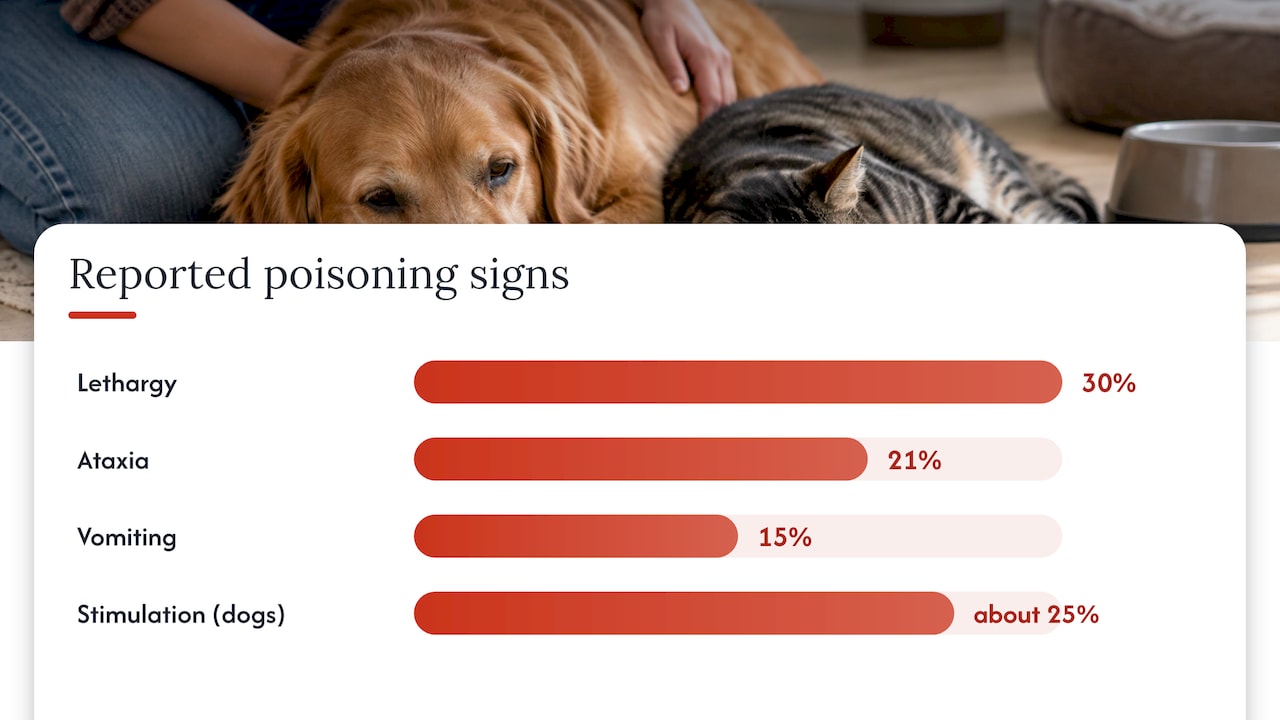
In Pet Poison Helpline cases from 2018 to early 2023, the Merck manual reports the most common signs were lethargy (30%), ataxia (21%) and vomiting (15%). Not every dog goes quiet, though. Today’s Veterinary Practice notes that about 25% of dogs show stimulation instead, so an unusually restless, wired dog also counts as a warning sign.
How much is too much?
There is no amount a vet will call safe. The numbers below help you describe the situation on the phone, they do not tell you when to relax.
The Merck manual says dogs can show mild signs at THC doses as low as 0.3 to 0.5 mg per kilogram of body weight, and moderate signs above 2 to 3 mg per kilogram. Do the math for a small dog: a 10 lb (about 4.5 kg) dog could show mild signs from only a couple of milligrams of THC. A single 10 mg gummy is far more than that.
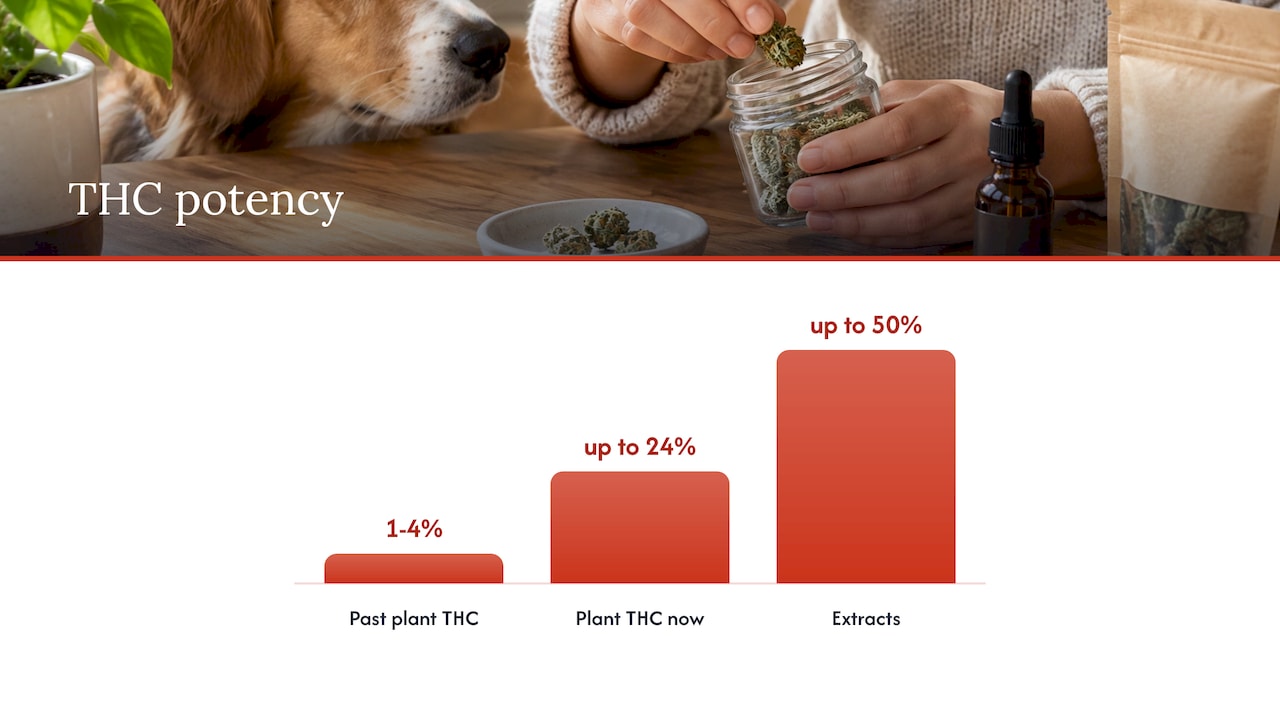
The same source says the probable oral lethal dose is very high for plant material, and no median lethal dose has been published. That is why most dogs survive. But potency has changed. Today’s Veterinary Practice reports that plant THC levels used to be 1% to 4% and can now reach 24%, with extracts up to 50%, and that a single brownie can hold several human servings. Concentrates can lead to coma and low blood pressure.
Labels are another reason to be cautious. The same article cites a study of 75 products in which THC content was accurately labeled in only 17%. Gummies can range from 1 mg to 300 mg or more. When you call a vet, give the product name, the package size and how much is missing, and keep the wrapper.
Chocolate and xylitol make edibles worse
Edibles are the most common route of exposure and can be the most dangerous. UrgentVet notes that brownies or gummies may contain chocolate or xylitol, toxic substances with more serious effects on pets than cannabis alone. If the edible contained either, tell the vet immediately, since it changes the treatment. Check the ingredients before you call.
What to do if your dog or cat ate weed
Act fast and stay calm. Here is the order that vets and poison hotlines recommend:
- Move your pet away from any remaining product and take the packaging away so nothing else gets eaten.
- Call right away. Pet Poison Helpline advises that if a pet has consumed marijuana by any measure, contact a veterinarian immediately or call (855) 764-7661. Hotlines may charge a consultation fee, so ask when you call. Your regular vet or the nearest 24-hour emergency hospital in your borough is also a good first call.
- Give honest details. Be straight about what it was, how much, when, and your pet’s weight. VCA Animal Hospitals notes that vets need accurate information about how the pet was exposed, because a pot brownie needs treatment for both cannabis and chocolate, while inhaled smoke may need respiratory care. No vet is there to judge you, and the truth can change the treatment.
- Do not make your pet vomit on your own. Cornell says dogs already showing signs should not be induced to vomit or given activated charcoal because of the risk of aspiration. Only do it if a veterinarian tells you to.
- Go in immediately for emergency signs. Trouble breathing, refusing to sit or stand, seizures or being unable to swallow normally all mean get to a vet as soon as possible.
- Keep your pet safe while you travel. Keep them warm, calm and away from stairs. A wobbly dog can fall.
A note on timing: a 2021 review says that if less than 30 minutes have passed since consumption, vets may decontaminate by inducing vomiting and giving activated charcoal. That is a decision for the veterinarian, which is another reason to call first.
How vets treat THC poisoning and what recovery looks like
There is no antidote for THC. Cornell explains that treatment focuses on supportive care: IV fluids, supportive medications and close monitoring. For more severe exposures, the vet may recommend intravenous lipid emulsion therapy, which helps the body clear fat-soluble toxins like THC faster.
The outlook is generally good. Cornell reports that most dogs recover fully in one to two days, and more serious exposures can stretch recovery to three days. Extremely high doses are rarely fatal, but deaths have been reported. A 2021 review says recovery may take 24 to 72 hours, or longer (up to 5 days) depending on the dose. Expect your pet to be sleepy, unsteady and clingy for a while, and keep them somewhere quiet, with a vet’s guidance on food and water.
Vets also watch for complications. The same review notes that when deaths occur, they appear to result from associated complications such as aspiration. That is why a pet that cannot stand or swallow should not be left to sleep it off.
Smoke and vapor around pets
Research on secondhand cannabis smoke in pets is limited, so the careful approach is to avoid it. UrgentVet says that secondhand smoke rarely causes intoxication unless the pet is in an enclosed space. Small New York apartments, bathrooms and closed bedrooms are exactly that kind of space.
Practical rules:
- Keep pets in a separate, well-ventilated room while you smoke, as VCA recommends. Better still, smoke outside where it can dissipate, on a balcony or away from the pet.
- Give extra space to pets with asthma, bronchitis or other breathing problems. Smoke of any kind can irritate them.
- Never blow smoke at a pet or let a pet lick ash, resin or residue from pipes and bongs.
- Ventilate after use and clean surfaces your pet sleeps on.
Vapes bring their own risks. An animal hospital blog points out that the biggest concern is that cartridges and pens left around can end up in a curious pet’s mouth, and that some vape ingredients, such as propylene glycol, are very toxic to cats. Treat a chewed cartridge as an emergency and bring it to the vet.
Set up your home so it never happens
Most poisonings are accidents involving a bag left on a coffee table, a gummy in a coat pocket or a bag in the trash. VCA’s advice is to treat cannabis like any other drug in the house: keep all forms of it out of reach and consider high cabinets or locked drawers.
A checklist that works in a one-bedroom or a brownstone:
- Lock it up. A lockbox or a high closet shelf your dog cannot reach by jumping or climbing on furniture. Cats climb, so high alone may not be enough for them.
- Use original packaging. Child-resistant packaging is useful, but a determined dog can chew through a bag, so keep it in the box too.
- Handle deliveries quickly. Take the bag inside and put it away before you do anything else. Do not leave a delivery on the floor while you answer the door.
- Mind the trash. Wrappers, roaches, empty cartridges and gummy packaging smell interesting. Use a lidded or closed bin.
- Tell guests. A friend’s jacket or bag on the floor is a common source of accidents. Ask guests to keep products stored.
- Know your emergency plan. Save your vet, a 24-hour animal hospital and the poison hotline number in your phone before you need them.
If you are new to cannabis, sound dosing habits at home help too. Our guides on three rules for safe cannabis use, dosing edibles safely and reading cannabis labels will help you know exactly how much THC is in what you own, which is exactly the information a vet will ask for in an emergency.
CBD and hemp products for pets
Many owners ask about CBD for their animals. Be careful here. Dr. Pavlovsky and the AVMA, as reported by the University of Illinois, warn that pet CBD products may not follow quality control standards: they may contain compounds not on the label and more or less CBD than stated. The same page says veterinarians cannot legally dispense or prescribe CBD under current state and federal law.
The FDA has also acted. In 2024 it issued a warning letter stating that certain hemp extract oil products for pets were unapproved new animal drugs. A 2021 review adds that US poison control organizations see up to 50% of pets exposed to CBD or hemp-labeled products develop signs that need veterinary care, suggesting these products may not be pure CBD.
So the rule is easy: human cannabis and CBD products are for adults only, and anything you want to give your pet should come from a conversation with your veterinarian. If you are curious about how the two compounds differ for people, see THC vs CBD.
Our perspective
We have served adult customers in New York City since 2011, and the question we hear most often from pet owners is how to keep their animals safe. Our answer is always the same: responsible ownership of cannabis includes responsible storage.
We built our brand around transparency, tested products and discreet delivery, and that fits with pet safety. When you know exactly what is in a product and how strong it is, you can store it properly, dose it carefully and give a vet accurate information if an accident happens. That is why we encourage customers to read labels and buy lab-tested products.
Our delivery is discreet and arrives in a specific window, so you can plan to be home, take the order inside and put it away right away. Choosing the right format matters, too. Products in sealed original packaging, such as pre-rolls and vape cartridges, are easier to lock up than loose items, and a lockbox is an easy add-on.
Love for animals and responsible cannabis use go together. Lock it up, keep the smoke away from your pets and keep that hotline number handy.
Jake
Order discreetly and store it right away
If you are an adult in NYC who wants tested products brought to your door, we deliver same day within specific time windows, with age verification and day and night menus. Delivery fees start from $8 in Queens and from $12 in Manhattan and the Bronx. Browse flower, pre-rolls and more on our menu.

Pick a delivery window when you will be home, bring the order inside and put it straight into your locked cabinet or box before the pets come to check it out.
FAQ
Will my dog be okay if they ate weed?
Most dogs recover. Cornell reports full recovery in one to two days for most dogs, up to three for more serious exposures. Deaths are rare but have been reported, particularly with highly concentrated products or edibles with chocolate. Call a vet or Pet Poison Helpline at (855) 764-7661 anyway, since early care lowers the risk of complications.
Is weed toxic to dogs?
Yes. THC is the compound most toxic to pets, and dogs are especially sensitive because of how their brain receptors are arranged. Signs like stumbling, drooling, dribbling urine and vomiting can appear within about 30 minutes to a few hours. Even small amounts can cause signs in small dogs.
My dog ate edibles. What should I do?
Call your vet, an emergency clinic or Pet Poison Helpline right away, and tell them the product, the amount and your dog’s weight. Check the ingredients for chocolate or xylitol and mention them. Do not induce vomiting unless a vet tells you to, and go straight to the clinic if your dog has trouble breathing, cannot stand or swallow, or has a seizure.
Can I smoke or vape around my pets?
It is best not to. Pets in enclosed rooms can be affected by smoke, and smoke can irritate animals with breathing problems. Smoke outdoors or keep pets in a separate, ventilated room, and keep vape cartridges well out of reach, since chewing on one is a bigger risk than the vapor.
Sources
- Cannabis (THC) intoxication in dogs, Cornell University College of Veterinary Medicine
- Toxicosis in Dogs and Cats From Tetrahydrocannabinol (THC), Merck Veterinary Manual
- My Dog Ate an Edible, Pet Poison Helpline
- Marijuana Intoxication in Cats and Dogs, Today’s Veterinary Practice
- Cannabis, Cannabidiol Oils and Tetrahydrocannabinol, Animals (MDPI), De Briyne et al.
- What To Do If Your Pet Eats Weed, UrgentVet
- Cannabis (Marijuana) Intoxication in Cats and Dogs, VCA Animal Hospitals
- Vape Safety Around Pets, Animal Medical Hospital & Urgent Care
- Do CBD Supplements for Pets Work? University of Illinois Veterinary Medicine
- FDA warning letter to Root Bioscience Brands, LLC (August 2024)