Read our Google Birdeye Reviews

The main types of weed grinders are split three ways: by number of pieces (two, three or four), by material (metal, plastic, wood) and by power (manual or electric). If you want to collect kief, you need a four-piece grinder with a screen and a catcher. If you only want an even grind with no fuss, a two- or three-piece metal grinder does the job. This guide explains each type, how teeth and screens change the result, and how to get the most out of the kief you collect.
TL;DR
- Two-piece grinders are the simplest. Three-piece models add a chamber that stores ground flower. Four-piece models add a screen and a kief catcher.
- Metal grinders are the standard choice for durability. Tooth shape changes how fluffy or crushed the grind comes out.
- Manual grinders give you control over texture. Electric grinders are faster but give you less control.
- To collect kief, grind in a four-piece grinder, then unscrew the bottom chamber and scrape out the resin powder.
- Kief can top a bowl or joint, be pressed into hash or rosin, or go into cannabutter.
Table of Contents
- Why a grinder is worth owning
- Types of weed grinders by number of pieces
- Manual vs. electric grinders
- Grinder materials: what to choose and why
- Tooth shape and grind quality
- Size: small, medium or large
- What is a kief catcher?
- Best grinder for kief: what to look for
- How to collect kief in a grinder
- What to do with kief
- Keeping a grinder clean
- How to choose: a quick decision guide
- Our perspective
- Get flower and accessories delivered in NYC
- FAQ
- Sources
Why a grinder is worth owning
A grinder breaks dried flower into small, even pieces. Even pieces burn more evenly, waste less and keep sticky resin off your fingers. That is the whole job, and the type you pick only changes how well it does it, how much it holds and whether it saves the resin that falls off the buds.
If you buy flower regularly, a grinder is the cheapest upgrade to how it smokes. A well-ground gram packs into a joint, pipe or cone more consistently than a gram torn apart by hand. Every flower strain we deliver across NYC benefits from it.
Types of weed grinders by number of pieces
The piece count is the first thing to decide, because it tells you what the grinder can do. Guides that sort grinders this way generally describe two-piece, three-piece and four-piece designs, and the differences are practical.
| Type | What you get | Best for | Watch out for |
|---|---|---|---|
| Two-piece | Lid and grinding chamber | Quick grinds, pockets, travel | You tip the ground flower out, and nothing separates kief |
| Three-piece | Adds a collection chamber under the teeth | Grinding ahead and storing ground flower | No screen, so no dedicated kief catcher |
| Four-piece | Adds a screen and a kief catcher | Anyone who wants kief | More parts to clean |
| Five-piece | Extra compartments for kief | Collectors who want two kief stages | Hard to find, and more to clean |
Two-piece grinders
A two-piece grinder is a lid with teeth and a base with teeth. You put flower in, twist, and open it to take the ground herb out. It is small, cheap to make and easy to clean, which is why it is the one most people start with. The downside is that every grind ends with flower stuck in the teeth and a bit of tapping to get it out.
Three-piece grinders
The third piece is a chamber below the grinding plate. Ground flower drops through holes into it and waits there until you need it. It keeps the mess in one place and lets you grind a few sessions’ worth at once. There is still no screen, so the resin that comes off stays mixed in with the herb.
Four-piece grinders
The fourth piece is the one that changes the experience. A fine mesh screen sits between the storage chamber and a bottom catcher. As you grind, the tiny resin glands that rub off the flower fall through the screen and collect below. Leafly’s explanation is simple: kief drops from the ground-flower chamber into the bottom catcher, where you can scrape it out. Over time that powder builds up into something worth using.
Five-piece grinders
Some grinders add a fifth part, usually a second kief compartment. They are uncommon, and most people find a good four-piece is enough.
Manual vs. electric grinders
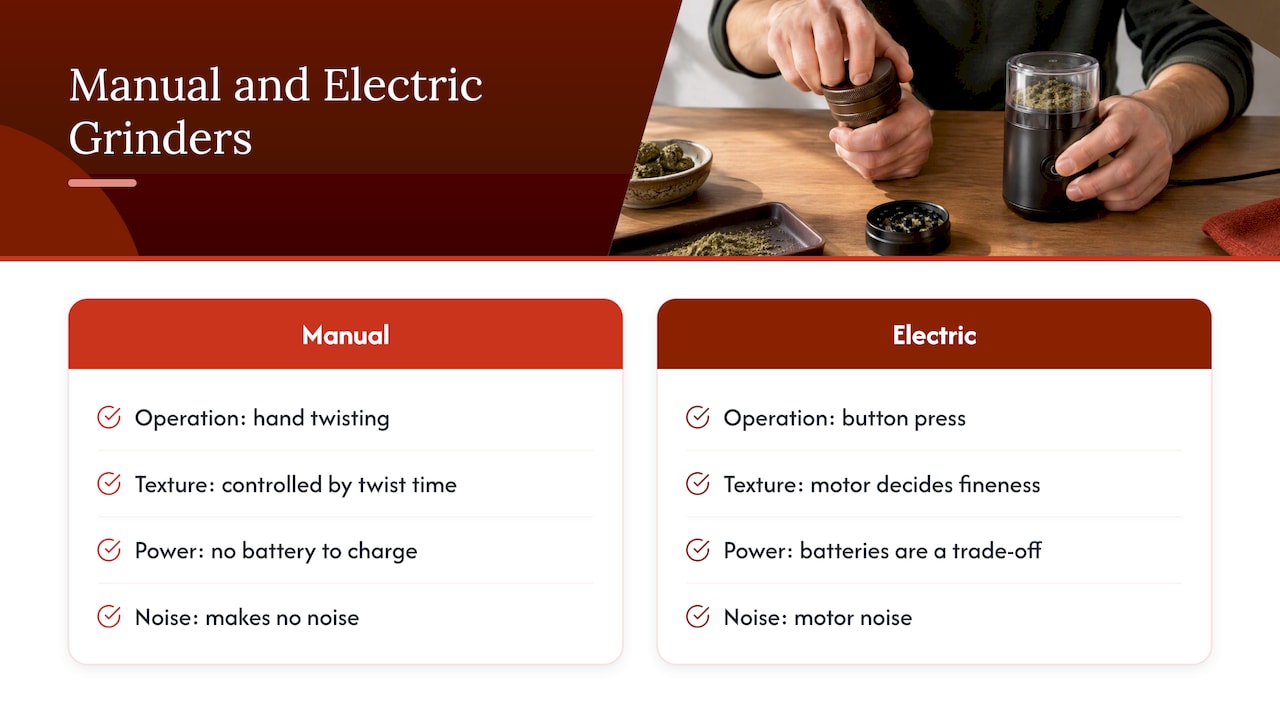
Among types of weed grinders, the other big divide is whether your hand does the work. Manual grinders need hand twisting, while electric ones work at the press of a button, according to Herb’s grinder guide.
Manual grinders are the default for good reason. You decide how coarse the grind is by how long you twist. They have no battery to charge, make no noise, and last for years. They also come in all four piece counts.
Electric grinders make sense if your hands tire easily, if you grind large amounts, or if twisting is painful. The trade-offs are batteries, motor noise and less control over texture, since the motor decides how fine the result is. A fast electric grind can turn flower to dust, which is not what you want for a joint that needs some structure to burn well.
For most people, manual is the better choice.
Grinder materials: what to choose and why
Material affects how long the grinder lasts, how sharp the teeth stay, and what ends up in your flower.
- Aluminum is the most common metal. It is light and affordable, and anodized versions have a finish that resists wear.
- Stainless steel is harder than aluminum, so it keeps its edge longer, though it is heavier and usually costs more.
- Zinc is typically the cheapest metal, and often heavier and rougher in feel.
- Plastic and acrylic are inexpensive and light. They can crack, and the teeth dull faster. Fragments can break off into your flower.
- Wood looks good but is harder to clean and not a first choice if you want kief.
If you will use a grinder daily, buy metal. Look for smooth threads and a lid that closes firmly, ideally with magnets so it does not open in a bag.
Tooth shape and grind quality
The teeth do the work, so they decide the quality of the grind. Three shapes come up most often:
- Diamond or pyramid teeth cut flower into a fluffy, even grind and grip well.
- Round pegs tend to crush and tear rather than cut, which suits some people and not others.
- Thicker, serrated or inverted-square teeth are built for sticky, resinous flower that clogs sharper designs.
There is a real durability point here. Cannabis Now’s review of one thick-toothed design notes that diamond-tooth grinders can create tiny metal burrs through friction, which is one reason some makers use thicker teeth. If you grind a lot of dense, sticky flower, thicker teeth are a sensible pick, and a clean, well-made metal grinder keeps this from being a concern.
Size: small, medium or large
Grinders run from small pocket models around 1.5 inches across up to 3 inches or more. Size does not change how the grinder works. It changes how much you can load at once and how easily it fits a pocket or a bag.
- About 1.5 to 2 inches: pocket-friendly, fine for one or two joints.
- About 2.5 inches: the all-round size for personal use.
- 3 inches and up: better for batches, pre-rolling or sharing.
If you want kief, go a bit larger. A bigger screen area collects more over time.
What is a kief catcher?
A kief catcher is the bottom compartment of a four-piece grinder. A mesh screen above it lets only the smallest particles through, which are mostly trichomes, the resin glands on the flower. Those fall into the catcher while the plant material stays above. Dry sifting is an old method: the Journal of Toxicological Sciences describes rubbing plant matter over a screen as one of the oldest ways to make kief.
So a kief catcher is the same idea in your pocket. You are doing small-scale dry sifting every time you grind.
Best grinder for kief: what to look for
If kief is the reason you are shopping, these features matter most:
- Four pieces. Only a design with a dedicated screen and catcher separates kief while you grind.
- Sharp, consistent teeth. Even grinding releases more resin without turning flower to powder.
- A strong, replaceable screen. Screens take the most wear, and a bent or torn one lets plant matter into your kief.
- Smooth threads and a firm lid. You will unscrew the catcher often, and rough threads clog with resin.
- Screen fineness. Finer screens tend to give cleaner, more golden kief but collect less and clog more easily. Coarser holes collect faster but let more plant matter through.
Your flower matters too. Fresh, properly cured buds hold their trichomes well. Very dry, old flower tends to crumble and gives less usable kief. If you pick up from us, the flower we deliver is a good place to start for resin-rich buds.
How to collect kief in a grinder
You do not need special technique. A few habits help.
- Load a four-piece grinder with broken-up flower, not a crowded handful.
- Grind normally, twisting the lid back and forth. Kief falls through the screen into the bottom chamber.
- Unscrew the catcher once you have a visible layer of powder, and scrape it out with a small tool or card.
- Store the kief in a small airtight container, away from heat and light.
Leafly suggests a clean penny or nickel dropped into the ground-flower chamber as a weight. It knocks resin off the screen and into the catcher as you shake the grinder.
Keep expectations realistic. It takes many grinding sessions to build up a useful amount, and a small catcher can take weeks to fill.
What to do with kief
Kief is concentrated resin, so a little goes a long way. According to Leafly’s guide to kief, common uses are:
- Sprinkled on top of a bowl or into a joint for extra potency.
- Pressed into hash.
- Pressed into rosin.
- Added to cannabutter for edibles.
Because kief is stronger than the flower it came from, start with a small pinch, especially if you are new to it. Wait before adding more. If you are comparing kief with pressed products, our guide to kief vs. hash explains how they differ.
Keeping a grinder clean
Resin builds up in the teeth and on the screen, and a gummed-up grinder is hard to turn and collects less kief. Freezing the grinder for a short while makes the resin brittle, so you can brush it out over a tray and keep the kief. Leafly’s cleaning advice is to rub sticky parts with isopropyl alcohol and salt, or brush kief off the screen. If you use alcohol, let every part dry fully, and do not consume any material that has touched it.
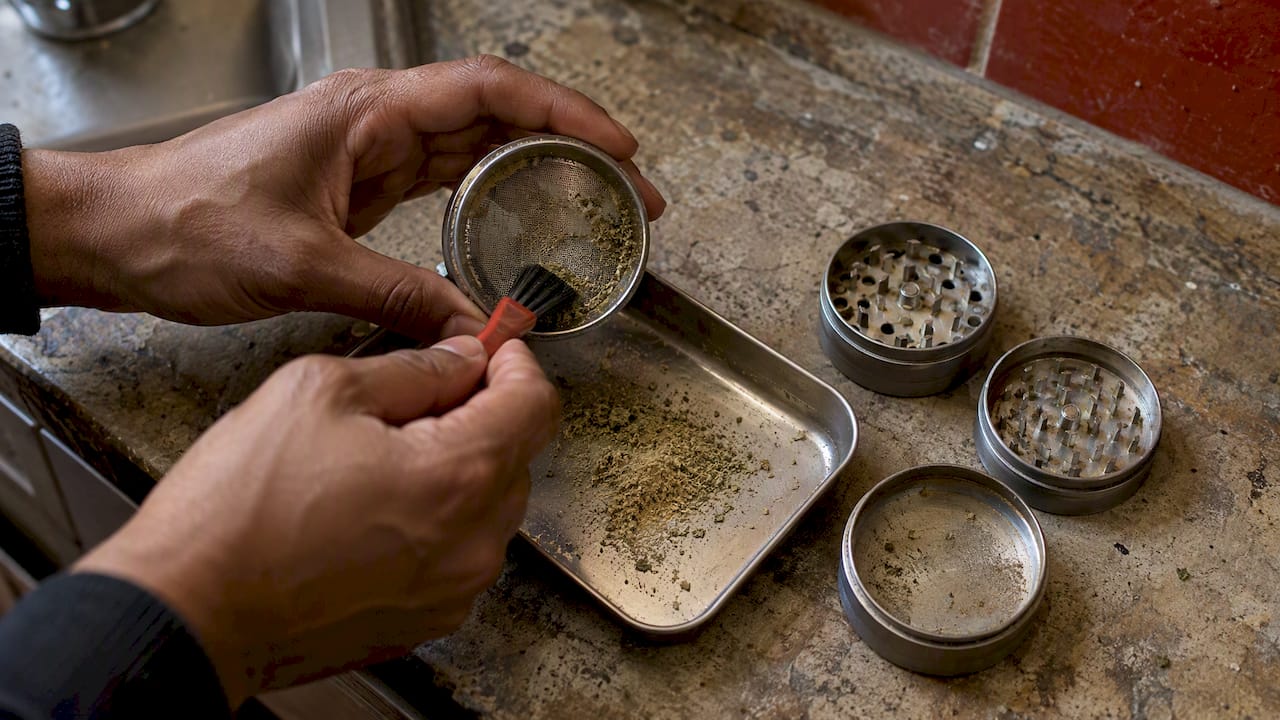
We wrote a step-by-step grinder cleaning guide that covers cleaning by material, so you do not damage the finish.
How to choose: a quick decision guide
- You want the cheapest, simplest option: a two-piece metal grinder.
- You grind ahead for the week: a three-piece metal grinder.
- You want kief: a four-piece, medium or large, with a replaceable screen.
- You have trouble twisting: an electric grinder, knowing you give up control over texture.
- You grind sticky, dense flower: thicker or serrated teeth in stainless steel or anodized aluminum.
Our perspective
We have been delivering to New York City since 2011, and grinders come up in nearly every conversation about flower. Our view is simple: the best grinder is the one you will actually use and clean.
For most of our customers, that means a four-piece metal grinder. You get an even grind today, and a little pile of kief that turns into something useful over the following weeks. It is the cheapest way to make good flower go further.
We also care about what you grind. We stock tested, verified products and publish guides like this one because informed adults make better choices. Pair a solid grinder with quality flower from our menu and the difference shows up in every session.
Jake
Get flower and accessories delivered in NYC
Once you have picked a grinder, you need something to put in it. We deliver lab-tested flower, pre-rolls, vapes, edibles, concentrates and accessories to adults 21 and over across New York City. You can browse day and night menus, verify your age securely and choose a delivery window.

Our published delivery fees start from $8 for Queens and from $12 for Manhattan and The Bronx. See the full menu and delivery options or check Manhattan delivery details if that is where you are.
FAQ
What is the best type of weed grinder for beginners?
A two-piece or three-piece metal grinder is the easiest place to start. They are simple, easy to clean and inexpensive. If you suspect you will want kief later, a four-piece costs little more and does the same job.
Do I need a four-piece grinder to collect kief?
Yes. Only a grinder with a mesh screen and a bottom catcher separates kief as you grind. Two- and three-piece models mix the resin into the ground herb.
How often should I empty the kief catcher?
Empty it whenever you see a visible layer of powder, usually every few weeks of regular use. Letting it pack down makes it sticky and harder to scrape out. Store what you collect in a small airtight container.
Is an electric grinder better than a manual one?
Not for most people. Electric grinders are faster and easier on the hands, but they need batteries, are louder and give you less control over how fine the grind is. Manual grinders let you stop exactly where you want.
Can I use kief if I am new to cannabis?
Yes, but start with a very small amount. Kief is stronger than the flower it came from, so a tiny pinch on a bowl or joint is plenty at first. Wait to see how you feel before adding more.
Sources
- Leafly: What is a marijuana grinder and how do you use it
- Leafly: What is kief and what to do with it
- Herb: The top weed grinders for perfect grinding
- Cannabis Now: Product review of the Santa Cruz Shredder
- Journal of Toxicological Sciences: Understanding dabs