Read our Google Birdeye Reviews
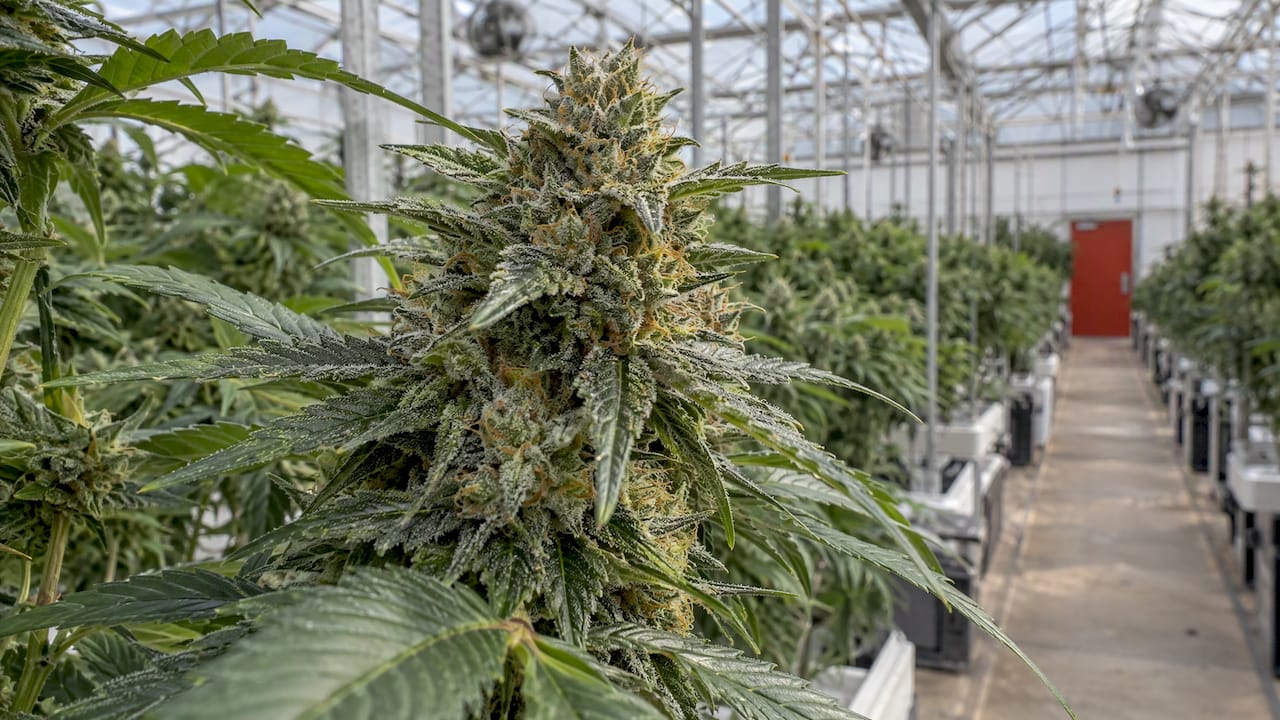
Cannabinoids and terpenes are two different families of compounds in the cannabis plant. Cannabinoids, such as THC and CBD, are the compounds that interact with your body’s cannabinoid receptors and drive most of a product’s effects. Terpenes are aromatic compounds that give a strain its smell and flavor, and they may shape how a product feels. A strong flower has both, and knowing which is which makes a label far easier to read.
TL;DR
- Cannabinoids (THC, CBD, CBN and others) are a chemical class unique to cannabis. THC is the main driver of the mental effects.
- Terpenes are aromatic compounds found across the plant world. In cannabis they shape aroma and flavor, and they may influence how a product feels.
- The “entourage effect,” the idea that the two groups boost each other, is still a hypothesis that clinical trials have not confirmed.
- “Indica” and “sativa” are weak predictors. The cannabinoid and terpene profile on the lab report tells you more.
- Terpenes are not the same as THC, and a high terpene percentage does not mean a stronger high.
Table of Contents
- What cannabinoids are
- What terpenes are
- Terpenes vs cannabinoids: the core differences
- Terpenes vs THC: which one makes the high?
- Are terpenes psychoactive?
- The entourage effect: what is proven and what isn’t
- Why indica and sativa are a weak guide
- How to use this when you shop
- Our perspective
- Order tested products with delivery across NYC
- FAQ
- Sources
What cannabinoids are
Cannabinoids are the signature chemistry of cannabis. The NIH’s National Center for Complementary and Integrative Health describes them as substances found in cannabis, and a 2021 academic review calls them terpenophenolic compounds specific to the plant, with 125 isolated or identified so far. That is a long list, but a handful do most of the work in the products you shop for.
- THC (tetrahydrocannabinol): per the NCCIH, THC is primarily responsible for marijuana’s effects on mental state. It is what people mean by “getting high.”
- CBD (cannabidiol): non-intoxicating, and the cannabinoid with the strongest clinical record. A 2024 review found the best evidence for medical cannabis benefit is CBD as an add-on treatment for intractable epilepsy, while THC may help with chronic pain and spasticity.
- Minor cannabinoids: CBN, CBG, THCV and others appear in smaller amounts. If you are curious about one of them, our piece on THCV and what human research shows is a good place to start.
Why raw flower isn’t the same as what you feel
Cannabinoids are made in the plant’s glandular trichomes, the tiny resin glands on the flower. In the living plant, THC mostly exists as THCA, and age or heat is needed to convert it into active THC. That is why a label can list THCA and THC separately, and why the math on “total THC” matters. We walk through it in our guide to THCA vs THC, dosing math and legal risk in NYC.
What terpenes are
Terpenes are the aromatic molecules behind the smell of citrus peel, pine needles and lavender. They are not unique to cannabis. What cannabis offers is a wide range of them, and they give the plant strain-specific properties such as aroma and taste.
They are also a meaningful share of the flower. A 2022 review reports that terpenes make up roughly 3 to 5 percent of the dry mass of cannabis inflorescence. In the plant they serve as defense and signaling chemistry. In your jar, they are the reason one strain smells like diesel and another like lemon candy.
Common ones you will see on menus:
- Myrcene: earthy, musky, often the most abundant. Our page on which strain has the highest myrcene goes deeper.
- Limonene: bright citrus.
- Beta-caryophyllene: peppery and spicy.
- Linalool: floral, lavender-like.
- Pinene: pine and fresh herbs.
For a shopper-level tour of the whole group, see Terpenes Explained: Your Cannabis Shopper’s Guide.
Terpenes vs terpenoids
You will see both words. The distinction is chemical: terpenes are hydrocarbons, while terpenoids are oxygen-containing terpenes. Terpenoids can form as flower dries and cures, and in everyday shopping people say “terpenes” for both. You do not need to track the difference to choose well.
Terpenes vs cannabinoids: the core differences
| Cannabinoids | Terpenes | |
|---|---|---|
| What they are | A chemical class specific to cannabis | Aromatic compounds found in many plants |
| Main job for you | Drive the effects (THC intoxicating, CBD not) | Aroma and flavor, possible influence on the experience |
| Where they sit on a label | Percent or milligrams of THC, CBD, others | Total terpene percent, sometimes a breakdown |
| Evidence base | Large, including approved drugs and clinical trials | Growing, but mostly early-stage |
| Intoxicating? | THC, yes | Not on their own in the way THC is |
The academic framing is simple: cannabinoids are a specific chemical class found in cannabis, and terpenes are non-cannabinoid constituents. Cannabinoids are defined partly by how they interact with cannabinoid receptors or other pharmacological targets.
There is one wrinkle. Researchers Hanuš and Hod note that beta-caryophyllene can interact directly with CB2 receptors of the endocannabinoid system. So the line between the two groups is clean chemically, but not entirely clean in how they act.
Terpenes vs THC: which one makes the high?
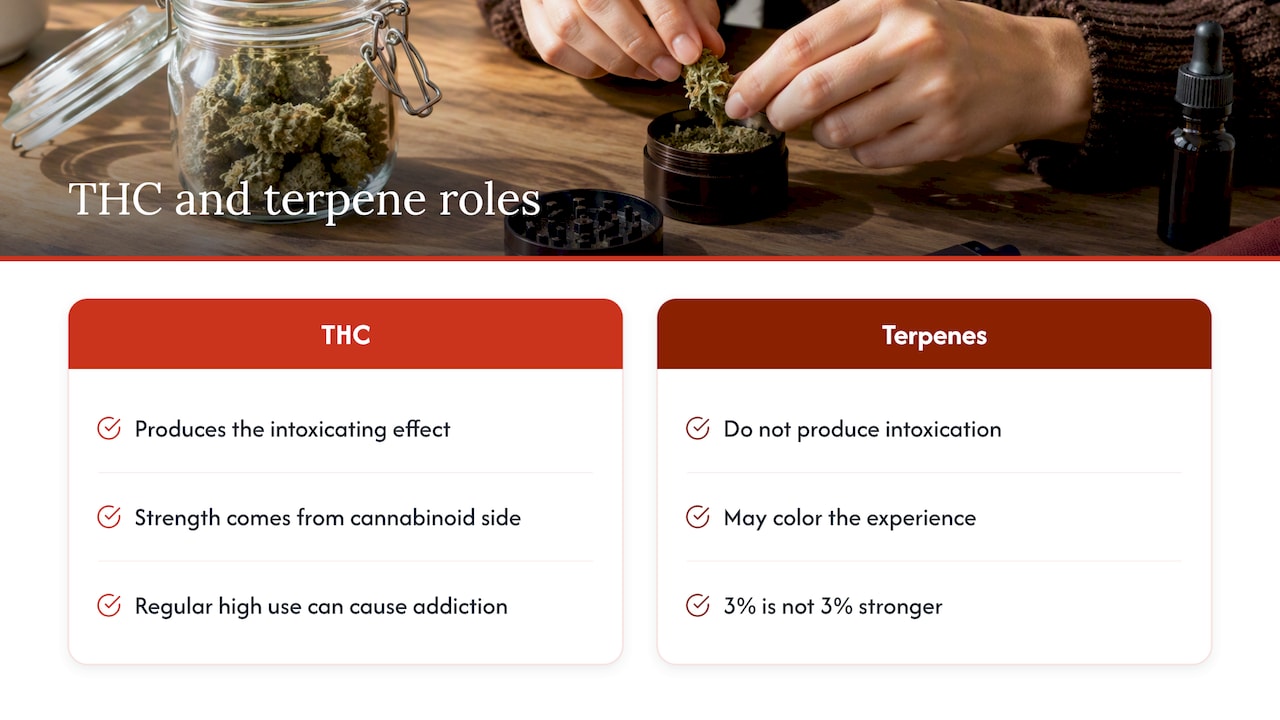
If you searched “terpenes vs THC,” here is the direct answer: THC is the compound that produces the intoxicating effect. Terpenes do not do that job. What terpenes may do is color the experience.
Cannabis Evidence, a clinician-oriented resource, says terpenes may be part of the reason products with the same THC and CBD content can feel different. That matches what many shoppers report: two 24 percent THC flowers that do not feel alike.
This is also why a high terpene number is not a power rating. A flower with 3 percent terpenes is not “3 percent stronger.” Strength comes from the cannabinoid side, and terpene percentage is about aromatic richness and freshness of handling. Our guide to reading a terpene percentage on a cannabis label shows how to use that number sensibly.
THC itself deserves respect. A 2024 review notes that regular use of high-THC cannabis can lead to addiction (cannabis use disorder) and may cause temporary mental, gastrointestinal or cardiovascular issues. If you are new, start with a low dose, wait before taking more, and talk to a clinician if you have a heart condition, a mental health history or take regular medication.
Are terpenes psychoactive?
Not in the way THC is. Terpenes are smelled and tasted, and researchers study whether they modulate mood or alertness, but nothing on a menu lets you swap THC for a terpene and expect a high. Some guidance does link specific terpenes to feel. One 2020 study suggested a sample with over 0.5 percent myrcene may lean sedating, while lower levels may feel more energizing. Treat that as a rough pattern, not a promise. Individual response varies by dose, tolerance, method and body chemistry.
If you are curious about terpenes and mood, we cover it in the role of terpenes in anxiety relief, and for evening use see does cannabis affect sleep quality.
Can you smoke just terpenes?
Terpenes are normally part of the flower, vape or concentrate you already use, so you take them in alongside cannabinoids. We do not suggest inhaling isolated terpene products as a standalone item. Heating and inhaling compounds designed for flavor or fragrance is not the same as using a tested cannabis product, and we are not aware of reliable guidance that treats it as a safe routine. If you have asthma, a lung condition or any respiratory concern, ask your doctor before choosing how to consume.
The entourage effect: what is proven and what isn’t
The entourage effect is the idea that cannabinoids, terpenes and other plant compounds work together so the whole is greater than the sum of its parts. It is popular in marketing, and it is a reasonable thing to wonder about. A 2024 systematic review describes it as a hypothesized synergy that remains unproven in clinical trials, and says further trials are needed to test whether terpenes enhance effects.
That is not the same as saying terpenes do nothing. Researchers writing in 2022 argue that minor terpenes are potent, biologically active molecules that deserve more study. A fair summary: the theory is plausible, the human evidence is thin, and the honest way to shop is by your own experience. Our page on what human trials do and don’t show about the entourage effect takes this further.
A related caution: the research field itself struggles with the lack of standardized cannabinoid preparations and dosing, which makes comparisons hard. That is one more reason a lab-tested product with a clear label beats guesswork.
Why indica and sativa are a weak guide
Most shoppers learned to pick by indica (relaxing) or sativa (uplifting). Clinician resources say these labels are not scientifically grounded and that observed effects are more likely tied to specific cannabinoid and terpene profiles. So instead of asking “indica or sativa,” ask:
- What is the total THC, and is there any CBD?
- What are the top two or three terpenes?
- What does it smell like to me, and did I like the last product with a similar profile?
- How will I consume it: flower, vape, edible or drink?
That last question matters because heat, delivery method and onset all change the experience. See our comparison of flower vs vapes for how method affects what you notice.
How to use this when you shop
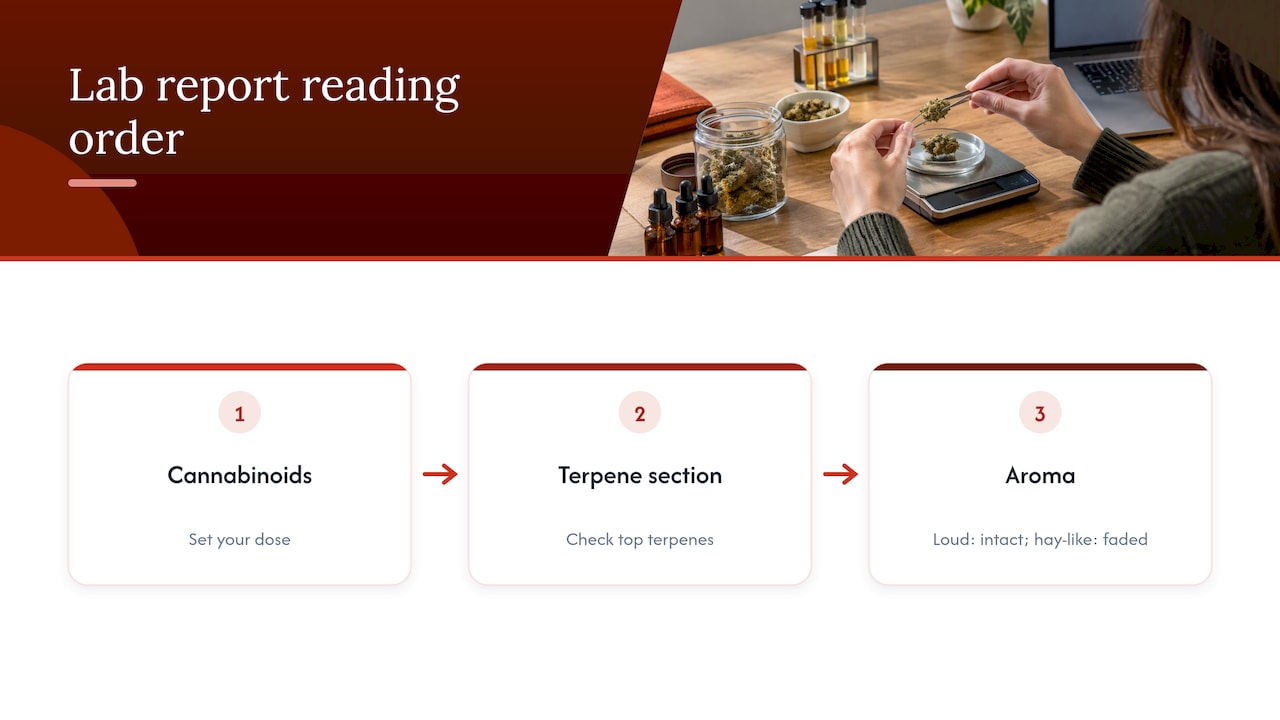
Read the lab report in this order
Start with cannabinoids to set your dose. Then check the terpene section for the top terpenes. Last, trust your nose. Cannabis with a loud, distinct aroma generally has terpenes intact, while a flat or hay-like smell suggests they have faded.
Keep a simple log
Write down the product, the top terpenes, the dose and how you felt an hour later. After three or four entries, patterns appear that no chart can give you. Maybe you like limonene-forward flower in the afternoon and myrcene-heavy products at night.
Match the product to the moment
- Flower and pre-rolls: the fullest terpene aroma, and quick onset.
- Vapes: convenience and discretion; check that the cart lists its terpene source and lab results.
- Edibles and drinks: terpenes matter less to the experience here, and the cannabinoid dose and slow onset matter more. Low-dose THC beverages make it easy to measure.
- Concentrates: often terpene-rich and potent, so start small.
Our perspective
We have been serving New York City since 2011, and the question we hear most is some version of “what should I buy?” Our answer is rarely a strain name. It is: look at the lab report, then follow your nose.
We think shoppers are best served by honesty. Cannabinoids set the strength. Terpenes shape the character. The entourage effect is an interesting idea, but we would rather tell you the human evidence is still developing than sell you a promise. What we can promise is that we focus on tested, verified products with fair pricing, so the numbers you read on a label are numbers you can use.
Pick a terpene profile you enjoy, keep the dose modest, and build from there. When you find a flower, vape or drink that fits, you will know it, and you can reorder it with confidence.
Jake
Order tested products with delivery across NYC
When you are ready to put this into practice, we deliver lab-tested flower, vapes, edibles, concentrates, pre-rolls, THC beverages and CBD products to adults 21 and over, with same-day delivery and age verification at checkout. Browse the day and night menus, compare the terpene and cannabinoid details on each listing, and choose a delivery window. Published delivery fees start from $8 in Queens and from $12 in Manhattan and the Bronx.

Start on our online menu or look at a terpene-forward pick such as Limon Nerds premium flower.
FAQ
What is the main difference between terpenes and cannabinoids?
Cannabinoids are a chemical class specific to cannabis, and THC is the one mainly responsible for the high. Terpenes are aromatic compounds found in many plants, and in cannabis they shape smell and flavor. Terpenes may also influence how a product feels, but that is still being studied.
Are terpenes the same as terpenoids?
Not exactly. Terpenes are hydrocarbons, and terpenoids are terpenes that contain oxygen. In everyday shopping, people use “terpenes” for both, and you do not need to separate them to read a label.
Do more terpenes mean a stronger high?
No. Strength is driven mainly by THC content, not by terpene percentage. A high terpene number usually points to a more aromatic product. Use the cannabinoid figure to set your dose.
Is the entourage effect real?
It is a hypothesis. A 2024 systematic review says the idea that terpenes enhance cannabinoid effects remains unproven and needs more clinical trials. It is reasonable to pay attention to your own experience with different profiles while the science develops.
Sources
- Cannabis (Marijuana) and Cannabinoids: What You Need To Know, NCCIH
- Cannabinoids, Phenolics, Terpenes and Alkaloids of Cannabis, PMC
- Secondary Terpenes in Cannabis sativa L.: Synthesis and Biosynthetic Aspects, PMC
- Terpenes/Terpenoids in Cannabis: Are They Important?, PMC
- The Cannabis Terpenes, PMC
- Cannabis, cannabinoids and health: a review of evidence, PMC
- The Entourage Effect in Cannabis Medicinal Products, PMC
- Cannabis Basics, Cannabis Evidence