Read our Google Birdeye Reviews
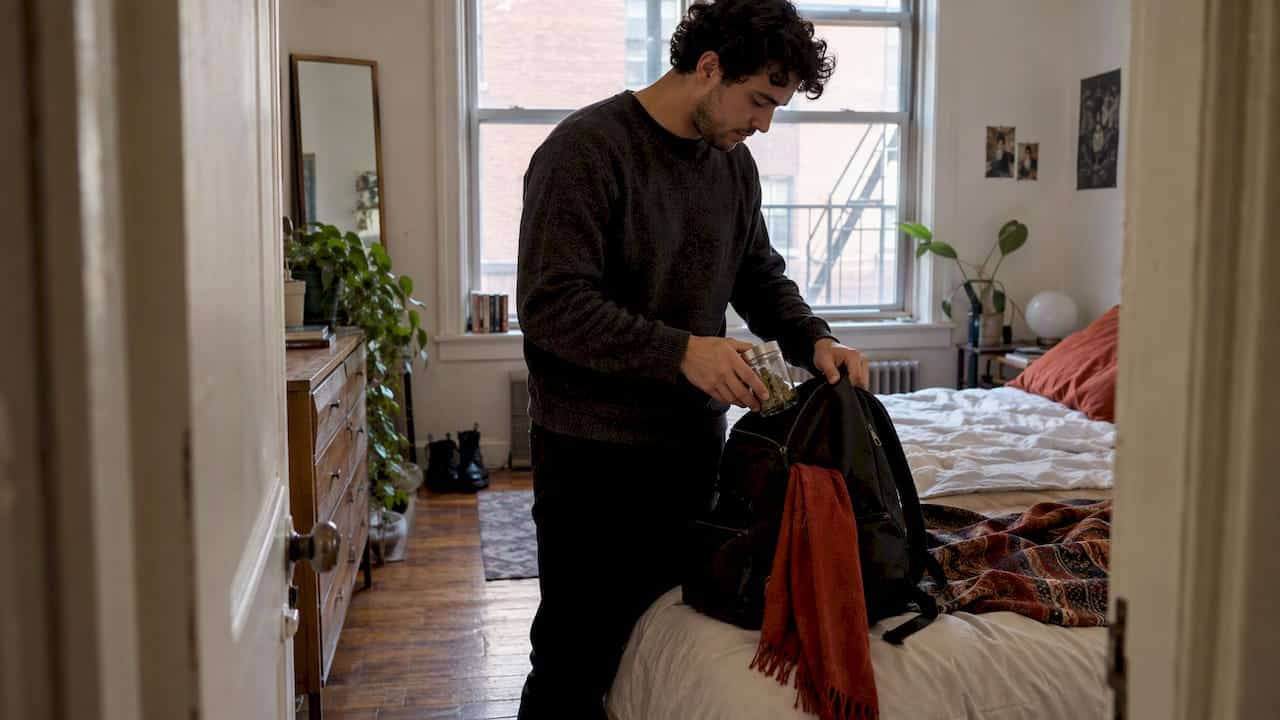
In New York, adults 21 and older may carry up to three ounces of cannabis flower and 24 grams of concentrate in public, and may keep up to five pounds at home. That larger home amount never authorizes carrying it outside. Location rules still apply, and federal property stays off limits no matter what state law allows.
TL;DR:
- Public possession is capped separately at three ounces of flower and 24 grams of concentrates; five pounds allowed at home cannot be carried outside.
- At a private residence, adults may store up to five pounds, but they must secure it where no one under 21 can reach it.
- Drivers and passengers may carry legal amounts in vehicles, but they cannot open packaging or use cannabis there, even while parked; impaired driving remains illegal.
- Cannabis remains prohibited in public housing and on federal property, including airports, and smoking or vaping is barred wherever tobacco smoking is banned.
- Adults may share cannabis only with another adult aged 21 or older, without compensation; selling, trading, or linking it to a purchase is unlawful.
Table of Contents
- What the statute says about flower, concentrates, and home limits
- Where you can and can’t carry or use cannabis in NYC
- Sharing, gifting, and selling: what counts as a legal transfer
- Penalties and thresholds: from violation to felony
- Safe home storage and household rules
- A practical take for NYC adults
- FAQ
- Sources
- Ready to order within the limits?
What the statute says about flower, concentrates, and home limits
The numbers are simple once you separate where you are standing. Outside your home, the ceiling is three ounces of cannabis or 24 grams of concentrated cannabis. Inside a private residence or its grounds, the ceiling rises to five pounds, and that amount must be kept in a secured place that people under 21 cannot reach.
Here is how the pieces fit together:
- Flower: up to three ounces in public. This covers cannabis in its plant form, such as buds and pre-rolls.
- Concentrates: up to 24 grams in public. This category covers extracts like wax, resin, oils, and the cannabis inside vape cartridges, which is why grams, not ounces, are the unit that matters.
- Home storage: up to five pounds at a private residence. This figure is separate from the public limits and is not an extra amount you may carry out the door.
- Plants: New York allows home cultivation by adults, with limits on mature and immature plants per residence. Check the Office of Cannabis Management’s adult-use page for the current plant counts before you grow.
Why does the split between flower and concentrate matter? Concentrates pack far more THC into less weight, so the law caps them by the gram. A person holding cannabis in both forms must stay within each individual limit. Treat both caps as hard lines and never assume a combination gives you extra room.
If you want the broader legal backdrop, our explainer on whether cannabis is legal in New York walks through how the state got here.
Where you can and can’t carry or use cannabis in NYC
Possession and use are two different questions. You can lawfully hold cannabis within the limits and still break a rule by lighting it in the wrong place. Adults may generally smoke or vape where tobacco smoking is allowed, but NYC Health lists restrictions that catch people off guard. Smoking or vaping in a prohibited spot can bring a civil summons and a fine.
Here are the places to watch, in the order most people run into them:
- Motor vehicles. Drivers and passengers must keep cannabis within the quantity limits, and neither may open the packaging or use the product in the vehicle, even when parked. Driving while impaired remains illegal.
- Restaurants, patios, and businesses. Anywhere tobacco smoking is banned, cannabis smoking and vaping are banned too.
- Parks, beaches, and event spaces. City rules restrict use in many public outdoor areas. Our guide to NYC park smoking rules covers the details.
- Public housing. Federal housing rules still prohibit cannabis, so the state allowance does not protect you there.
- Federal property. Cannabis remains illegal on federal property, including federal buildings, airports, and national parks.
Edibles do not get a free pass. Eating a gummy in a restricted place does not make the vehicle, housing, or federal rules disappear. The same federal logic applies to travel: crossing state or international borders with cannabis is illegal even if your possession is lawful in New York. That includes flying out of a New York airport, so leave it at home.
For a plain-language look at how the city treats the subject overall, see our page on whether cannabis is legal in New York City.
Sharing, gifting, and selling: what counts as a legal transfer
You may share cannabis with another adult, with one firm condition: no compensation. The Office of Cannabis Management says adults of legal age may share cannabis without compensation with another adult of legal age, within possession limits. Selling, trading, bartering, or linking cannabis to the purchase of another good or service is unlawful without a license.
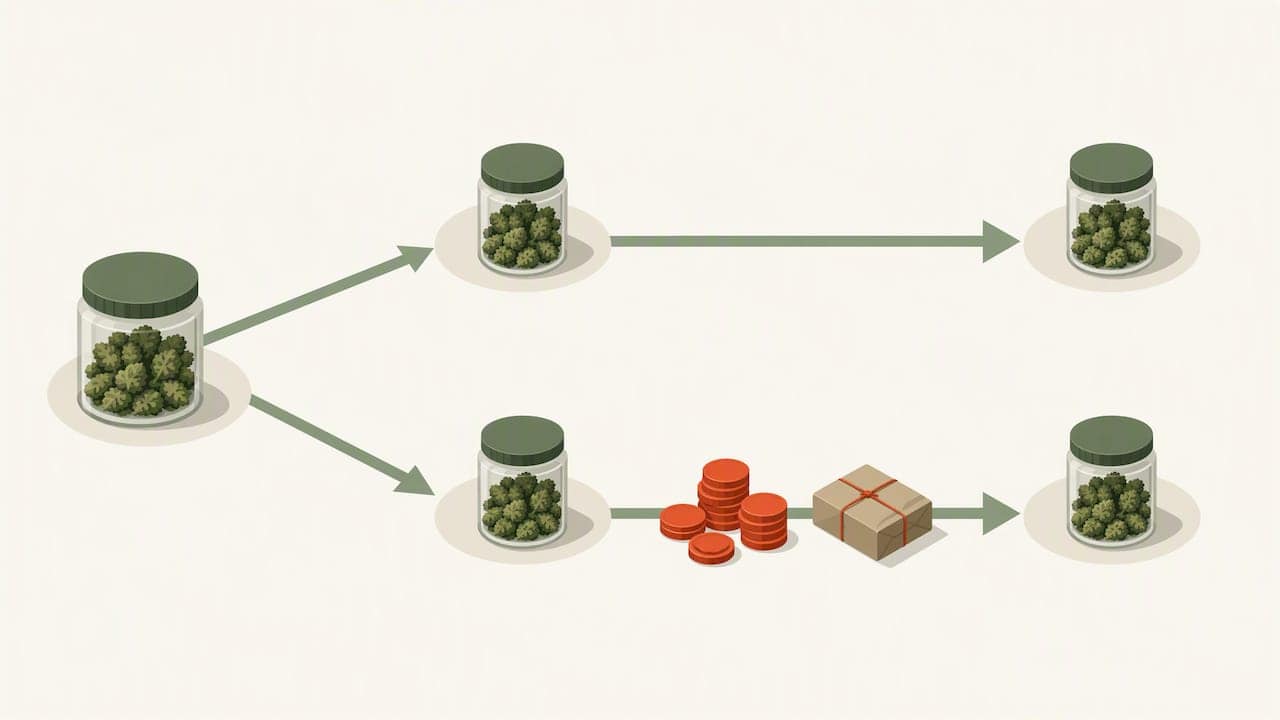
The “gifting” model, where a shop or seller “gives” you cannabis with a sticker or a tote bag, is a recurring trap. Regulators treat it as a sale dressed up as a gift, not as a loophole.
Quick examples make the line easier to see:
- Legal: you hand a 21-year-old friend a pre-roll at a private gathering, expecting nothing back, and you both stay under your limits.
- Illegal: a friend pays you for cannabis, even once.
- Illegal: a seller offers “free” cannabis with an art print.
- Illegal: you swap cannabis for concert tickets or a favor.
- Illegal: you give cannabis to anyone under 21, regardless of payment.
Pro Tip: If money, goods, or favors change hands in any form, treat it as a sale and walk away. Buy from a licensed source and keep the receipt.
Penalties and thresholds: from violation to felony
New York scales the consequences to the amount. A small overage is treated far more lightly than a large stash, and the statutes show exactly where each tier begins.
- Unlawful possession (violation): knowingly possessing more than three ounces of cannabis or more than 24 grams of concentrate is a violation punishable by a fine not to exceed $125. The statute classifies this unlawful-possession offense as a violation.
- Criminal possession, third degree (class A misdemeanor): more than 16 ounces of cannabis or more than five ounces of concentrate.
- Criminal possession, first degree (class D felony): more than ten pounds of cannabis or more than four pounds of concentrate.
- The middle tier: second-degree possession sits between those two, with felony exposure as quantities climb. Review the full text of the Penal Law sections before relying on any figure for a specific case.
This structure explains why a person can be a little over the public limit without immediately facing a felony: slightly over the limit is a violation with a maximum $125 fine, while felony exposure begins only at substantially larger quantities.
Be careful with the home number. Five pounds at a residence is lawful, but the same five pounds in a backpack on the subway is not, and it sits well past the three-ounce public line. The consequences can vary with the circumstances of a case. Officers and prosecutors have discretion, so outcomes vary, but nobody should plan around leniency.
Safe home storage and household rules
Lawful home storage comes with a duty: the cannabis must be secured and kept out of reach of anyone under 21. A simple setup keeps you compliant and keeps kids safe.
- Use a lockable box or cabinet, not a kitchen drawer or nightstand.
- Keep edibles in their original child-resistant packaging, with the label intact, so no one mistakes a gummy for candy.
- Store products out of sight and out of reach of children, as NYC guidance advises.
- Agree on house rules with roommates: who may store what, where, and who is under 21.
- Check your lease. Landlords and building rules may still ban smoking or possession.
Federal housing is the exception that surprises people. Because federal law still prohibits cannabis possession and use, residents of federal-program housing can face consequences despite the state rules. If you live in one, treat the state limits as irrelevant to your lease.
A practical take for NYC adults
I keep it to three rules: carry far less than the public cap, never touch or open anything in a vehicle, and store everything locked and out of sight at home. State permission is only the first check. Your landlord, the venue, and federal rules each get a vote, so confirm them before you light up anywhere unfamiliar. The official links below are the best place to double-check specifics.
— Jake
FAQ
What is the legal limit for unlawful possession of marijuana in New York?
Unlawful possession begins above three ounces of cannabis or 24 grams of concentrate. That is a violation with a fine not to exceed $125, not a crime.
Is New York 420 friendly?
Adults 21 and older may possess and use cannabis, but only in permitted places. Use is restricted in vehicles, parks, restaurants and patios, public housing, and on federal property, so check the venue first.
Can I fly out of NY with marijuana?
No. Cannabis stays illegal on federal property, and airports fall under that rule. Crossing state or international borders with cannabis is also illegal, even when your possession is lawful in New York.
What will happen to the marijuana law in New York City in 2026?
We have no sourced information about planned changes at this time. Check NYS Open Legislation and the Office of Cannabis Management for the current text before relying on any rule.
Sources
Everything above traces to primary sources, and you can check each one yourself. The key statutes are Penal Law §222.25 on unlawful possession, §222.30 on third-degree criminal possession, and §222.40 on first-degree criminal possession. For plain-language guidance, see NYC Health’s cannabis page and the Office of Cannabis Management’s law enforcement page.
To confirm nothing has changed, search the section number on NYS Open Legislation and read the current text, then scan the OCM pages for updates. Remember that state law and federal law run on separate tracks: New York can allow possession while federal rules still apply on federal land and across borders.
- Cannabis (Marijuana) – NYC Health
- Nycourts
- Adult-Use Information | Office of Cannabis Management
- Nysenate
- Nysenate
Ready to order within the limits?
If you want to buy legally and keep your carry well under the public cap, we offer flower, vapes, edibles, and concentrates for delivery in New York City. Our same-day delivery checklist walks you through ID, timing, and handoff for your order. Delivery fees start from $8 for Queens and $12 for Manhattan and $12 for the Bronx. Place your order today.