Read our Google Birdeye Reviews
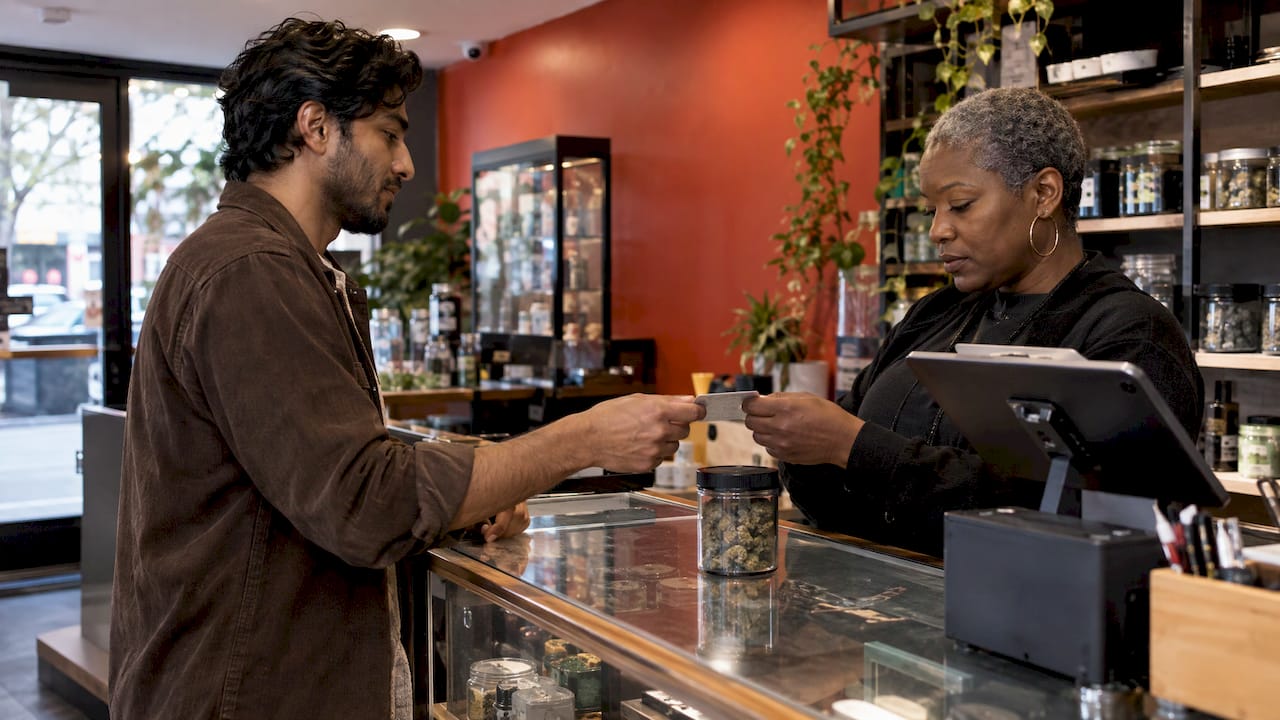
THCA flower sits in a legal gray zone that is closing. Under the 2018 Farm Bill, hemp was measured by delta-9 THC alone, and that gap is what let high-THCA flower be sold as hemp. Congress has now rewritten the definition so that it counts total THC, and the change takes effect on November 12, 2026. If you live in New York City, the practical answer is simpler than the national debate: THCA is treated as THC, and the safe route is lab-tested flower bought by an adult 21 or older from a seller that verifies age and shows its results. That is how we run our same-day delivery across the five boroughs.
TL;DR
- Until the new definition takes effect, federal hemp law measured delta-9 THC only (0.3% dry weight), which is why THCA flower was sold as hemp.
- The amended federal definition takes effect on November 12, 2026 and moves to a total-THC standard that counts THCA.
- States can be stricter than federal law, so a product can be federally lawful and still banned where you live, or where it is shipped.
- THCA turns into THC when heated, so treat it like THC for dosing, drug testing and legal risk.
- In NYC, buy from a seller that verifies your age, publishes lab results and delivers to your door.
Table of Contents
- Why THCA flower was ever legal
- What changes on November 12, 2026
- Federal legal does not mean state legal
- How testing decides what a flower really is
- The dosing math: THCA is not “non-psychoactive” once you light it
- What this means if you are in New York City
- Checklist before you buy any THCA or THC flower
- Our perspective
- Order tested flower in NYC
- Where the law is likely heading
- FAQ
- Sources
Why THCA flower was ever legal
THCA is the acidic precursor of THC. It is not intoxicating in raw form, but it converts to THC when you smoke, vape or otherwise heat it. That chemistry is the whole story behind the legal question.
The 2018 Farm Bill defined hemp as cannabis with a delta-9 THC concentration of not more than 0.3% on a dry-weight basis, according to the Congressional Research Service. The definition says nothing about THCA. A flower that tests at 0.2% delta-9 THC and 25% THCA could therefore be described as hemp on paper, even though it behaves like high-potency cannabis once lit.
Regulators saw the mismatch. Hemp growers are generally tested before harvest, and law firm Vicente LLP explains that the plan uses a total-THC formula: total THC equals 0.877 times THCA, plus THC. The factor reflects the weight lost when THCA converts. A crop that fails that test is considered “hot hemp” and cannot be sold as hemp. Many states already use total THC for hemp in the field, but not all apply it to finished products. That patchwork is why THCA flower stayed on shelves in some places and vanished in others.
What changes on November 12, 2026
In 2025 Congress passed P.L. 119-37, which amends the statutory definition of hemp. The Congressional Research Service says the new definition is scheduled to apply after November 12, 2026, with a limit on total THC and new restrictions on potentially intoxicating cannabinoid products.
Two parts matter for flower buyers:
- Total THC replaces delta-9 only. THCA is counted alongside THC, so high-THCA flower no longer qualifies as hemp on the strength of a low delta-9 number. This is the part most readers searching this keyword care about.
- Finished products face a tiny cap. The amendment excludes final hemp-derived cannabinoid products that contain more than 0.4 milligrams combined per container of total THC and similar-effect cannabinoids.
In plain terms, intoxicating THCA flower sold as a federal hemp product is on its way out. Industry lawyers have said for some time that conversion by heat is a chemical certainty, which is why regulators are moving toward total-THC testing that reflects what a product becomes when it is used.
This does not make cannabis federally legal. Marijuana remains a controlled substance under federal law, and state-licensed cannabis markets operate under state rules. If you want the bigger picture, we cover when cannabis might be federally legal in a separate guide.
Federal legal does not mean state legal
The most common mistake is treating the federal hemp definition as a national permission slip. States keep the authority to be stricter, and many are. Guidance on this topic keeps making the same point: a product can be federally legal and still prohibited where you buy it, travel or receive a shipment.
A few examples show how far the rules spread:
| State | Position on hemp or THCA flower |
|---|---|
| California | The Department of Cannabis Control’s enforcement guidance says sale or delivery of hemp flower and hemp pre-rolls is prohibited in the state. |
| Idaho and Iowa | Smokable hemp flower is banned, according to a 50-state review. |
| North Carolina | No explicit ban on hemp flower, per the same review. |
| New York | THCA is handled as THC for compliance. See our New York THCA guide. |
Two takeaways follow. First, rules differ by activity: buying, possessing, transporting and shipping can each be treated differently. Second, a website that will ship to your address is not proof the product is lawful there. Online availability does not guarantee that a product can legally be possessed at every destination.
How testing decides what a flower really is
A certificate of analysis (COA) is the lab report that lists a batch’s cannabinoid content. Read one for any flower and you will see several lines:
- Delta-9 THC: the amount of active THC already present.
- THCA: the precursor, usually the largest number in raw flower.
- Total THC: the calculated figure, using the 0.877 factor above.
- Contaminant panels: pesticides, heavy metals, microbials, residual solvents and mycotoxins where applicable.
A COA documents what is in the batch. It is not a permit and does not prove a product is lawful where you live. Still, it is the best single document for knowing what you are about to consume. A batch labeled with 24% THCA and 0.3% THC is a high-potency flower, not a mild one.
We wrote a short guide on three quick checks to verify cannabis lab results that walks through batch numbers, lab names and how much variation to expect between labs.
The dosing math: THCA is not “non-psychoactive” once you light it
Marketing often calls THCA non-intoxicating. That is true of the raw plant. It stops being true the moment you heat the flower, which is how nearly everyone uses it.
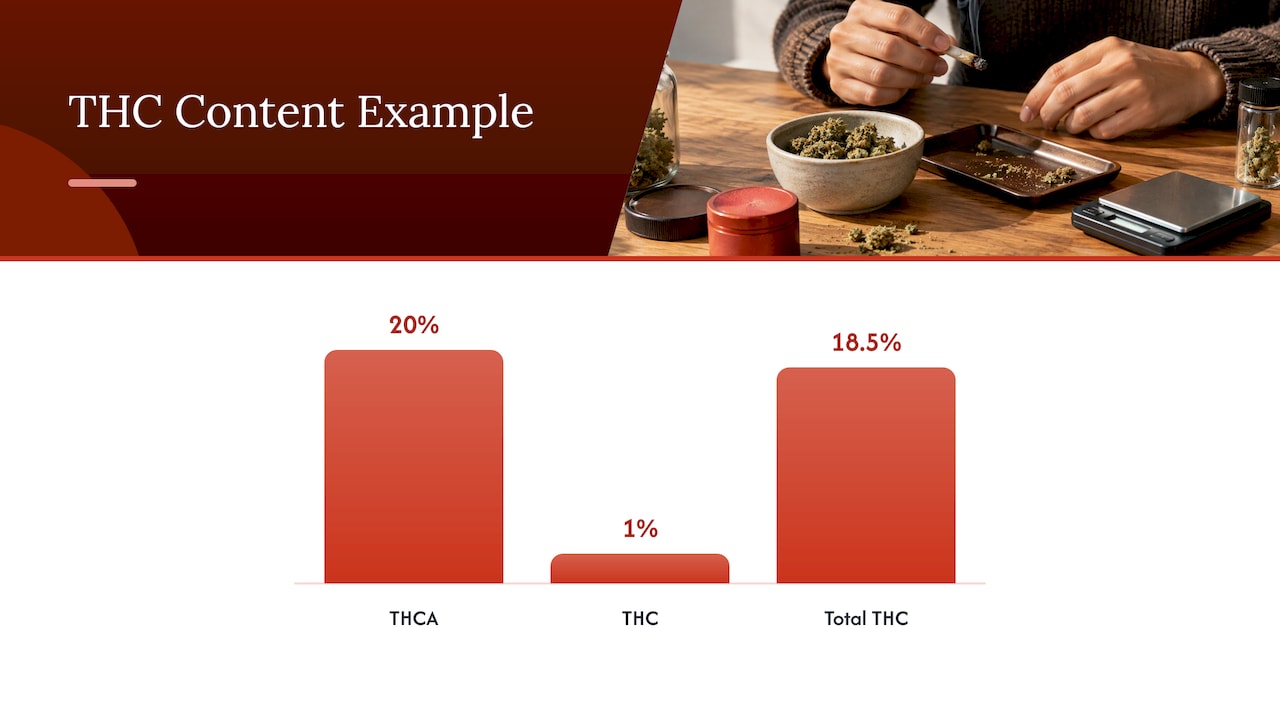
A rough worked example using the total-THC formula: a flower with 20% THCA and 1% THC has total THC of (0.877 × 20) + 1, or 18.5%. In a gram, that is about 185 mg of THC potential. Actual delivery varies with how you consume it, but the label number is the right basis for deciding how much to use. New consumers especially should start with a small amount, wait, and not stack doses.
Our breakdown of THCA versus THC, dosing math and legal risk in NYC goes deeper on this, and our guide to THC versus CBD helps if you are choosing between effects.
Safe-use points that apply to any THC-containing flower:
- Adults 21 and older only. Keep it away from children and pets.
- Do not drive or operate machinery after use.
- Avoid use during pregnancy or breastfeeding, and talk to your doctor if you take prescription medication or have a heart or mental health condition.
- THCA flower can cause a positive result on a THC drug test, because it converts to THC and is metabolized like it. If you face workplace or other testing, assume it will count.
What this means if you are in New York City
New York’s adult-use law allows adults 21 and older to buy and possess cannabis, and the state’s regulator treats THCA as THC when it applies the total-THC formula. For a New Yorker the question changes from “is THCA legal?” to “am I getting a tested, properly verified product from a seller that checks my age?”
That is the question we built our delivery service around. We have served adult customers in New York City since 2011, and our menu covers flower, vapes, edibles, pre-rolls, concentrates, THC beverages, CBD and accessories. Everything is resold from tested and verified brands, and ordering includes secure age verification. A flower you buy from us arrives with a menu listing and delivery tracking rather than a mystery package from out of state.
One more point about shipping. Mail-order THCA from an unknown website crosses state lines, carries the destination-state risk described above and gives you no recourse if a batch is not what the label says. Same-day local delivery inside the city avoids the interstate problem entirely.
Checklist before you buy any THCA or THC flower
- Confirm your age and location. You must be 21 or older, and the rules that count are those where you receive and use the product.
- Ask for the batch COA. Match the batch number on the package to the report and look at total THC, not just THCA.
- Check the contaminant panel. A potency-only report tells you half the story.
- Know the delivery rules. Understand who can sign for the order and when. Our scheduled delivery guide for NYC apartments shows how to avoid missed handoffs.
- Check current law before you travel. Do not carry flower across state lines. Look at the state’s official cannabis or agriculture page for current rules, since they change.
Our perspective
We started delivering in New York City in 2011, long before anyone argued about THCA. Over that time the lesson has not changed: the customer should know what is in the jar.
The THCA debate turns on a technicality, delta-9 versus total THC. A customer does not care about the technicality. They care that the flower matches its label, that it is tested, that the price is fair and that the person at the door is professional and discreet.
That is why we put verified brands, lab results and age verification at the front of ordering, and why our day and night menus let you browse when it suits you. With the federal definition moving to total THC, buyers who already read COAs and think in total THC will be ahead of the curve.
Our advice is simple: treat THCA flower as THC, buy local, buy tested, and keep it out of reach of anyone under 21.
Jake
Order tested flower in NYC
If you are 21 or older and want flower from tested brands delivered across the city, you can browse our menus and schedule a window on our site. Delivery fees start from $8 in Queens and from $12 in Manhattan and the Bronx, one-off per order. Brooklyn’s fee is listed at checkout. See our same-day delivery menu or read about delivery versus pickup in NYC to choose how you want to order.
For a sense of timing, our guide to weed delivery times by city explains how to schedule before the evening rush. If you are in Midtown or downtown, Manhattan weed delivery has the area details.
Where the law is likely heading
The direction is clear. Federal hemp law is moving from a delta-9 test to total THC, and states are tightening finished-product rules. Flower with real intoxicating potency is increasingly being pushed into state-regulated cannabis markets with licensing, testing and age checks, rather than sold as hemp.
For consumers, that means three habits are worth building now: read total THC rather than headline THCA, keep the COA for what you buy, and check official state pages rather than product listings for what is legal. If you want to see how widely adult-use cannabis is legal across the country, our state-by-state guide is a good starting point.
FAQ
Is THCA flower federally legal?
Until the new definition applies, federal hemp law measures delta-9 THC at 0.3% dry weight, which is how THCA flower was marketed as hemp. The amended definition takes effect on November 12, 2026 and moves to total THC, which counts THCA. After that date, intoxicating high-THCA flower no longer fits the hemp definition.
Is THCA flower legal in New York?
New York treats THCA as THC for compliance, so for adults 21 and older the sensible route is cannabis bought from a seller that verifies age and shows lab results. Our New York THCA guide covers the details.
Can THCA flower be shipped to any state?
No. States can be stricter than federal law, and California, for example, prohibits the sale or delivery of hemp flower. A product listed online may still be unlawful to possess at the destination, so check the official rules of the state you are in.
Will THCA show up on a drug test?
Yes, it can. THCA converts to THC when heated and is processed by the body as THC, so assume a positive result on a test for THC.
How do I check the current law where I live?
Look at your state’s cannabis regulator or agriculture department, since they publish the rules for hemp and adult-use cannabis. Check again before you buy or travel, because definitions are changing in 2026.
Sources
- Changes to the Federal Definition of Hemp: Legal Considerations (CRS)
- Changes to the Statutory Definition of Hemp (CRS)
- Change to Federal Definition of Hemp and Implications (CRS)
- Frequently Asked Questions About THCA Flower, Vicente LLP
- Hemp for enforcement agencies, California Department of Cannabis Control
- THCa Lawsuit: The Litigation Playbook for Licensed Cannabis
- Is THCA Flower Legal? Federal and State Laws Explained
- Hemp Flower Laws by State 2026