Read our Google Birdeye Reviews
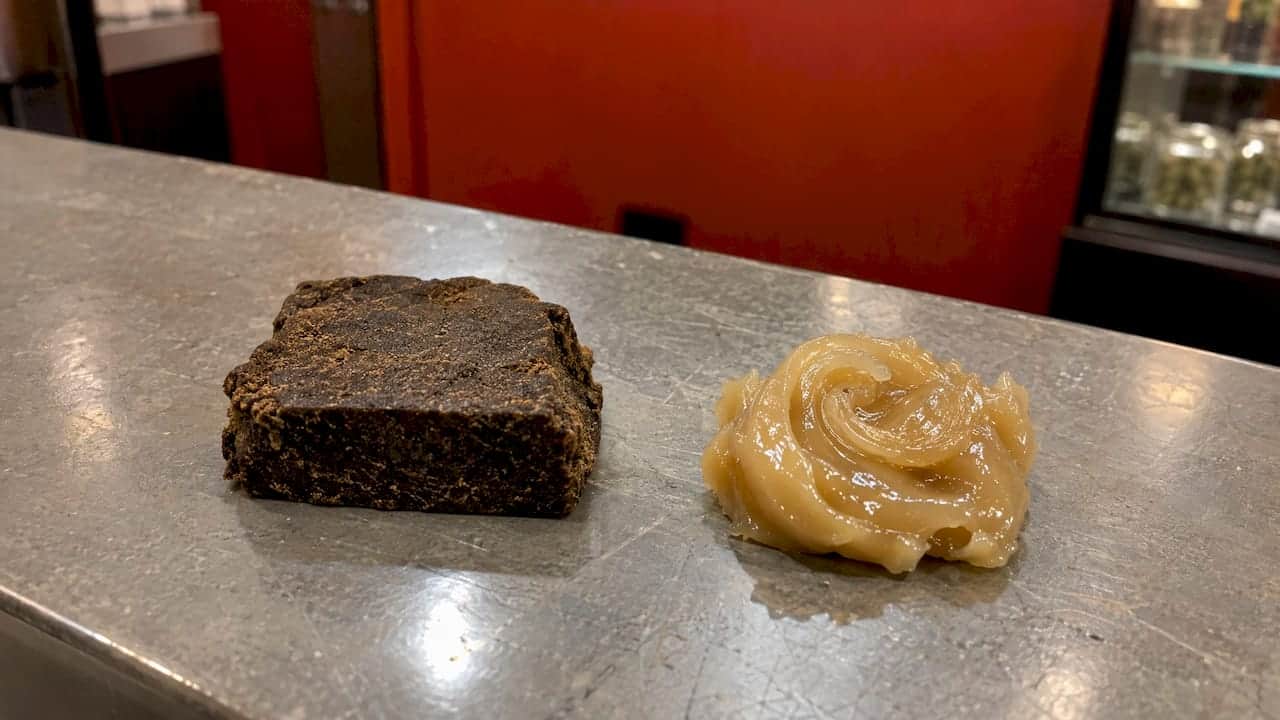
Hash and rosin are both concentrated cannabis resin, but they are not the same product. Hash is made by mechanically separating the resin glands (trichomes) from the plant. Rosin is made by squeezing resin out with heat and pressure, and it can be pressed from flower, kief, or hash itself. That overlap is why bubble hash and rosin get confused: bubble hash is a type of hash, and it is also the best raw material for the most refined rosin. Below you will find how each is made, how they look, taste and feel, how to read a lab report, and how to pick the right one for your next order.
TL;DR
- Hash is trichomes separated by sifting or ice water, then often pressed into a solid. Rosin is resin squeezed out under heat and pressure, with no chemical solvents.
- Bubble hash is an ice-water hash. When it is pressed, the result is hash rosin, and when the starting plant was fresh-frozen, it is live rosin.
- Flower rosin is usually darker and more affordable. Rosin made from bubble hash is typically lighter and more refined.
- Before you buy either one, check the certificate of analysis (COA) for potency and contaminant results, and store it cool, in glass.
- Neither is “better” in every case. The right pick depends on how you consume, your budget, and how much flavor nuance you want.
Table of Contents
- What is hash, and what is rosin?
- How hash is made
- How rosin is made
- Bubble hash vs rosin
- Bubble hash vs live rosin
- Flower rosin vs hash rosin
- How hash and rosin differ in texture, flavor and potency
- How to read the lab report
- Storage: keep terpenes where you paid for them
- Which one should you choose?
- Order hash and rosin for delivery in NYC
- FAQ
- Sources
What is hash, and what is rosin?
The cleanest way to separate the two is by process, not by appearance.
Hash comes from physically separating trichomes from the plant. The Ontario Cannabis Store describes hash as made by mechanically separating trichomes, through dry sifting, ice-water agitation or similar methods, and then commonly pressing the collected trichomes into a solid form. Hand-rubbed charas and old-school hashish belong here too.
Rosin is a different idea. According to the same OCS guide, rosin is made by placing flower, kief, or hash between heated plates and applying pressure so the resinous oil squeezes out. No butane, ethanol or CO2 is involved, which is why rosin is called solventless.
So the two words answer different questions:
| Hash | Rosin | |
|---|---|---|
| What defines it | How trichomes are collected (sifting, ice water, hand-rubbing) | How resin is released (heat and pressure) |
| Typical starting material | Whole plant material | Flower, kief, or hash |
| Solvents used | None | None |
| Typical look | Compressed, crumbly or malleable | Ranges from glassy to creamy or buttery |
A useful mental shortcut: hash is a collection of resin glands, while rosin is the oil pressed out of something. Often, the thing being pressed is hash.
How hash is made
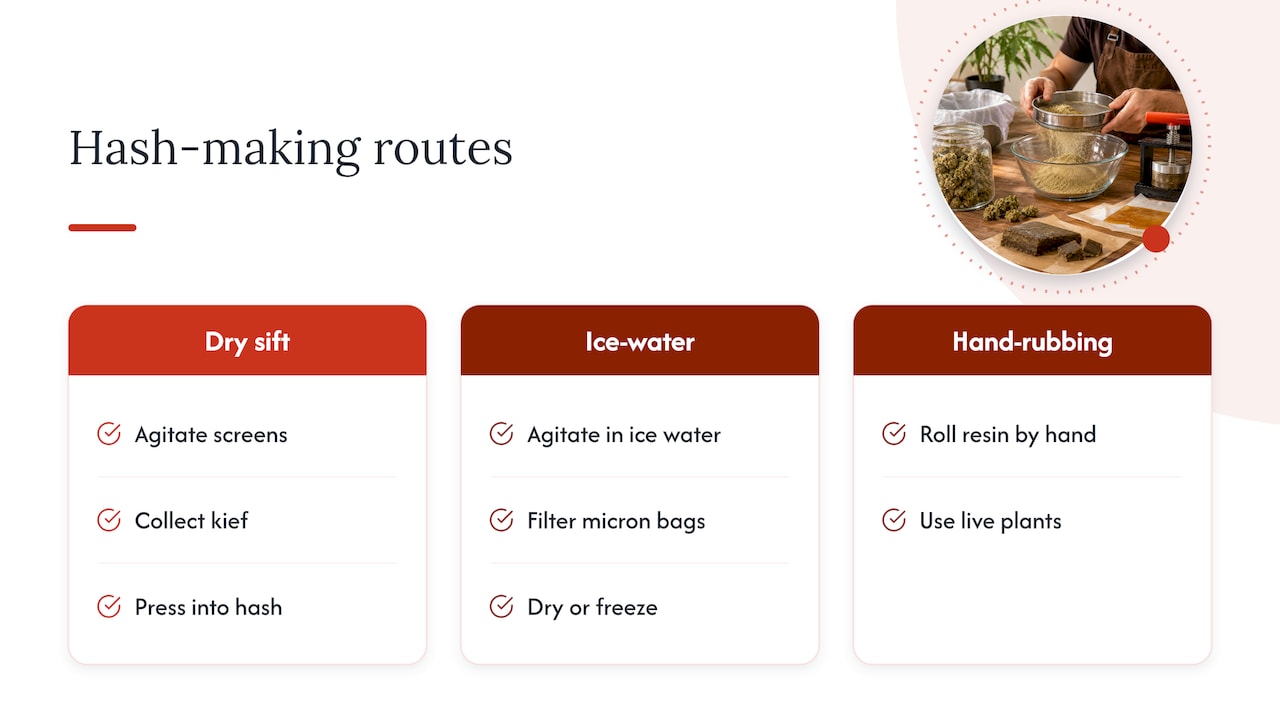
There are three common routes.
Dry sift. Dried plant material is gently agitated over fine screens, and the trichome heads fall through. The powder is called kief. Press kief and you get a block of hash.
Ice-water extraction (bubble hash). Cannabis is stirred in ice water, which makes the trichomes brittle so they snap off. The slurry passes through a series of mesh bags with different micron ratings, and the material that collects is dried or frozen. The Trichome Institute describes this agitate, filter, then dry or freeze sequence in its comparison of hash, bubble hash and rosin.
Hand-rubbing. Resin is rolled off live plants by hand, the traditional method behind charas.
Each method gives a different grade. Bubble hash graded by bag size is often described by “star” ratings or by the micron bag where it was collected, because heads of different sizes land in different bags. A product that melts cleanly when heated is generally the more refined one. A product that leaves a lot of residue still has plant material mixed in.
How rosin is made
Rosin needs three things: starting material, heat, and pressure. The material is sealed in a fine mesh bag, set between heated plates, and squeezed. Resin runs out onto parchment paper and is collected.
The starting material is where rosin splits into types:
- Flower rosin is pressed directly from dried and cured cannabis flower.
- Kief rosin is pressed from dry-sift powder.
- Hash rosin is pressed from hash, most often bubble hash.
- Live rosin is pressed from material that was frozen fresh after harvest instead of dried and cured. The OCS notes that live rosin uses fresh-frozen flower that is washed in ice water and then pressed with heat and pressure.
That last point matters for the keyword you probably came with. Live rosin and “live hash rosin” are usually the same thing in a shopper’s mind: ice-water hash made from fresh-frozen plants, then pressed.
Bubble hash vs rosin
Bubble hash is made with cold water and gravity, while rosin is made with pressure and heat. They sit at different points in the same chain.
Think of it as a pipeline:
- Fresh-frozen or cured cannabis goes into ice water.
- The trichomes are collected and dried as bubble hash.
- The bubble hash goes between heated plates and becomes hash rosin (or live rosin, if the plant was frozen fresh).
Bubble hash can be smoked, crumbled onto a bowl, or dabbed, but it is a more variable product. Pressed into rosin, the result is smoother, more uniform, and easier to dose in a dab rig or a vaporizer built for concentrates.
Another way to see it: bubble hash is the raw ingredient, and rosin is the finished oil. Many connoisseurs still keep bubble hash around because they like how it burns on top of flower, which rosin does not do as well.
Bubble hash vs live rosin
This is the comparison most readers actually care about. Bubble hash is made using cold water and gravity, and live hash rosin is rosin pressed from bubble hash made with freshly frozen cannabis. So you are not choosing between two unrelated products. You are choosing between the intermediate and the finished one.
| Factor | Bubble hash | Live rosin |
|---|---|---|
| Form | Dry, crumbly, sandy or fudge-like | Sauce, badder, jam or sap |
| Best for | Topping a bowl, a bong, or pressing your own | Dabbing, concentrate vapes |
| Flavor | Earthy, varies with grade | Often closest to the fresh plant, with a strong terpene profile |
| Convenience | Needs prep for some uses | Ready to use |
| Storage | Cool, dark, airtight | Cold storage, shorter shelf life |
Why does live material taste different? Starting material quality and freshness affect a concentrate’s character, and live material yields higher terpene content than cured material, according to a 2025 guide on solventless hash rosin. The OCS also notes that the final taste and aroma of rosin reflect its input material.
If you want the most aromatic experience, live rosin is where the fresh-frozen approach pays off. If you want something versatile, with a smoking-friendly texture, bubble hash is a fine purchase. For a deeper side-by-side with a different extract style, see our comparison of live rosin and live resin.
Flower rosin vs hash rosin
Flower rosin is pressed straight from buds, so it carries more of the plant with it. The Trichome Institute says rosin made from flower tends to be darker and contain visible plant particulates, while bubble-hash rosin is lighter, has minimal or no plant particles, and has a higher cannabinoid percentage, because the input has already been separated from much of the plant material.
What that means in practice:
- Flower rosin: a good entry point. It is usually the more approachable option on price, and it is a clear step up from basic oils if you want solventless.
- Hash rosin: a cleaner, lighter-colored result and a more concentrated one. It is typically the premium tier.
Color is a hint, not a guarantee. Darker rosin can be perfectly fine, and light rosin can be old. The real test is the lab report and how the product smells when you open it.
For more on how pressed hash behaves in a session, read hash rosin explained.
How hash and rosin differ in texture, flavor and potency
Texture. Hash is generally more solid and compressed, and can be crumbly or malleable. Rosin has a wider range: translucent and shatter-like, creamy, or butter-like. Puffco’s guide makes the same point, and adds that texture changes with the material and how it was processed. The same rosin can also change texture depending on how it is cured and whether it is whipped.
Flavor. Rosin made from fresh-frozen material tends to taste closer to the plant because more of the terpenes survive. Cured-material rosin is still flavorful, just usually less vivid. Hash has its own earthy, sometimes spicy character, and the grade of the hash drives it.
Potency. Both are concentrates, so both hit harder than flower. A high percentage on a label does not mean the experience is better. It means the product is more concentrated, and a small amount goes a long way. Start with a portion the size of a grain of rice if you are new to dabbing.
Purity. Solventless does not automatically mean clean. It means no chemical solvent was used to extract. Contaminants like pesticides or mold can still come from the plant, and that is exactly what lab testing is for.
How to read the lab report
A certificate of analysis tells you what is inside the jar. New York’s regulations for cannabis laboratories cover the contaminant categories that testing addresses. In practice, look for pass or fail results on:
- Heavy metals
- Pesticides
- Mycotoxins
- Microbial contamination
- Residual solvents (which should be absent or within limits on a solventless product, and a COA should report applicable results)
The state’s emergency laboratory testing regulation is the official reference for how licensed labs operate in New York, including secure sample storage and reporting of results to regulators.
Then match the COA to the product: check the batch number on the jar, the lab name, and the test date. Our guide to verifying cannabis lab results walks through three quick checks that also help you spot lab-to-lab variability, which is real and worth knowing about before you compare percentages across brands.
Storage: keep terpenes where you paid for them
Both hash and rosin do best in secure, cool and segregated conditions, often in glass jars. That prevents chemical and microbial degradation, and it preserves terpene integrity. A few habits help:
- Use a small glass jar with an airtight lid, not a plastic bag.
- Keep it out of light and heat. A cool cabinet is fine for hash. Rosin, especially live rosin, is better in the fridge.
- Open the jar less often, and use clean tools.
- Keep every cannabis product out of sight and reach of children and pets.
Live rosin has a shorter shelf life than other solventless extracts and needs cold storage so the terpenes do not degrade, per the same solventless hash rosin guide cited above. If you will not finish a gram in a few weeks, put it in the fridge and plan on a smaller size next time.
Which one should you choose?
Use these as starting points, not rules.
Pick bubble hash if you like to top a bowl or a joint, you want an earthy, traditional experience, or you enjoy something that is not too refined.
Pick flower rosin if you want a solventless dab at a gentler price, and you do not mind a darker color and a bit more plant character.
Pick hash rosin if you want a cleaner, more concentrated result and you care about a lighter color and smooth flavor.
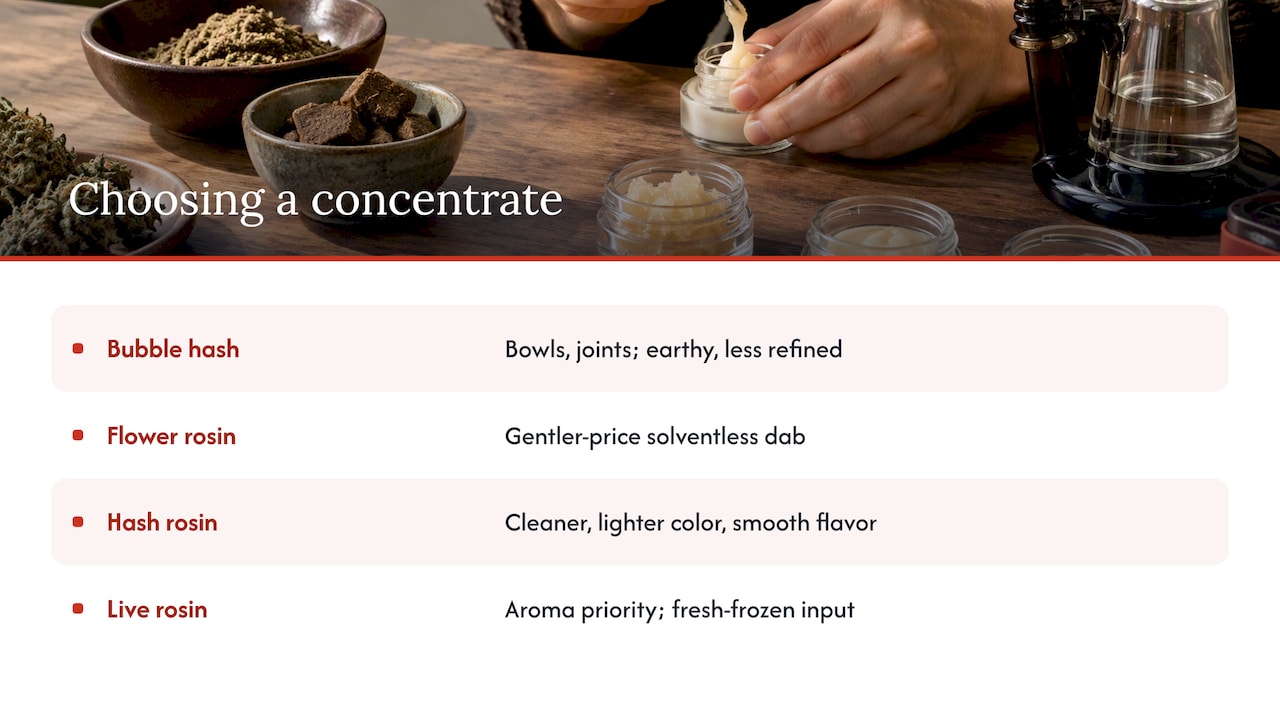
Pick live rosin if aroma is your priority. Fresh-frozen starting material tends to carry more terpenes into the finished product.
On price, rosin is among the pricier concentrate formats, and hash rosin and live rosin generally sit above flower rosin because of the extra work and starting material. Prices differ by brand, batch, state and menu, so compare per-gram pricing across what is currently listed rather than going by a single number you read online.
Our take on hash vs rosin
We have been delivering to New York City since 2011, and the question we hear most is not “which is stronger?” but “which one will I actually enjoy?” Our answer is to match the product to the way you consume.
If you dab, live rosin is where we point most people first, because fresh-frozen input is designed to keep the flavor of the plant in the jar. If you roll or pack bowls, a good bubble hash gives you the same family of resin with a more forgiving texture.
What we care about most is that you can verify what you buy. We stock tested and verified products and encourage every customer to look at the lab results before the first session, whatever the format. Solventless is a great category, but only if the batch behind the label is honest.
If you are unsure, start small. A single gram of rosin lasts a long time, and it is the best way to learn what you like before you commit to a bigger jar.
Jake
Order hash and rosin for delivery in NYC
If you are ready to try one, we deliver same-day across New York City, with day and night menus so you can browse whenever you like. Our concentrate shelf includes live rosin, hash-based products and more. You can start with live rosin, look at the cold cured live rosin and 90U hash duo, or try the hash rosin syrup.
Delivery fees start from $8 for Queens and from $12 for Manhattan and the Bronx. You must be 21 or older, and we verify age at checkout. Browse the full menu and place your order when you are ready.
FAQ
Is bubble hash the same as rosin?
No. Bubble hash is made by agitating cannabis in ice water and collecting the trichomes, while rosin is made by applying heat and pressure. They are connected, though: bubble hash can be pressed into hash rosin, which is the more refined of the two.
Is live rosin better than bubble hash?
It depends on how you use it. Live rosin is pressed from fresh-frozen material and tends to be the more aromatic and dab-friendly choice. Bubble hash is more versatile for smoking and costs less in many cases, so “better” comes down to your preferences.
What is flower rosin?
Flower rosin is rosin pressed straight from dried cannabis flower, without making hash first. It usually looks darker and carries more plant material than rosin pressed from bubble hash. Many people see it as the accessible entry point to solventless concentrates.
How much does a gram of rosin cost?
Rosin sits at the higher end of concentrate pricing, and it varies with the type, brand and market. Live and hash rosin generally cost more than flower rosin. Check the current menu for exact per-gram prices, since they change from batch to batch.
How should I store hash and rosin?
Keep them in a small airtight glass jar, away from light and heat. Hash does fine in a cool cabinet, while live rosin does best refrigerated because it has a shorter shelf life. Keep all products locked away from children and pets.
Sources
- Deep Dive into Concentrates, Ontario Cannabis Store
- Cannabis Hash, Bubble Hash, & Rosin: What’s the difference?, Trichome Institute
- Introduction to Solventless Hash Rosin
- New York emergency cannabis laboratory testing regulation