Read our Google Birdeye Reviews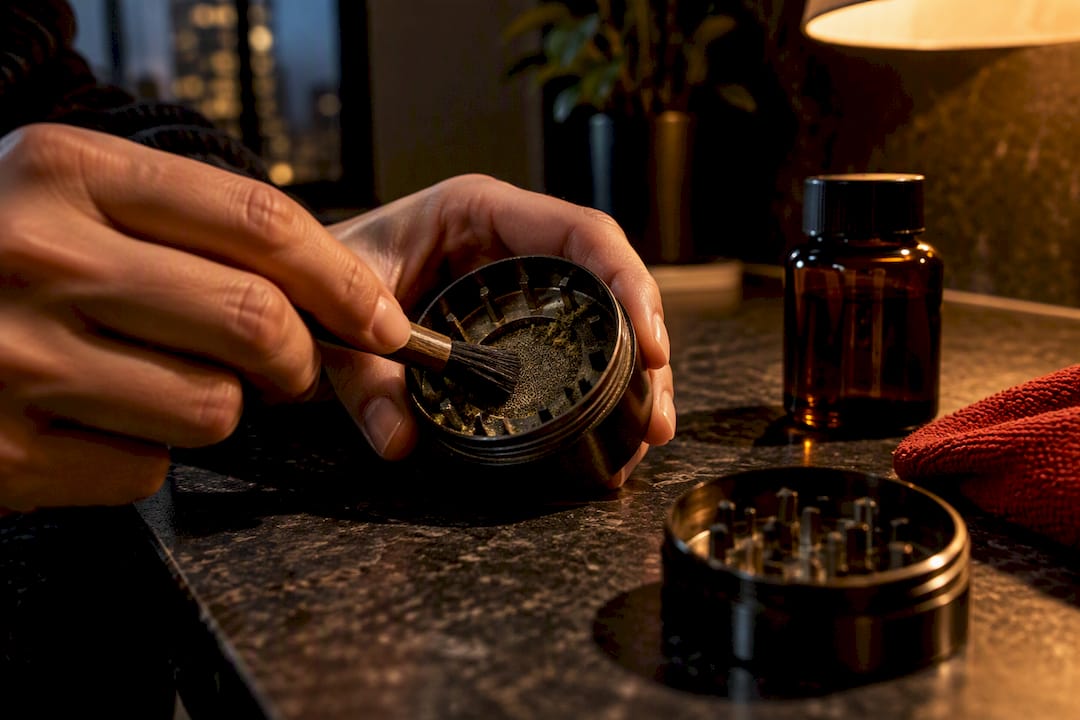
For a quick fix, freeze your grinder for 20 to 60 minutes, then tap and dry-brush out the loosened resin, a method that makes sticky resin brittle enough to flake off without any liquid. For a full reset on metal grinders, soak the parts in 91%+isopropyl alcohol with coarse salt. Skip the alcohol on acrylic or wood, and always work in a ventilated space away from open flames since isopropyl is flammable.
TL;DR:
- For metal grinders, freezing for 20 to 60 minutes significantly loosens resin before soaking in 91%+ isopropyl alcohol and coarse salt for best results.
- Acrylic and wood grinders should only be washed with warm water and dish soap, avoiding alcohol and soaking to prevent damage or warping.
- Daily users should deep clean every two to four weeks to prevent resin buildup that can impact grind quality, while occasional users can extend cleaning intervals to every two to three months.
- Proper drying—air-drying or low-heat towel or hair dryer—is crucial to prevent oxidation or binding after cleaning, especially when using alcohol-based methods.
- Always work in well-ventilated areas and keep solvents away from open flames to safely perform deep cleaning with isopropyl alcohol.
Table of Contents
- What you need: tools, supplies, and safe alternatives
- Quick clean (5 minutes): the routine between deep cleans
- Deep clean for metal grinders: step-by-step soak, scrub, rinse, and dry
- Material-specific rules for metal, acrylic, wood, and electric grinders
- When to clean: frequency guidelines and warning signs
- Safety checklist: handling solvents and avoiding fire or exposure
- Maintenance tips to slow buildup and preserve finishes
- Publisher perspective: High Fashion Smokes & Prints practical notes
- What the cleaning guides get wrong
- Where to find replacement parts and accessories
- Sources
- FAQ
What you need: tools, supplies, and safe alternatives
You do not need a specialized kit to clean a grinder well. Most of what works sits in a kitchen drawer or a bathroom cabinet already.
- A small stiff-bristled brush (an old toothbrush works) for scrubbing teeth and threads.
- Toothpicks or a pipe cleaner for scraping out grooves and screen holes.
- A sealable freezer bag or small jar for both freezing and soaking.
- Isopropyl alcohol at 91% or higher for dissolving resin on metal parts.
- Coarse salt (kosher or sea salt) to add mild abrasion during the soak.
- Warm water and a drop of dish soap for acrylic or plastic pieces.
- A lint-free towel and, optionally, a hair dryer on low heat for drying.
- Disposable gloves and a well-ventilated room or open window.
If you only have 70% isopropyl on hand, it will still dissolve resin, but it carries more water and dries more slowly, which means longer drying time and a higher chance of leftover moisture in the threads. Use it if that’s what’s available, just budget extra drying time before reassembly.
Quick clean (5 minutes): the routine between deep cleans
This is the maintenance pass you can do standing over a trash can, no soaking required.
- Pull the grinder apart completely, including the screen if it has one.
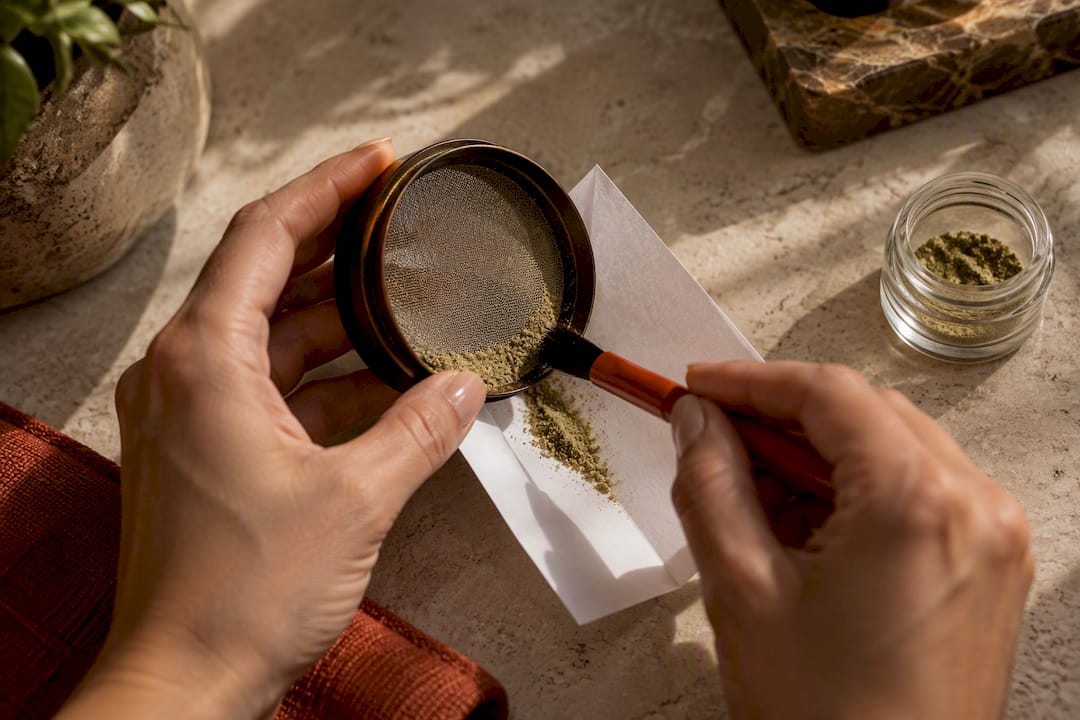
- Tap each piece upside down over a piece of paper to release loose kief. Save it in a small container if you want it for later.
- Dry-brush the teeth, the lid threads, and the screen holes to knock out anything still clinging.
- Use a toothpick or pipe cleaner to clear packed material from tight corners the brush can’t reach.
- Reassemble and twist the lid a few times to check for smooth rotation.
If the grinder still feels gritty or sticky after this, or the lid drags instead of spinning freely, that’s your signal to move on to a full soak rather than repeating the dry brush.
Pro Tip: Do the quick clean over a folded piece of paper instead of a sink. It catches kief cleanly and makes transferring it to a jar effortless.
Deep clean for metal grinders: step-by-step soak, scrub, rinse, and dry
When dry-brushing stops cutting it, this is the full process for aluminum, stainless steel, or titanium grinders.
- Disassemble fully and tap out any kief first, since the soak will dissolve it along with the resin.
- Place the pieces in a freezer bag or on a tray and freeze for 20 to 60 minutes. Cold makes resin brittle, and a quick tap or brush afterward knocks loose a surprising amount of material before any liquid touches it.
- Drop the pieces into a jar or zip bag with enough 91%+ isopropyl alcohol to cover them, then add a spoonful of coarse salt.
- Seal and shake for a minute or two, letting the salt scrub the surface as it moves. Soak for 20 to 30 minutes for regular buildup, longer for heavily caked grinders.
- Scrub remaining spots with your brush or a cotton swab, then rinse thoroughly under warm running water to clear dissolved resin and salt residue.
- Let every piece air-dry completely, or towel-dry and finish with a hair dryer on low, before putting the grinder back together.
91%+ isopropyl alcohol paired with coarse salt is the most effective combination for dissolving stubborn plant resin on metal grinders, according to method guides that test the freeze-then-soak approach directly. Skipping the freezer step still works, but you’ll spend more time scrubbing to get the same result.
Material-specific rules for metal, acrylic, wood, and electric grinders
Not every grinder can handle the same treatment, and using alcohol on the wrong material can ruin a finish or crack a part.
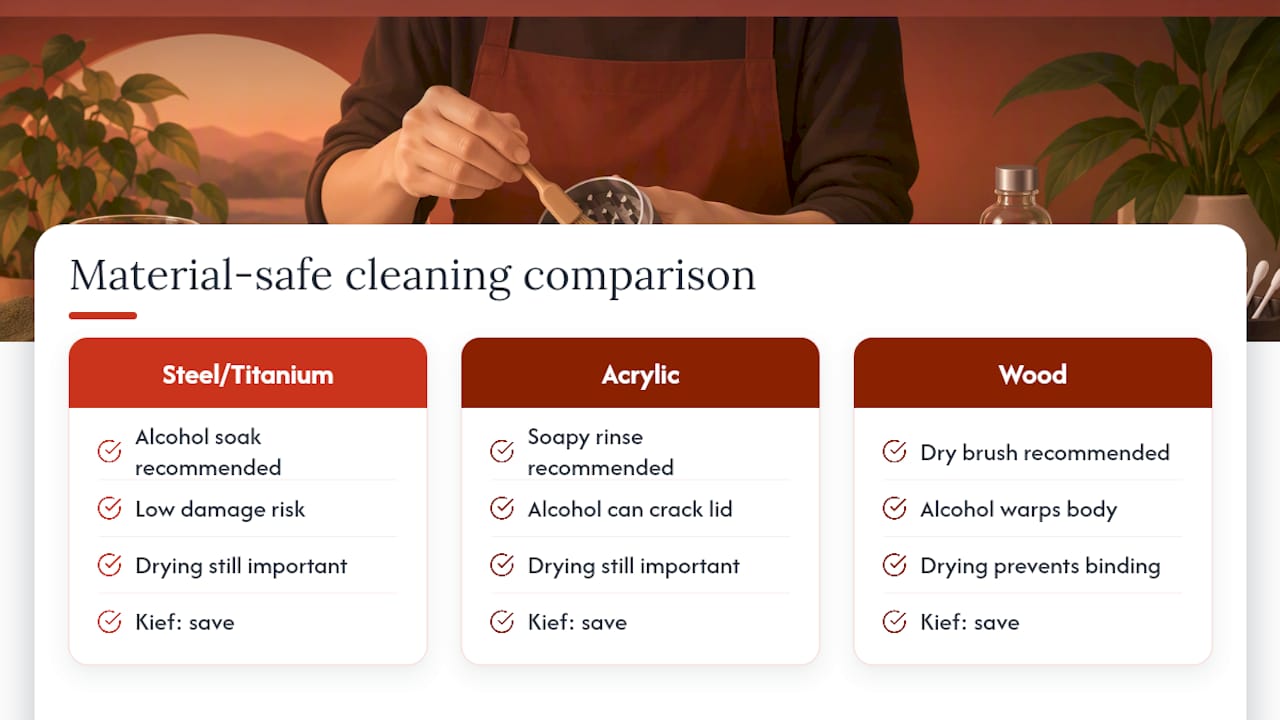
- Anodized or coated metal: skip the salt scrub on visible finished surfaces since abrasion can wear through the coating; a gentle alcohol soak and soft brush are safer.
- Stainless steel and titanium: these hold up well to alcohol soaks and firmer scrubbing without much risk to the finish.
- Acrylic or plastic: use warm water with a little dish soap only. Alcohol and boiling water can crack or cloud acrylic, so for stubborn residue, a paste of baking soda and water lifts buildup without solvents.
- Wood: dry-brush the wooden body and spot-clean any metal screen or teeth separately. Never soak wood or expose it to alcohol, since it will warp or absorb the liquid.
- Electric grinders: never submerge the unit. Wipe the housing with a barely damp cloth and follow whatever the manufacturer specifies for the grinding chamber.
When to clean: frequency guidelines and warning signs
Daily users should aim for a deep clean every 2 to 4 weeks, since resin builds up fast enough in that window to start affecting grind quality and airflow. Regular users can stretch that to every 4 to 6 weeks, and occasional users are usually fine cleaning every 2 to 3 months.
Frequency guidance is a starting point, but your grinder will tell you when it’s time regardless of the calendar:
- The lid feels sticky or resistant when you try to twist it open.
- Threads grind or catch instead of turning smoothly.
- The screen looks clogged and kief stops collecting in the bottom chamber.
- Ground material tastes stale or noticeably less potent than fresh flower should.
If you’re seeing two or more of these signs, skip the quick clean and go straight to the deep soak.
Safety checklist: handling solvents and avoiding fire or exposure
Isopropyl alcohol does the heavy lifting in a deep clean, but it deserves real caution. It’s classified as a Class 1B flammable liquid, which means vapors can ignite well below room temperature.
- Work in a ventilated room or near an open window, never in a closed bathroom with the fan off.
- Keep the jar and soaked parts away from open flames, lighters, stovetops, and space heaters.
- Never heat or boil isopropyl alcohol to speed up the soak.
- Let every part dry fully before reassembling or using the grinder. Using it while damp traps moisture in the threads and invites oxidation and binding down the line.
- If alcohol contacts skin or eyes, rinse with water; dispose of used alcohol down a drain with running water rather than pouring it into the trash.
Pro Tip: Set a timer for your soak instead of guessing. Walking away from alcohol near a kitchen stove is how avoidable accidents happen.
For a broader look at handling cannabis products safely at home, our guide on safe cannabis use covers similar ventilation and storage habits.
Maintenance tips to slow buildup and preserve finishes
A few small habits stretch the time between deep cleans and keep your grinder’s finish intact longer.
- Tap and brush out loose material after every session instead of letting it accumulate.
- Store the grinder somewhere dry and cool, since heat softens resin and makes it stickier.
- Keep oily lubricants away from the chamber, since oil mixes with plant residue and gets messier, not smoother.
- Clean threads with an alcohol-dipped cotton swab rather than a metal pick, which can gouge soft metal and leave burrs that trap even more residue.
- Replace a screen once it’s permanently clogged or bent, and consider replacing the whole grinder if the teeth have worn rounded or the threads no longer catch.
Publisher perspective: High Fashion Smokes & Prints practical notes
A New York City cannabis dispensary has been serving customers with same-day delivery since 2011, and grinder upkeep comes up constantly in the educational content we put out for customers who want to get more from their flower. A clean grinder isn’t just about hygiene, it’s about not losing kief and terpenes to a gummed-up screen. Our approach to any product safety topic starts with the same principle this guide follows: match the method to the material, and never treat a flammable solvent casually.
What the cleaning guides get wrong
Most cleaning guides treat every grinder the same way, pushing an alcohol soak as the universal fix. That advice works fine on stainless steel and titanium, but it’s overkill or outright damaging on acrylic and wood, where a soapy rinse or a dry brush does the job without risking a cracked lid or a warped body.
The bigger blind spot is drying. Guides spend paragraphs on soak times and salt ratios, then mention drying in a single throwaway line. In practice, a grinder reassembled while its threads are still damp is more likely to bind or oxidize than one that was never cleaned aggressively in the first place. If you take one thing from this guide, let it be patience at the drying stage rather than intensity at the scrubbing stage.
Saving the kief you knock loose is also underrated. It’s the most concentrated material in the grinder, and treating it as trash rather than a bonus is a habit worth breaking.
— Jake
Where to find replacement parts and accessories
Once your grinder’s screen is too bent to save or the teeth have worn smooth, replacing it beats fighting it every session. High Fashion Smokes & Prints carries accessories alongside our regular flower, vape, and concentrate menus, with the same same-day delivery windows we use for everything else in New York City.

- Replacement screens for grinders that have lost theirs to clogging or corrosion.
- Cleaning brushes sized for grinder teeth and threads.
- General accessories and extras alongside flower, vapes, and concentrates on our regular menus.
If you’re not sure a part fits your specific grinder, reach out to our support team before ordering. Browse the current menu and place an order through same-day delivery to get set up with a clean, working grinder again. For general storage habits once your kief is saved, storing hash in airtight glass, cool and dark keeps potency intact between sessions.
Sources
- NIOSH Pocket Guide: Isopropyl alcohol (CDC/NIOSH)
- How to Clean a Metal Grinder | 8 Easy Steps — MetalFixes
- How often should I clean my grinder? — The Coffee Company
FAQ
How long do I boil my grinder to clean it?
Never boil a grinder in isopropyl alcohol, since it’s a Class 1B flammable liquid and heating it raises the risk of ignition. Boiling water alone can also warp acrylic parts or loosen glued components, so stick to a cold soak instead.
Can you use vinegar to clean a metal grinder?
Vinegar can help with light residue on metal grinders, but it’s slower and less effective at dissolving sticky resin than a 91%+ isopropyl soak. For real buildup, alcohol and coarse salt remain the more reliable combination.
How do you clean a grinder without special tools?
A toothbrush, a toothpick, and dish soap handle most of the job without buying anything specialized. Freeze the pieces for 20 to 60 minutes first to loosen resin, then dry-brush before reaching for any liquid.
How do you disassemble a grinder for cleaning?
Twist the lid off, then separate each internal chamber, including the screen and any middle collection layer, working over a piece of paper to catch loose kief. Most grinders come apart by hand with a firm twist and no tools required.