Read our Google Birdeye Reviews
Mixing weed and alcohol almost always increases impairment beyond what either substance produces alone, and it makes the intensity of that impairment harder to predict. Alcohol can push blood THC levels higher and faster than cannabis alone would, and the two substances compound each other’s effects on balance, judgment, and reaction time. If you’re going to combine them anyway, the safer path is lower doses of both, cannabis before alcohol rather than after, and absolutely no driving.
TL;DR:
- Consuming alcohol before cannabis can increase peak blood THC levels by 50 to 100%, significantly intensifying impairment and unpredictability.
- Mixing weed and alcohol worsens balance, judgment, and reaction time beyond what either substance causes alone, increasing risk especially while driving.
- The order of use matters: cannabis before alcohol may delay absorption, while alcohol before cannabis causes faster THC absorption and stronger effects.
- People with certain conditions, teenagers, pregnant individuals, or those on specific medications face a much higher risk of harmful consequences from combining these substances.
- Lowering doses, avoiding concentrates and edibles, and never driving are the most effective harm-reduction strategies when mixing weed and alcohol.
Table of Contents
- Is Mixing Weed and Alcohol Safe? Here’s What the Evidence Shows
- Why Order and Product Type Change How Hard You Get Hit
- What a Bad Reaction Looks Like and What to Do About It
- How Combining Alcohol and Weed Affects Driving
- Who Faces the Highest Risk From Combining
- The Harm-Reduction Rules Worth Actually Following
- Where High Fashion Smokes & Prints Stands on Safety
- A More Honest Take on “Crossfading”
- Sources
- FAQ
Is Mixing Weed and Alcohol Safe? Here’s What the Evidence Shows
The short answer is no, not in any way that lines up with “safe” as most people mean it. A 2024 narrative review pulling together lab studies, real-world observation, and qualitative interviews found that combining alcohol and cannabis produces additive performance impairment across nearly every methodology researchers have tried. The subjective experience is messier. Some people report feeling more intoxicated when they combine; others report feeling less high, even though their actual coordination and reaction time get worse. That mismatch between what you feel and what your body is doing is exactly what makes simultaneous use risky.
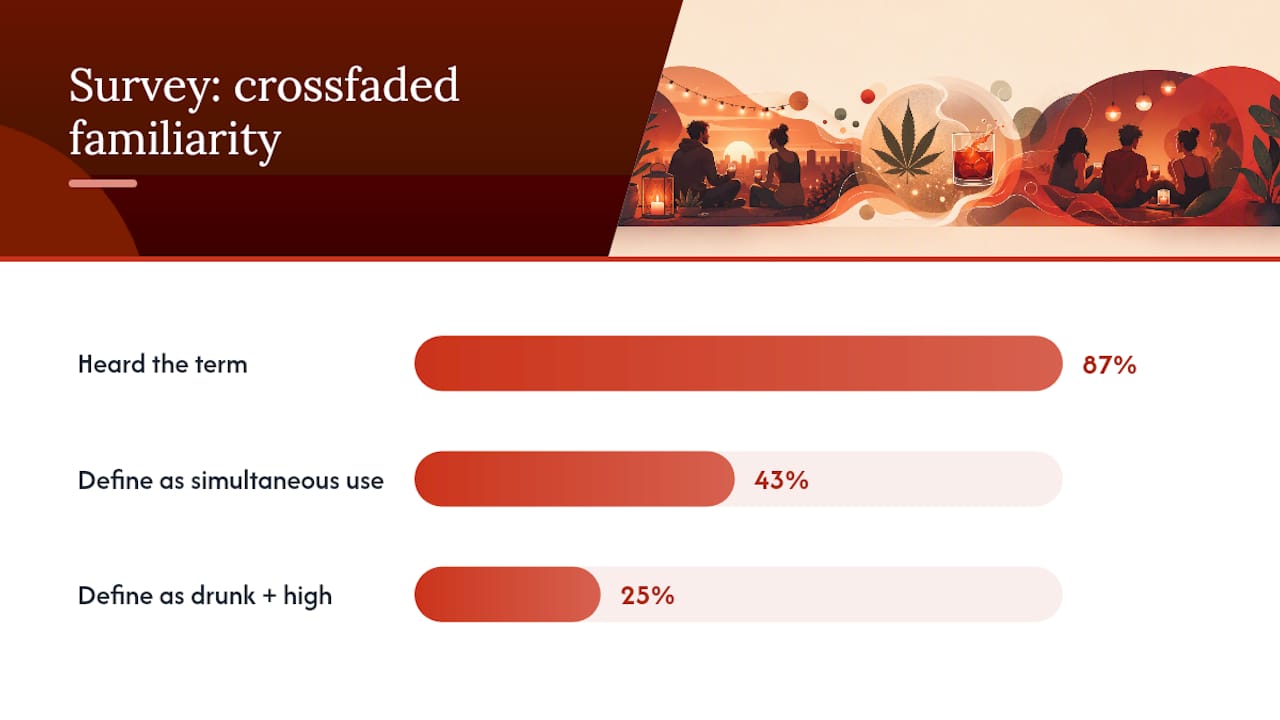
The term for this combination has its own slang, and it’s more mainstream than you might expect. A survey of 807 young adults between the ages of 18 and 23 found that 87% had heard the word “crossfaded.” Asked to define it, 43% described it as using alcohol and cannabis at the same time, while 25% specifically meant being both drunk and high simultaneously. The word is common enough that plenty of people plan for it without realizing how much the underlying chemistry works against them.
The pharmacology backs up the folk wisdom on timing. A controlled study by Hartman and colleagues in 2015 gave participants alcohol before inhaled cannabis and found peak blood THC levels rose by roughly 50 to 100% compared with cannabis alone. That’s not a small bump. It means the same joint or vape session can hit meaningfully harder if you’ve already been drinking, which explains a lot of the “I didn’t think I smoked that much” moments people report after a night of drinking first.
Beyond the lab, population data tells a similar story. An analysis from the University of Washington’s Addictions, Drug & Alcohol Institute found that people who use alcohol and cannabis simultaneously report more social consequences, more harm to themselves, and more instances of drunk driving than people who use the same substances but keep them separate. That’s a meaningful distinction: it’s not just that people who drink heavily also tend to smoke heavily. Combining the two, in the same window of time, appears to independently raise the odds of harm.
A few caveats matter here, and any honest summary has to include them:
- Dose variation is huge. A single beer plus a small hit of flower behaves nothing like four shots plus a dab.
- Route of administration changes everything. Edibles behave very differently from inhaled cannabis when alcohol enters the picture, largely because of how long they take to peak.
- THC versus CBD ratios matter. High-CBD products tend to produce far less of the disorientation associated with high-THC combinations.
- Long-term causal data is thin. Researchers have solid short-term pharmacology and decent epidemiology, but fewer long-term studies isolate the specific harms of habitual co-use versus heavy single-substance use.
The headline number to remember: alcohol consumed before cannabis can raise peak THC blood concentration by 50 to 100% compared to cannabis used on its own. That single data point explains a large share of the bad nights people describe when they say a combination “hit different” than expected.
Why Order and Product Type Change How Hard You Get Hit
The mechanism behind that THC spike isn’t mysterious once you break it down. Alcohol widens blood vessels and speeds up blood flow, including in the lungs and gut. When THC enters a bloodstream that’s already primed by alcohol, more of it gets absorbed, faster, whether you’re smoking, vaping, or eating an edible. That’s the biological reason “drink first, smoke second” tends to produce a rougher ride than the reverse order.
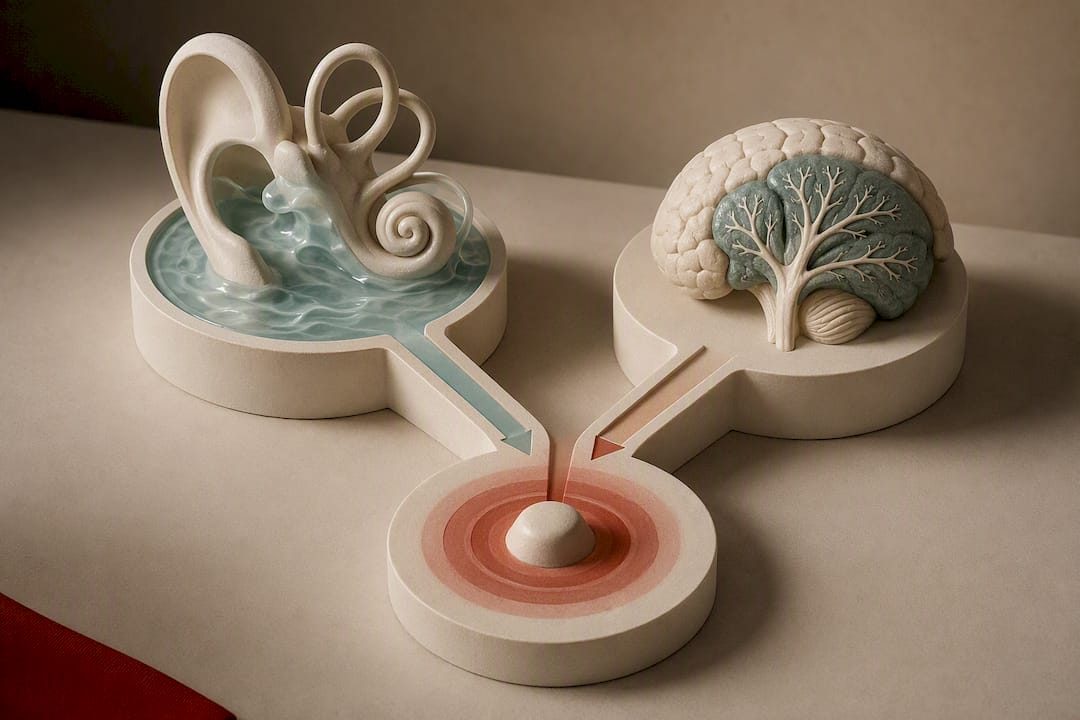
There’s a second mechanism at play with the dizziness people describe as “the spins.” Alcohol disrupts the fluid in your inner ear, producing a specific kind of positional vertigo called alcohol-induced nystagmus. Cannabis, meanwhile, affects the cerebellum, the part of your brain responsible for balance and coordination, through CB1 receptor activity. Combine an inner ear that’s misreading motion with a cerebellum that’s already struggling to process it, and you get the spins, a nauseating sense that the room is spinning even when you’re lying perfectly still. It’s one of the most common reasons people end up regretting a mixed session.
Order effects run in the other direction too, though less dramatically. Cannabis consumed before alcohol can slow gastric motility, meaning your stomach empties more slowly. That can delay alcohol absorption and, anecdotally, lead some people to drink less because they feel the effects of cannabis before they’ve had much to drink. This isn’t a loophole or a hack. It’s a different acute profile, not a safer one, and it depends heavily on dose and individual tolerance.
Product type adds another layer of unpredictability:
- Inhaled cannabis (flower, vapes) peaks within minutes, so the alcohol interaction shows up fast and is easier to gauge in real time.
- Edibles take 30 minutes to 2 hours to peak and can keep THC circulating for several hours longer than smoking, which means the alcohol interaction can hit well after you think you’ve “leveled off.”
- Concentrates and dabs deliver THC at much higher potency, so any alcohol-driven absorption boost gets applied to a bigger dose to begin with.
- Multiple alcohol types in one sitting (beer, then liquor, then wine) make it harder to track your actual blood alcohol level, which compounds the unpredictability on the cannabis side.
Pro Tip: If you’re going to combine at all, treat edibles as off-limits for the same session. The delayed onset makes it nearly impossible to judge how alcohol is interacting with a dose that hasn’t even peaked yet.
Knowing the difference between product categories helps here. If you’re trying to keep a session predictable, understanding the real difference between THC and CBD or comparing flower against vape effects gives you a much better sense of what you’re actually adding to the mix before alcohol changes the math.
What a Bad Reaction Looks Like and What to Do About It
The acute symptoms of mixing tend to cluster around a few recognizable patterns, and most people who’ve overdone it describe some combination of the following: intense dizziness or the spins, sudden and severe nausea or vomiting, overwhelming sedation that feels different from a normal buzz, confusion or disorientation, and in more serious cases, slowed or irregular breathing.
If you or someone with you starts showing these signs, work through this sequence:
- Sit or lie down in a stable position, ideally on your side, not your back, in case of vomiting.
- Fix your eyes on a single stationary point rather than closing them. Closing your eyes tends to make the spins dramatically worse because it removes the one visual anchor your brain has left.
- Sip water slowly. Don’t chug it, and don’t add more alcohol to “even it out,” which is a myth that makes things worse.
- Get a sober person involved. Someone who isn’t impaired needs to monitor breathing and consciousness, especially if vomiting starts.
- Protect the airway during vomiting. Never leave someone lying flat on their back if they’re vomiting.
- Call emergency services if breathing becomes slow, shallow, or irregular, if the person becomes unresponsive, or if vomiting doesn’t stop and dehydration becomes a concern.
One detail deserves special attention because it’s genuinely dangerous: THC has an antiemetic effect at some doses, meaning it can suppress vomiting. That sounds like a good thing until you realize what it can mask. Vomiting is often the body’s way of expelling excess alcohol before it reaches dangerous blood concentrations. If cannabis is suppressing that reflex, someone can be absorbing more alcohol than their body would otherwise allow, without the warning sign that usually prompts people to stop or seek help. That’s part of why the ADAI’s guidance treats combined intoxication as a distinct risk category, not just “drunk plus high.”
How Combining Alcohol and Weed Affects Driving
This is the section with the clearest, least ambiguous evidence in the entire topic. Driving under the influence of alcohol and cannabis together is measurably worse than driving under the influence of either one alone, and it’s not close.
Simulator studies and meta-analyses consistently find additive or synergistic impairment in the specific skills driving depends on: lane position control, reaction time to sudden hazards, and the ability to divide attention between multiple things happening at once. Alcohol alone degrades reaction time. Cannabis alone tends to degrade attention and hazard perception more than raw reaction speed. Combine them and you get both deficits stacked on top of each other, at a time when your brain is least equipped to compensate.
The population data backs up the lab findings. The ADAI analysis found that people who use alcohol and cannabis at the same time report substantially more instances of driving under the influence than people who use the substances separately. That’s a behavioral pattern, not just a pharmacological one. Combined intoxication seems to make people underestimate their own impairment more than single-substance use does, possibly because the subjective high feels different from what their coordination is actually doing.
A few practical rules follow directly from this evidence:
- Never drive after combining, period. Not “just a little,” not “I feel fine.”
- Build in more sober time than you would for either substance alone. THC can linger far longer than alcohol, especially with edibles, so “I’m sober from the beer” doesn’t mean you’re sober overall.
- Arrange a ride before you start drinking or smoking, not after, since your judgment about your own fitness to drive is exactly what’s compromised.
- Treat a designated driver as a designated non-user, not someone who “just had one.”
Who Faces the Highest Risk From Combining
Some people carry meaningfully higher risk when they mix alcohol and cannabis, and it’s worth an honest self-check before assuming a combination that’s fine for a friend is fine for you.
Higher-risk groups include:
- Adolescents and young drivers, whose brains and driving experience are both still developing.
- Pregnant people, for whom both substances carry independent developmental risks.
- Anyone managing anxiety, panic disorder, or other psychiatric conditions, since combined intoxication can intensify paranoia and panic in ways neither substance produces alone.
- People taking medications that interact with either alcohol or cannabis, including certain sedatives, antidepressants, and blood thinners.
- Heavy or frequent drinkers, whose baseline tolerance can mask how much additional impairment cannabis is adding.
Product and behavior combinations that raise the stakes further:
- Mixing several types of alcohol in one sitting, which makes your actual blood alcohol level harder to estimate.
- Using concentrates or multiple cannabis products back to back rather than one measured dose.
- Swimming, biking, or operating any equipment while combined.
- Caring for children or dependents during or shortly after use.
- Drinking or smoking on an empty stomach, which speeds absorption of both substances.
The Harm-Reduction Rules Worth Actually Following
If total avoidance isn’t realistic for you tonight, here’s the order of operations that actually reduces risk, based on the mechanisms already covered above.
- Don’t mix, if you can help it. This is the only zero-risk option, and every public-health source cited in this article converges on it.
- If you’re combining anyway, lower the dose of both substances. Half your usual pour, half your usual hit. The interaction effect means your “normal” amount of either substance behaves like more.
- Choose cannabis before alcohol, not after. The order effects covered earlier mean this sequence is less likely to produce the sharp THC spike associated with alcohol-first combinations.
- Skip concentrates and unfamiliar edibles entirely. Save the dosing math for edibles for a night when alcohol isn’t part of the equation.
- Eat something substantial before and during. Food slows absorption of both alcohol and orally consumed THC, buying you more time to notice how you’re actually feeling.
- Hydrate steadily, not in a panic. Water throughout the night, not a liter chugged after you already feel off.
- Wait longer between doses than you normally would. Start low, go slow applies double when two substances are both still climbing toward peak effect.
A few checkpoints help enforce those rules in the moment. Set your limit before you start, not after three drinks in. Assign one person in the group who isn’t using anything that night, and give them explicit permission to intervene. If the spins hit, keep your eyes open and fixed on something still, rather than lying down and closing them. And know the signs of alcohol poisoning independently of how high someone seems, since, as covered earlier, cannabis’s antiemetic effect can mask the vomiting that would otherwise signal trouble.
Pro Tip: Keep a simple rule for group settings: if two people are combining, only one of them is allowed to be “new” to either substance that night. Two inexperienced users compounding each other’s uncertainty is how a manageable evening turns into a bad one fast.
If you notice that combining alcohol and cannabis has become a habit rather than an occasional choice, that shift is worth paying attention to on its own. Regularly needing both substances together, rather than choosing one or the other depending on the occasion, can be an early sign of escalating use that’s worth discussing with a doctor or counselor rather than managing solo. Reliable dosing habits with a single substance at a time, like the three core rules for safer cannabis use, are a reasonable place to start rebuilding a more predictable relationship with either one.
For readers curious about lower-intensity cannabinoid options that don’t carry the same interaction profile as high-THC products, a high-CBD concentrate is worth understanding as a category, since CBD-dominant products generally produce far less of the disorientation associated with THC-alcohol combinations.
Where High Fashion Smokes & Prints Stands on Safety
High Fashion Smokes & Prints sells lab-tested cannabis products and publishes dosing and safety guidance because uncertainty about potency is one of the biggest preventable risks in this whole conversation. When you know exactly what’s in a product, you remove one entire variable from a situation that already has too many unpredictable ones, especially when alcohol is involved.
We’re not going to tell you mixing is risk-free with the right product, because it isn’t. But choosing lab-verified flower, vapes, or edibles instead of unlabeled products at least means the THC content on the package matches what’s actually in your system, which makes every harm-reduction step in this guide easier to follow accurately. Our dosing and safety guidance walks through starting doses by product type, and our same-day delivery menu makes it easy to plan a session around a known quantity rather than a guess.
A More Honest Take on “Crossfading”
Most advice about mixing alcohol and cannabis treats the question as binary: either you’re responsible and abstain, or you’re reckless and combine. That framing misses the more useful conversation, which is about sequencing and dose, not moral judgment.
The data on order effects deserves more attention than it gets. The fact that alcohol-first sessions produce measurably higher peak THC than cannabis-first sessions isn’t a minor footnote. It’s arguably the single most actionable piece of pharmacology in this entire topic, and it barely shows up in most public-health messaging, which tends to default to a blanket “don’t mix” that’s true but incomplete for the people who are going to combine regardless.
What frustrates me about a lot of coverage on this subject is how little it distinguishes between a controlled, low-dose evening with edibles taken off the table entirely, and the kind of chaotic, multi-substance, no-monitoring situation that actually shows up in emergency room data. Treating those as the same risk category doesn’t help anyone make a better decision. The research is clear that combined use raises impairment and unpredictability across the board, but the size of that increase depends heavily on choices readers can actually control: which substance goes first, how much of each, and whether concentrates or edibles are in the mix at all.
If there’s one thing worth internalizing here, it’s that “crossfaded” isn’t a single experience. It’s a spectrum that runs from mildly relaxed to genuinely dangerous, and where you land on it has less to do with luck than with the specific decisions covered in this guide.
— Jake
This article is general information, not a substitute for advice from a qualified doctor. Consult a qualified healthcare professional about your own circumstances before acting on anything here.
Sources
- The effects of simultaneous alcohol and cannabis use on subjective drug effects: A narrative review across methodologies
- Controlled Cannabis Vaporizer Administration: Blood and Plasma Cannabinoids With and Without Alcohol (Hartman 2015)
- Using alcohol and cannabis simultaneously more harmful for youth (ADAI analysis)
FAQ
Is It Safe to Smoke Weed and Drink Alcohol at the Same Time?
No combination of alcohol and cannabis is risk-free, since the research consistently shows additive impairment beyond either substance alone. The safest choice is to avoid mixing entirely; if you do combine, lower doses, cannabis before alcohol, and never driving are the harm-reduction basics.
What Happens if You Drink and Smoke Weed at the Same Time?
Alcohol consumed before cannabis can raise peak THC blood levels by 50 to 100%, making the high hit harder and less predictable than expected. Common reactions include intense dizziness (the “spins”), nausea, and heavier sedation than either substance would cause on its own.
What Drug Should Never Be Mixed With Alcohol?
Alcohol interacts with a wide range of substances, but cannabis is one of the most commonly combined and one of the least predictable, since it can both intensify alcohol’s sedative effects and mask warning signs like vomiting. Combining alcohol with any sedative, opioid, or benzodiazepine carries serious risk and should only happen under medical guidance, if at all.
What Should You Never Mix With Weed?
Alcohol is the most common substance people mix with weed, and the combination reliably increases impairment and unpredictability compared to either alone. Sedatives, opioids, and other depressants carry similar or greater risk when combined with cannabis and should be avoided without direct medical supervision.
Can Mixing Weed and Alcohol Cause Long-Term Health Effects?
Long-term causal research on habitual co-use is still limited compared to short-term pharmacology, but epidemiological data links frequent simultaneous use to heavier overall substance use patterns and greater risk of substance-related harm. Regularly needing both substances together, rather than choosing one depending on the occasion, is worth discussing with a doctor.