Read our Google Birdeye Reviews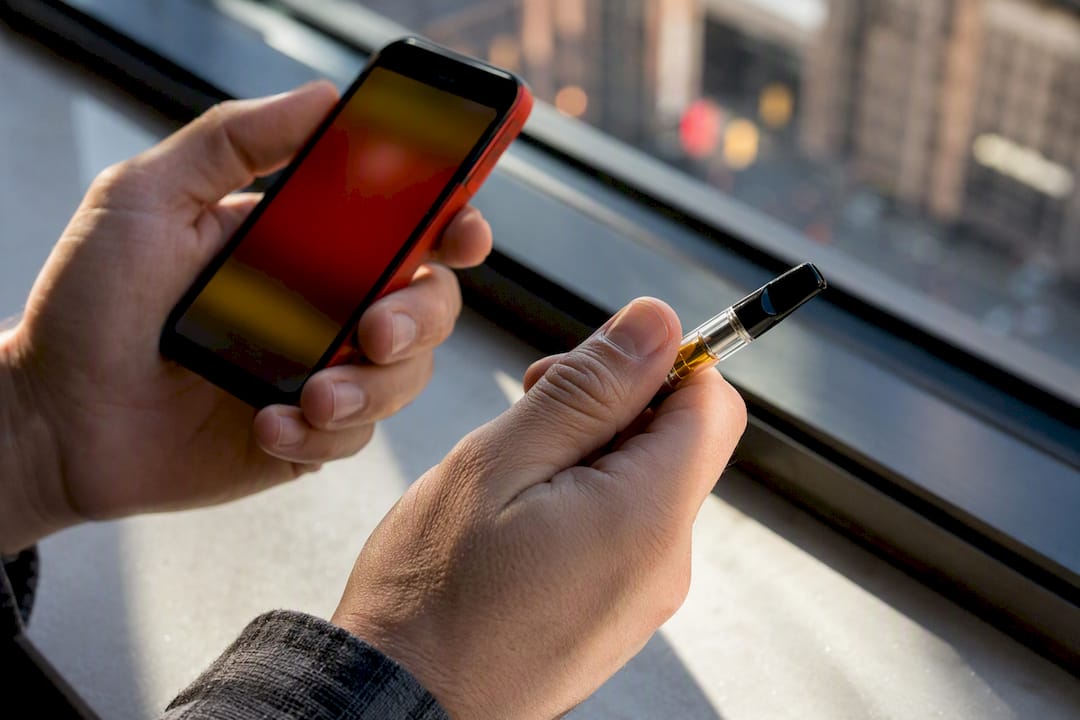
The quickest way to avoid fake carts is to buy only lab-tested products from licensed dispensaries. If you’re inspecting a cart right now, run two checks first: scan for the QR code and confirm the Certificate of Analysis matches the batch number on the packaging. If you’ve already used a suspicious cartridge and feel unwell, stop immediately and save the product for testing or medical review.
TL;DR:
- Always verify that the QR code links to a valid Certificate of Analysis that matches the batch number on the packaging before purchasing or using a cart.
- Buying from licensed dispensaries with proper state licensing and traceable batch testing significantly lowers the risk of encountering contaminated or fake products.
- Oil viscosity and packaging details can indicate authenticity, but visual checks alone cannot detect dangerous additives like vitamin E acetate, which require lab testing.
- Confirm the COA includes lab name, license number, cannabinoid content, and contaminant testing results; blank or inconsistent reports are major red flags.
- Be cautious of abnormally low prices, counterfeit packaging, or sellers with no license, as these typical signs often point to illicit or unsafe products.
Table of Contents
- Quick Pre-Use Checklist: Six Checks You Can Run in 30 to 90 Seconds
- Visual and Hardware Signs of Fake vs. Real Carts
- Lab Verification and COAs: How to Read and Confirm a Certificate of Analysis
- Where You Buy Matters: Licensed Dispensaries vs. High-Risk Channels
- Contaminants and Health Risks: Why Lab Tests Matter More Than Your Eyes
- How to Verify QR Codes, Batch Numbers, and Lab Info on Your Phone
- If You Already Used a Suspicious Cart: Symptoms to Watch and Immediate Steps
- Why Trusted Retailers and Verified Testing Matter
- Common Scams and Counterfeit Brands to Watch Out For
- Legal Implications of Buying or Possessing Fake Carts
- Differences in Price and What Unusually Low Prices May Indicate
- Impact of Fake Carts on Broader Cannabis Industry and Consumer Safety
- Skip the Guesswork: Prioritize the Checks That Actually Catch Fakes
- Buy Tested Carts Without the Guesswork
- Sources
Quick Pre-Use Checklist: Six Checks You Can Run in 30 to 90 Seconds
Before you ever put a cart to your lips, run through this sequence. It takes less time than waiting for your delivery driver to text you they’ve arrived.
- Scan the QR code and confirm it leads to a COA with a batch number matching the one printed on your box.
- Confirm the seller is licensed. A legitimate dispensary or delivery service displays a state license number, not just a slick website.
- Check the price. If it’s dramatically below typical market rate for that brand and size, treat that as a warning, not a bargain.
- Inspect the packaging. Look for tamper-evident seals, sharp printing, and consistent fonts, not blurry logos or crooked labels.
- Watch the oil before firing. Real distillate usually moves like honey when you tilt the cart, with bubbles that rise slowly and evenly.
- Check the hardware. Threading should screw on smoothly, and the serial number on the cartridge should match the box.
Pro Tip: Keep a flashlight app open when you inspect oil color and bubble movement. Overhead store lighting hides cloudiness and uneven mixing that daylight or a phone light reveals instantly.
None of these checks alone guarantees authenticity. Together, they take under two minutes and eliminate the most obvious counterfeits before you spend a dollar.
Visual and Hardware Signs of Fake vs. Real Carts
Oil viscosity tells you more than color does. Authentic distillate has a syrupy consistency: tilt the cartridge and watch the air bubble travel from one end to the other. It should move at a steady, unhurried pace, not shoot across in half a second and not sit frozen in place. Fake oil often behaves at either extreme. Thin, watery oil that sloshes and bubbles rapidly usually means it’s been cut with a thinning agent. Oil that barely moves at all, thick and gluey, may signal a different kind of dilution meant to fake potency at a glance.
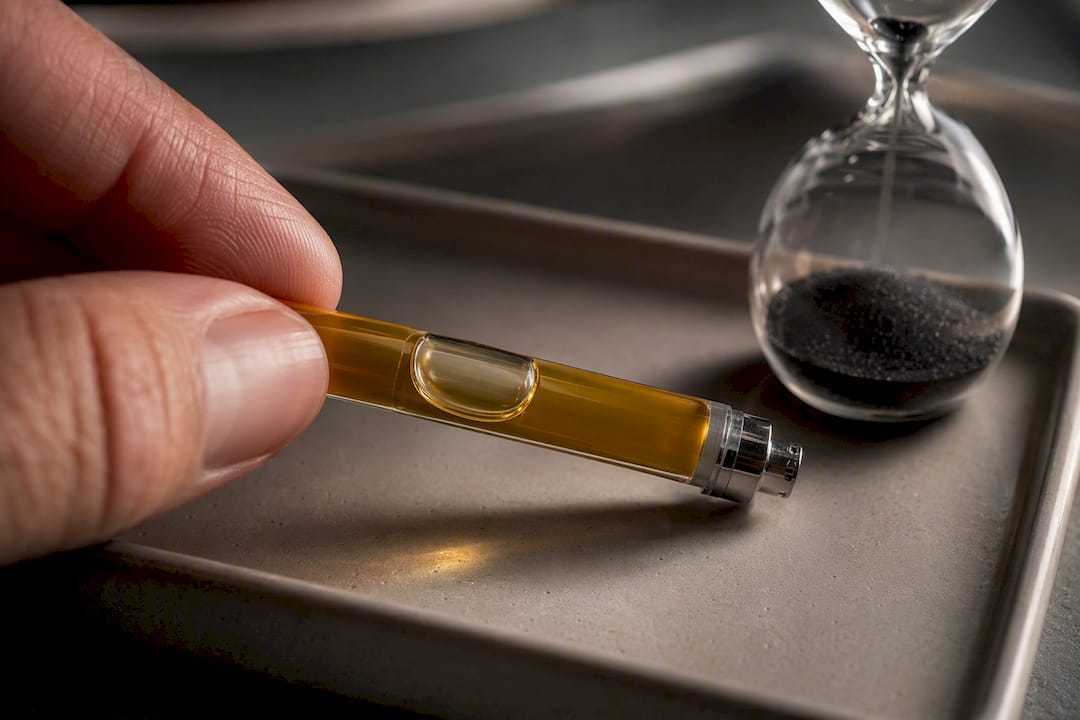
Color is where a lot of buyers get fooled, because legitimate oil legitimately varies from pale gold to deep amber depending on the strain and extraction method. That range is normal. What’s not normal is oil that looks unnaturally bright yellow-green, has a cloudy or separated appearance, or shows visible sediment settling at the bottom. Those are signs worth pausing over, even if they’re not proof on their own.
Hardware tells its own story. A counterfeit cart often has:
- Threading that feels loose, off-center, or requires force to screw onto a battery.
- A mouthpiece that’s a slightly different shade of plastic than the body, suggesting mismatched parts from different molds.
- No serial number, or a serial number that doesn’t match anything printed on the box.
- A weight that feels noticeably lighter or heavier than an authentic cart of the same brand and size.
Packaging is often the easiest tell, because counterfeiters copy the oil and hardware more carefully than the fine print. Misspelled words, low-resolution logos, missing batch numbers, and absent state license information are the classic giveaways. Analysts who track counterfeit trends note that tamper-resistant packaging and unit-level identifiers became standard across the legal market after the 2019 EVALI outbreak, so a cart that lacks those features is behind the times in a way legitimate manufacturers no longer are.
The number that matters most here isn’t a percentage, it’s zero. Zero visual checks, on their own, can confirm a cart is free of contaminants. Vitamin E acetate, the additive tied to the EVALI outbreak, can mimic the exact viscosity of legitimate cannabis oil, which means a cart can pass every visual test and still be dangerous. Visual inspection filters out obvious fakes. It doesn’t replace lab verification.
Lab Verification and COAs: How to Read and Confirm a Certificate of Analysis
A Certificate of Analysis is the closest thing to a nutrition label a cannabis product has, and reading one takes about a minute once you know what to look for. A real COA lists:
- The testing lab’s name and state license number, printed clearly, not buried in a footer.
- A batch or lot ID that matches the number printed on your cartridge packaging exactly.
- A cannabinoid panel showing THC, CBD, and minor cannabinoid percentages.
- Residual solvent results, since extraction chemicals like butane or propane must test below regulatory limits.
- Pesticide and heavy metal screening, covering contaminants that can accumulate in cannabis plants during growth.
Watch for red flags in that report itself. A COA showing perfect zeros across every single contaminant category is a pattern labs and public-health agencies flag as implausible, since real-world testing almost always detects trace amounts of something, even in clean product. A blank or nonexistent lab license number is another giveaway, as is a batch ID on the COA that doesn’t match the number on your box.
Counterfeiters sometimes copy real QR codes wholesale or reuse legitimate batch numbers on fake packaging, so scanning a code that “works” isn’t proof of anything by itself. Always cross-check the COA against the testing lab’s own public database or website, not just the landing page the QR code opens.
If the QR code fails or the linked page looks off, search the lab’s name directly and look up the batch on their own site. A five-minute phone call to the lab is a reasonable ask for a product you’re about to inhale.
COAs have limits. They test a sample from a batch, not every single unit, and they can theoretically be forged by a determined counterfeiter. Even so, a matched, verifiable COA remains the strongest single piece of evidence a consumer can check before use, because it’s the only check that addresses what’s actually inside the oil rather than what the packaging looks like.
Where You Buy Matters: Licensed Dispensaries vs. High-Risk Channels
Purchase channel changes your risk profile more than almost any other factor. Licensed dispensaries operate inside a supply chain that requires testing at multiple checkpoints, tracks products by batch from cultivation through sale, and faces real consequences for selling contaminated goods. That oversight is exactly what’s missing from illicit and informal sellers, which is why public-health investigators repeatedly traced EVALI cases back to unregulated sources rather than tested retail product.
High-risk channels share a few traits:
- Social media sellers who take orders through direct message and ship product with no license number visible anywhere.
- Informal, in-person sellers operating outside any regulatory framework, often selling recognizable brand packaging that was never verified by that brand.
- Websites with no visible state license, vague “About Us” pages, and no working customer service line.
Checking a retailer’s license takes under a minute. Most state cannabis regulatory websites maintain a searchable license database. If a delivery service or storefront can’t produce a license number that matches what’s listed there, that’s disqualifying on its own.
Price differences between legal and illicit channels usually reflect real costs: cultivation and product testing, packaging compliance, and applicable cannabis taxes. A cart selling for a fraction of the going rate has to be cutting costs somewhere, and testing is the expense that’s easiest to skip without a buyer noticing until it’s too late.
Contaminants and Health Risks: Why Lab Tests Matter More Than Your Eyes
Vitamin E acetate is the contaminant most associated with lung injury from illicit vape products, and it’s also the clearest argument against relying on visual inspection alone. It was identified as a primary chemical linked to the 2019 EVALI outbreak, and it thickens oil to closely match the texture of legitimate distillate. In other words, the exact viscosity check recommended earlier in this article can be defeated by the exact additive that hospitalized people.
Vitamin E acetate isn’t the only concern. Residual solvents left over from sloppy extraction, including butane and propane, can remain in finished oil above safe limits. Peer-reviewed chemical analyses of illicit vaping liquids have identified these solvents alongside heavy metals like lead and pesticide residues, none of which change how oil looks or smells in any way a consumer would notice.
Symptoms tied to contaminated vape products include:
- Shortness of breath or chest tightness that develops over days, not seconds.
- Persistent cough, fever, or fatigue without an obvious cause.
- Nausea, vomiting, or abdominal pain alongside respiratory symptoms.
The danger compounds with repeated exposure. A single hit off a contaminated cart might cause no noticeable reaction, which is precisely why people keep using a bad batch until symptoms escalate. Peer-reviewed research on vaping-associated lung injury points to cumulative exposure, not one-time use, as the pattern behind most severe cases. Lab analysis remains the only reliable way to catch these hazards, because none of them announce themselves through smell, color, or texture.
How to Verify QR Codes, Batch Numbers, and Lab Info on Your Phone
- Scan the QR code with your phone’s camera and check the domain it opens. It should belong to the testing lab or the licensed brand, not a generic third-party page.
- Compare the batch number on the resulting COA against the number printed on your cartridge box. They must match exactly, digit for digit.
- Confirm the lab’s name and license appear on the report, then do a quick separate search to confirm that lab is real and currently licensed in your state.
- If the QR code fails or redirects oddly, go directly to the lab’s website and search their public batch database using the number on your box instead of trusting the scanned link.
- Screenshot everything before you leave the counter or close the app, including the COA, the batch number, and the seller’s license page.
- Contact the retailer or lab directly if any piece of information is missing, mismatched, or unavailable, and ask them to explain the discrepancy before you buy.
Pro Tip: Save verified COAs from brands you trust in a phone folder. When a new batch shows up, you can compare formatting and lab language side by side instead of relying on memory.
Refuse the sale or return the product if a batch number doesn’t match, a QR code leads nowhere useful, or a seller can’t produce license information on request. A legitimate retailer will never treat that request as an inconvenience.
If You Already Used a Suspicious Cart: Symptoms to Watch and Immediate Steps
Stop using the cartridge the moment you suspect it’s counterfeit or contaminated, even if you feel fine right now. Preserve the product exactly as it is: don’t throw away the packaging, don’t wipe it down, and don’t use the rest of the oil. Photograph the cartridge, the box, any visible batch number, and the COA if you scanned one, then note when you used it and roughly how much.
Watch for symptoms that require urgent care rather than a wait-and-see approach:
- Shortness of breath or chest pain, especially if it worsens over hours rather than improving.
- A fever that develops alongside respiratory symptoms.
- Persistent vomiting or abdominal pain that doesn’t resolve.
Roughly 2,800 people were hospitalized or died during the 2019 to 2020 EVALI outbreak tied to illicit vaping products, and public-health agencies now advise anyone with these symptoms after vaping to seek medical attention promptly and mention vape use specifically to their provider.
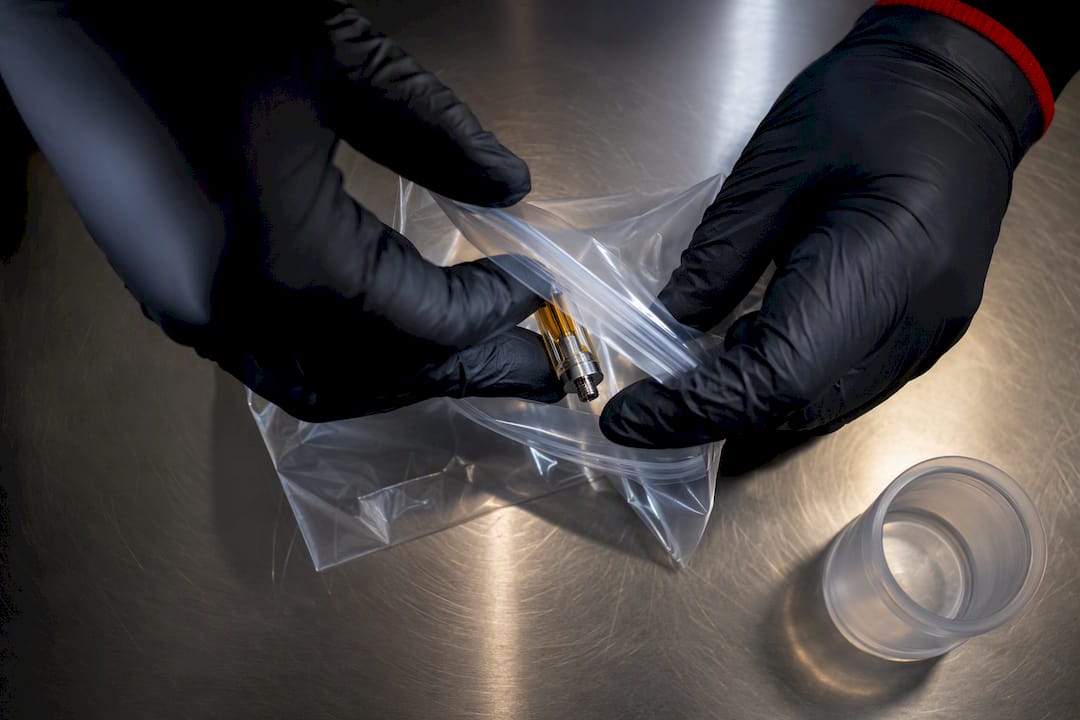
Report suspicious products to your state’s cannabis regulatory agency or local health department. Most states accept product complaints online, and some ask you to mail in a sample. Keep the cartridge in its original packaging in a sealed bag if a lab or health department requests it. Regulators can only trace a bad batch back to its source if consumers actually report it instead of just throwing it away.
Why Trusted Retailers and Verified Testing Matter
Highfashionsmokesandprints stocks lab-tested inventory with Certificates of Analysis available for the products it carries, which is the operational version of everything this article recommends checking yourself. A retailer that takes testing seriously builds age verification, batch tracking, and documentation into the ordering process itself, so the burden of catching a fake doesn’t fall entirely on a customer squinting at a QR code on their porch.
That said, no retailer, however careful, eliminates every risk in the cannabis supply chain. Buying from a verified source drastically lowers your odds of encountering a counterfeit or contaminated cart, but the habits covered above, checking batch numbers and reading a COA when it’s handed to you, are still worth practicing every time. Verification is a routine, not a one-time decision you make when picking a retailer.
Common Scams and Counterfeit Brands to Watch Out For
Counterfeiters don’t usually invent new brand names. They copy popular, recognizable ones, because a fake box with a trusted logo sells itself. Cartridge lines that see heavy counterfeiting tend to be whichever brands are most popular in a given region at a given time, which means the specific names worth watching shift year to year and state to state.
A few scam patterns show up consistently regardless of which brand gets copied:
- Recycled packaging. Counterfeiters buy or collect empty authentic boxes and refill them with unregulated oil, so the box itself can be completely genuine.
- Near-identical branding. Fonts, colors, and logos that look right at a glance but have subtle differences, like a slightly wrong shade or a misplaced trademark symbol, under close inspection.
- Marketplace impersonation. Sellers on social platforms using a legitimate brand’s photos and name without any actual affiliation, license, or product to back it up.
- Bundle deals that seem generous. Multi-pack discounts on a brand that never discounts, at a seller with no license, are a near-certain sign of counterfeit inventory.
The safest response isn’t memorizing which specific brands are being faked this month. It’s applying the same COA and batch verification to every cartridge you buy, regardless of how familiar or trustworthy the logo looks.
Legal Implications of Buying or Possessing Fake Carts
Counterfeit cartridges create legal exposure that has nothing to do with whether cannabis itself is legal where you live. Trademark counterfeiting is a separate offense from cannabis possession, and selling fake products bearing a real brand’s logo can expose sellers to civil and criminal liability under trademark law, independent of any cannabis-specific statute.
For buyers, the legal risk is smaller but not zero. Possessing a counterfeit product doesn’t usually carry the same penalty as knowingly selling one, but if a fake cart contains an unlisted or illegal additive, you could be in possession of a product that violates your state’s cannabis testing and labeling requirements, even without knowing it. That’s a genuinely unfair position to be in, and it’s another reason verification at the point of purchase matters more than dealing with consequences after the fact.
State cannabis programs vary widely in how they define compliant packaging and testing, so a product that’s clearly illegal in one state’s regulated market might occupy murkier territory elsewhere. When in doubt, treat any cartridge lacking a valid state license reference and matching COA as legally questionable in addition to being a health risk, and let that uncertainty push you toward buying from licensed sources rather than gambling on an unlicensed one.
Differences in Price and What Unusually Low Prices May Indicate
Legitimate cannabis pricing reflects real, unavoidable costs: cultivation, mandatory lab testing, compliant packaging, and cannabis-specific taxes that vary by state and locality. Those costs get baked into the shelf price of every legal product, which is why tested cartridges from licensed dispensaries tend to cluster within a fairly predictable range for a given brand and size.
When a price drops dramatically below that range, something in the production chain got skipped, and testing is usually the first casualty because it’s invisible to the buyer until something goes wrong. A cart priced well under typical market rate isn’t automatically fake, but it should raise the same kind of question you’d ask about any product priced too far below its category: what corner got cut to make that price possible?
Discount pricing at a licensed dispensary, tied to a sale, a loyalty program, or overstock, is a different situation entirely, because the testing and licensing infrastructure behind it doesn’t change. The distinction that matters is channel, not just number. A $20 cart from an unlicensed seller with no visible testing carries far more risk than a $20 cart discounted from $35 at a retailer that publishes its COAs.
Impact of Fake Carts on Broader Cannabis Industry and Consumer Safety
Every counterfeit cart that reaches a consumer chips away at public trust in cannabis vaping as a category, not just in whichever brand got copied. The EVALI outbreak is the clearest example: it was overwhelmingly traced to illicit, untested products, yet the resulting fear affected how consumers viewed legal vape cartridges too, even though the regulated market had testing safeguards the illicit market never did.
Legitimate brands lose revenue directly when counterfeiters copy their packaging, and they also absorb reputational damage when a fake product causes harm under their name. That’s a cost licensed manufacturers didn’t create and can’t fully control, no matter how good their own testing standards are.
For consumers as a group, counterfeit products erode the basic premise that a lab-tested market is safer than an unregulated one. That premise only holds if the testing infrastructure gets used and verified consistently. Every consumer who checks a batch number before buying, and every regulator who investigates a report of a suspicious product, reinforces a system that depends on active participation to actually work. A tested market that nobody verifies isn’t meaningfully safer than an untested one.
Skip the Guesswork: Prioritize the Checks That Actually Catch Fakes
Most guides treat every red flag as equally important, and that’s where they go wrong. Oil color, hardware quality, packaging print quality: all worth a glance, none of them catch vitamin E acetate or a heavy metal contaminant. The COA and batch match are doing almost all the real work here. Everything else is a speed bump for obviously sloppy counterfeits, not a defense against a well-made fake filled with something dangerous.
The conventional advice to “trust your senses” undersells how deceptive a well-executed fake can be. Oil that looks and pours exactly right can still be loaded with an additive that mimics viscosity on purpose. That’s not a reason to skip the visual checks. It’s a reason to treat them as a first filter, not a final verdict.
If you’re prioritizing anything from this article, prioritize this: buy from a licensed source that makes COAs easy to find, and actually look at the batch number before you use the product. Everything else, the packaging inspection, the hardware check, the oil viscosity test, matters, but it’s secondary to that one habit. Consumers who buy from tested inventory are already doing the hardest part right. The remaining checks just close the gaps.
— Jake
Buy Tested Carts Without the Guesswork
Highfashionsmokesandprints stocks lab-tested cartridges with Certificates of Analysis available for the products carried, so the verification steps in this article aren’t a separate task you have to do on top of shopping, they’re built into browsing the menu itself.

Same-day delivery across New York City means you’re not choosing between convenience and testing standards. Every cartridge listed comes from a supply chain that tracks batch numbers from cultivation through checkout, and product pages make it straightforward to see what you’re actually getting before it arrives at your door. If you’re deciding between a cart and a disposable pen, the comparison guide breaks down hardware differences that matter for exactly the checks covered above.
Ready to see it in practice? Browse the current vape and cartridge selection and place a same-day order with COA documentation available for the batch you’re buying.
Sources
The CDC’s report on EVALI documents how illicit THC vaping products drove the 2019 to 2020 lung injury outbreak and remains the primary public-health record on the topic.
The FDA’s lung injury update explains vitamin E acetate’s role and gives direct guidance on when to stop using a suspect product.
A peer-reviewed review in PMC covers the clinical mechanisms behind vaping-associated lung injury in more technical detail.
Chemical toxicology research published by ACS identifies specific contaminants found in illicit vaping liquids, useful for readers who want the underlying lab science behind COA requirements.
This article is general information, not a substitute for advice from a qualified doctor. Consult a qualified healthcare professional about your own circumstances before acting on anything here.
- CDC MMWR — EVALI and illicit THC vaping products
- FDA lung injury update — warning about THC-containing vaping products
- NIH / PMC review article on vaping-associated lung injuries
- ACS Chemical Research in Toxicology — studies on vaping liquid toxicity