Read our Google Birdeye Reviews
The strongest human evidence right now backs cannabigerol for easing anxiety and stress, thanks to a 2024 double-blind, placebo-controlled trial. Everything else you’ve heard about CBG benefits, from neuroprotection to fighting drug-resistant bacteria, still lives mostly in petri dishes and animal models, not human trials.
That gap matters. It doesn’t mean the other findings are wrong, just unproven at the level anxiety relief now sits at.
A few things worth knowing before you go further:
- CBG doesn’t get you high. It’s non-intoxicating, structurally different from THC, and won’t impair motor skills or memory at doses studied in humans.
- In the controlled trial, effects on anxiety and stress showed up within a short time after an oral dose.
- Preclinical work points to anti-inflammatory, antibacterial, neuroprotective, and eye-pressure-lowering effects, but none of that has cleared a human clinical trial yet.
In that 2024 trial, a single 20 mg oral dose of hemp-derived CBG cut anxiety ratings significantly from baseline on a standard 0 to 10 scale, without any reported intoxication or cognitive impairment.
If you’re dealing with a diagnosed anxiety disorder, chronic pain, or another medical condition, talk to a clinician before treating CBG as a substitute for existing care. The clinical picture is encouraging, not complete.
Key Takeaways
CBG’s anxiety and stress benefits now rest on real human trial data, while its other proposed benefits remain preclinical and require far more research before they can be called proven.
| Point | Details |
|---|---|
| Anxiety relief has trial support | A 2024 double-blind trial found 20 mg oral CBG reduced anxiety and stress within 20 to 60 minutes without impairment. |
| Other benefits stay preclinical | Neuroprotection, antibacterial action, and anti-inflammatory effects rely on animal and lab studies, not human trials yet. |
| Side effects are generally mild | Dry mouth, dry eyes, and sleepiness are the most reported issues, with no strong intoxication signal. |
| COAs are non-negotiable | Always match the batch number on your product to its certificate of analysis before buying. |
| High Fashion Smokes and Prints verifies before listing | The dispensary checks lab reports against batch numbers ahead of same-day NYC delivery. |
Table of Contents
- Human Clinical Evidence: What the Trials and Surveys Actually Show
- Why CBG Might Work: The Receptor Science Behind the Effects
- What Side Effects and Safety Risks Should You Know About?
- How Much CBG Should You Take, and Which Method Works Best?
- CBG vs. CBD vs. THC: What Actually Sets Them Apart?
- How to Spot a Quality CBG Product (and Avoid a Bad One)
- Why Publisher Testing Standards Matter for CBG Buyers
- Is CBG Legal? What to Know Before You Buy
- Where to Read the Primary Research Yourself
- What I Tell Customers Who Ask About CBG
- Ready to Try CBG? Here’s How to Buy It With Confidence
- Frequently Asked Questions About CBG Benefits
- Sources
Human Clinical Evidence: What the Trials and Surveys Actually Show
Most of what gets repeated about CBG benefits traces back to test tubes and mice, not people. That’s what makes the 2024 trial out of Washington State University worth taking seriously: it’s one of the first controlled human studies to test CBG in isolation and measure something concrete.
Researchers ran a double-blind, placebo-controlled, crossover field trial giving healthy adults a single 20 mg oral dose of hemp-derived CBG. Crossover design means each participant served as their own control, taking both the CBG and the placebo on separate occasions, which strengthens the comparison considerably. The results, published in Scientific Reports, showed a statistically significant reduction in subjective anxiety and stress ratings, plus an unexpected bonus: improved verbal memory compared to placebo.
That memory finding deserves a beat of attention. THC is well known for muddying short-term recall. CBG did the opposite in this trial, and participants showed no signs of motor or cognitive impairment at all. Nobody got sedated, nobody felt “high,” and nobody performed worse on memory tasks. For a cannabinoid, that’s an unusual safety signal, and it’s a big part of why researchers are excited about CBG as an anxiety option that doesn’t come with THC’s baggage.
Onset was fast by cannabinoid standards. Participants reported changes in mood and anxiety within a short time after taking the oral dose, consistent with typical absorption of ingested cannabinoids.
Where the Evidence Gets Thinner
Beyond that trial, most of what exists is observational: user surveys, retrospective reports, and self-selected feedback from people already using CBG products. This kind of data has real value. It captures patterns across hundreds or thousands of real-world users that a small clinical trial can’t replicate, and it’s often where hypotheses for future trials come from.
But survey data carries obvious limitations. People self-select into using CBG in the first place, often because they already believe it will help, and self-reported outcomes lack the blinding that makes the WSU trial credible. Someone who paid for a CBG tincture expecting calm is more likely to report calm, whether or not the compound caused it.
Here’s the honest state of play on specific claims:
- Anxiety and stress reduction has initial, credible human-trial support. This is the benefit you can discuss with the most confidence.
- Chronic pain relief remains largely anecdotal and preclinical, resting on receptor pharmacology and animal studies rather than controlled human trials.
- Neuroprotection is a promising laboratory finding, not a demonstrated clinical outcome in people.
- Sleep support shows up constantly in user reports, but it hasn’t been isolated and tested the way anxiety was in the 2024 trial. If sleep is your main concern, it’s worth reading how terpene profiles interact with cannabinoid effects before assuming CBG alone will do the job, since compounds like myrcene are frequently cited by users as doing more of that specific work.
- Antibacterial and anti-inflammatory activity are backed by lab and animal studies, not trials in humans with infections or inflammatory disease.
One trial, however well designed, is not a mountain of evidence. It’s a first serious data point. Reviewers writing in PMC have been consistent on this: CBG’s therapeutic profile looks genuinely promising across multiple mechanisms, but the jump from receptor binding in a dish to a proven treatment in a clinic takes years and multiple replicated trials most cannabinoids, including CBD before it, are still working through.
Why CBG Might Work: The Receptor Science Behind the Effects
CBG isn’t a one-trick molecule. It binds to a surprisingly wide set of receptors, and that multi-target behavior is likely why its effects look different from THC or CBD.
The receptor getting the most attention right now is the alpha-2 adrenergic receptor (α2AR). This receptor sits at the center of the body’s stress response, and drugs that activate it (clonidine is a familiar example in medicine) tend to calm the nervous system and can lower blood pressure and heart rate. CBG appears to engage this receptor with meaningful potency, which is one plausible explanation for the calming effect seen in the 2024 trial.
CBG also interacts with 5-HT1A, a serotonin receptor subtype tied to mood regulation and anxiety. Several existing anti-anxiety medications work partly through this same receptor, so CBG’s activity here gives the anxiety findings a mechanistic backbone rather than leaving them as an unexplained correlation.
Then there’s the cannabinoid system itself. CBG interacts with CB1 and CB2 receptors, though generally with lower affinity than THC, which lines up with why it doesn’t produce intoxication the way THC does. It also acts on TRP channels, a family of receptors involved in pain signaling, temperature sensing, and inflammation, and on PPAR receptors, which regulate metabolism and fat storage. That PPAR interaction is part of why some researchers are curious about CBG’s potential role in metabolic and appetite-related processes.
Here’s where the preclinical evidence gets specific:
- Neuroprotection: Animal studies, including models relevant to Huntington’s disease, have shown CBG reducing markers of oxidative stress and neural damage.
- Antibacterial activity: Lab studies have found CBG effective against resistant bacterial strains, including MRSA, in vitro.
- Anti-inflammatory action: Animal models of inflammatory bowel disease have shown reduced inflammation markers after CBG exposure.
- Intraocular pressure: Early animal research suggests CBG may lower eye pressure, which is relevant to glaucoma management.
- Cardiovascular effects: Because of its α2AR activity, CBG has shown potential to lower heart rate in some contexts, a notable contrast to THC, which typically raises it, according to pharmacology research in PMC.
Pro Tip: When you see a CBG product claim it “fights inflammation” or “protects brain cells,” ask whether that claim traces back to a human study or an animal model. Both matter for research, but only one tells you what to expect from your own body.
The translational gap is real, and worth naming directly. Doses used in mice don’t scale linearly to humans, the pharmacokinetics of oral versus injected CBG differ across species, and a receptor effect seen in a cell culture doesn’t guarantee the same magnitude of effect in a full nervous system. That’s not a reason to dismiss the mechanism, it’s a reason to treat “CBG showed promise in animal studies” and “CBG is clinically proven” as two very different sentences.
What Side Effects and Safety Risks Should You Know About?
CBG’s side-effect profile, based on both the 2024 clinical trial and broader user surveys, looks mild compared to most cannabinoids people are already familiar with. Dry mouth and dry eyes top the list, followed by mild sleepiness and occasional appetite changes. None of these are surprising given how cannabinoids generally interact with the body’s saliva and tear production pathways.
What’s notably absent from the data is any strong signal of intoxication or impairment. Trial participants receiving the 20 mg oral dose showed no measurable motor or cognitive deficits, and reported low rates of subjective “drug liking,” a term researchers use to flag abuse potential. That’s a meaningfully different safety profile than THC.
Stat check: Side-effect tables from the Scientific Reports trial recorded low incidence of adverse effects overall, with no serious cardiac events reported among healthy adult participants at the studied dose.
Liver and metabolism questions are where the data thins out fastest. There’s no robust human hepatotoxicity data on CBG specifically, meaning nobody has run the kind of long-term dosing study that would reveal whether regular use stresses liver enzymes over time. That’s not a red flag exactly, but it is an honest blank space. The FDA’s guidance on dietary supplements is useful context here: cannabinoid products often fall into a regulatory gray zone that doesn’t require the same premarket safety testing as pharmaceuticals, so the burden of caution shifts more heavily onto the consumer and their doctor.
Before you add CBG to your routine, run through this checklist:
- Medications that affect liver enzymes (certain antidepressants, blood thinners, seizure medications) deserve a conversation with a pharmacist or doctor, since cannabinoids can compete for the same metabolic pathways.
- Pregnancy and breastfeeding are contexts where no cannabinoid, CBG included, has adequate safety data, so avoidance is the standard, cautious recommendation.
- Cardiac conditions warrant extra attention given CBG’s activity at α2AR and its potential to lower heart rate. Anyone on blood pressure medication or with an arrhythmia history should flag CBG use to their cardiologist, the same way anyone considering higher THC doses for pain or appetite should flag that use to a physician too.
- New or worsening symptoms after starting CBG (unusual fatigue, jaundice, abdominal pain) are a signal to stop and seek medical evaluation, not push through.
None of this makes CBG dangerous. It makes it under-studied for long-term use, which is a different and more honest way to frame it than either “totally safe” or “risky.”
How Much CBG Should You Take, and Which Method Works Best?
The only dose with real controlled human data behind it is a moderate oral amount used in the 2024 crossover trial. Participants felt measurable changes in anxiety and stress within a short time, without impairment. That’s a useful anchor point, but it’s also just one dose tested in one study design, so treat it as a starting reference, not a universal prescription.
- Start with the studied dose as a baseline. If you’re trying CBG for the first time, 20 mg oral is the figure with the most direct backing, though your ideal amount will depend on body weight, tolerance, and the specific product’s formulation.
- Give it the full window before judging results. Oral products take longer to kick in than inhaled ones because they pass through digestion first, so don’t write off a dose after 10 minutes when the trial data suggests 20 to 60 minutes is typical.
- Track what you take and how you feel. A simple note on dose, time, and effect over a week or two tells you more than guessing, especially since individual response varies more with cannabinoids than with most conventional medications.
- Check the certificate of analysis (COA) before you buy anything. Potency claims on a label mean little without lab verification behind them.
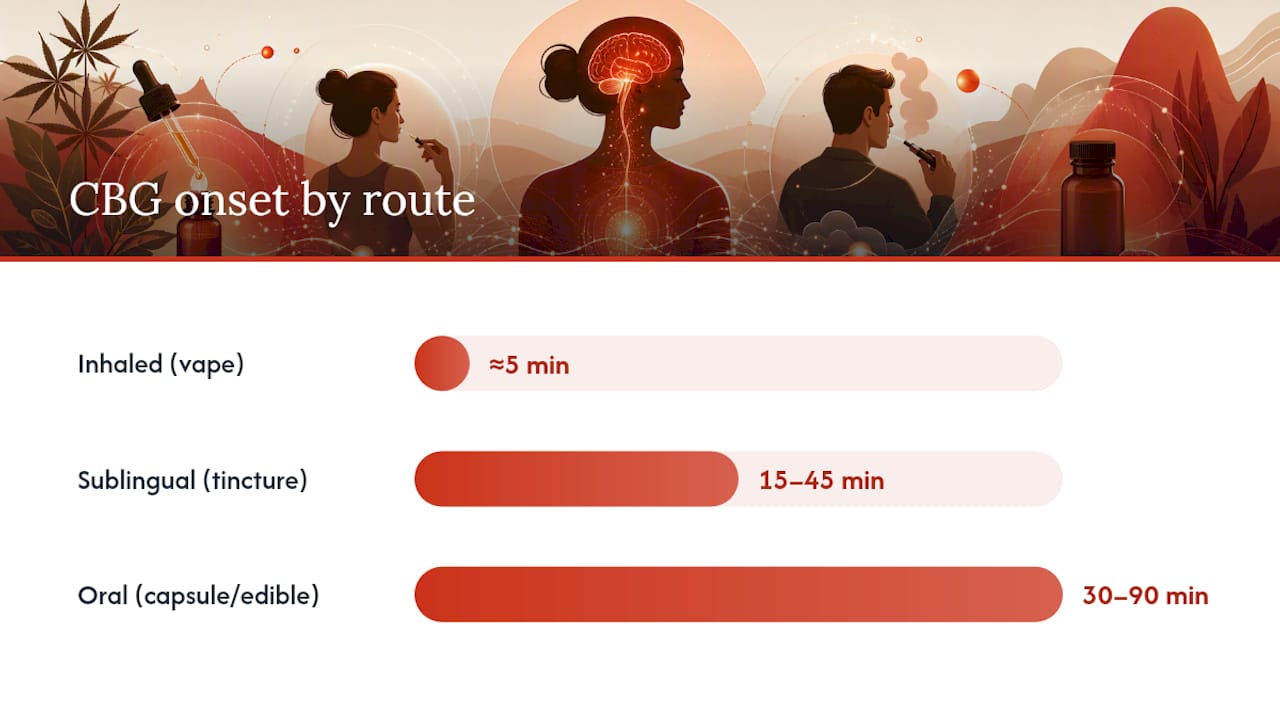
Route matters as much as amount. Oral capsules and edibles offer the most predictable, if slowest, absorption, generally 30 to 90 minutes to onset with effects lasting several hours. Sublingual tinctures, held under the tongue, tend to act faster, often within 15 to 45 minutes, because some absorption happens through the mouth’s mucous membranes before digestion even starts. Inhaled CBG, through vapes, hits fastest, often within minutes, but the effect also fades quicker. Topicals are the outlier: they’re applied for localized effects and generally aren’t expected to produce the systemic anxiety or mood changes seen in oral trial data.
Pro Tip: If you’re new to CBG, start with the lowest available dose on a product’s label and wait a full two hours before considering more, even if you don’t notice much right away. Cannabinoid effects can build subtly, and “start low, go slow” isn’t just a slogan, it’s how you avoid overshooting into unwanted grogginess.
The honest gap in this evidence is topical and inhaled dosing for CBG specifically. Almost all controlled human data comes from a single oral dose, so if you’re using a vape or a cream, you’re relying on general cannabinoid pharmacokinetics rather than CBG-specific trial results.
CBG vs. CBD vs. THC: What Actually Sets Them Apart?
THC gets you high. CBG and CBD don’t. That’s the first and most practical distinction, and it’s rooted in receptor biology, not marketing.
THC binds strongly to CB1 receptors in the brain, which is what produces intoxication. CBG, by contrast, leans more heavily on non-cannabinoid targets like α2AR and 5-HT1A, the same receptors tied to its anxiety-reducing effects in the 2024 trial. CBD shares some overlapping mechanisms with CBG but tends to work more through indirect modulation of the endocannabinoid system and other receptor families like TRPV1.
- For anxiety without intoxication: CBG now has direct clinical trial support; CBD has a longer research history but more mixed clinical results depending on dose and condition.
- For appetite changes: THC is well known for stimulating appetite; CBG’s role here is still preclinical, tied to its PPAR receptor activity rather than confirmed human outcomes.
- For potential neuroprotective interest: CBG’s preclinical profile looks more targeted here than CBD’s, though neither has cleared human trials for this specific use.
- For general product experience: whole-plant products containing multiple cannabinoids and terpenes together may behave differently than an isolated CBG extract, a phenomenon often called the entourage effect. It’s a real hypothesis in cannabis science, though it’s harder to study cleanly than single-molecule trials.
If your goal is calm without impairment, CBG’s clinical data currently gives it the edge over both THC and CBD for that specific outcome.
How to Spot a Quality CBG Product (and Avoid a Bad One)
CBG is naturally scarce in mature cannabis plants. Most chemovars only accumulate small amounts of it because the plant converts CBGA, its precursor acid, into THC or CBD as it matures. Getting a CBG-dominant product means either harvesting early or cultivating specialized low-THC, low-CBD chemovars, both of which add cost and complexity to production. That scarcity is the real reason CBG products often carry a higher price tag than CBD equivalents.
That rarity also raises the stakes on verification. A product labeled “high in CBG” is easy to print and hard to fake convincingly unless someone actually checks the lab report.
- Confirm the batch number matches the certificate of analysis. A COA that doesn’t correspond to the specific batch on your shelf is worthless, no matter how official it looks.
- Check the full cannabinoid profile, not just the CBG number. You want to know what else is in there, including any THC content, since even hemp-derived products can carry trace amounts.
- Look for residual solvent and pesticide screening. Extraction methods that use solvents need to show those solvents were properly purged.
- Review heavy metals testing. Cannabis plants absorb metals from soil, and testing catches contamination before it reaches you.
- Read the terpene report if one’s included. Terpene content can meaningfully shape the experience alongside CBG itself, and it’s worth understanding how specific terpenes interact with anxiety relief before assuming CBG is doing all the work in a given product.
Pro Tip: Ask to see the COA before you commit to a purchase, not after. A legitimate seller will have no hesitation showing you the lab report for the specific batch you’re buying, down to the batch number printed on the packaging.
Red flags worth walking away from: no COA available at all, vague language like “clinically proven” without a citation you can check, and lab reports that are more than a year old or from a batch number that doesn’t match your product. If a seller can’t answer a direct question about testing, that’s information too. For general anxiety-related cannabinoid guidance from outside the CBG-specific literature, this practical resource is a useful comparison point on what verified cannabinoid guidance looks like in practice.
Why Publisher Testing Standards Matter for CBG Buyers
High Fashion Smokes and Prints has been serving New York City cannabis consumers since 2011, and every product listed goes through the same lab-verification standard before it reaches a customer’s door.
That means checking COAs against batch numbers before a product ever hits the online menu, not after a customer asks about it. It’s a small operational habit, but it’s the difference between a label claim and a verified fact.
- Same-day delivery across NYC keeps the process fast without cutting corners on verification.
- Educational resources on the site walk customers through how to read cannabinoid content and dosing before they buy, not just after.
- Staff can answer specific questions about batch testing, potency, and product sourcing directly, which matters more with a scarce compound like CBG than with common products.
Buying CBG shouldn’t require guesswork about what’s actually in the jar.
Is CBG Legal? What to Know Before You Buy
Legal status for CBG depends heavily on whether it’s derived from hemp or marijuana, and that distinction shifts based on THC content and the jurisdiction you’re in. Hemp-derived CBG, generally defined as coming from cannabis containing 0.3% THC or less by dry weight, occupies different legal territory than CBG derived from higher-THC cannabis plants, and rules vary considerably from one country and one state to the next.
This is not a topic where a blanket “it’s legal everywhere” or “it’s illegal everywhere” statement holds up. Regulations shift based on source plant, THC percentage, and local law, and they change often enough that yesterday’s answer isn’t a safe assumption for today.
- Check your specific state or country’s current hemp and cannabis regulations before purchasing or traveling with any CBG product.
- The FDA’s dietary supplement guidance is a useful starting point for understanding how the U.S. federal government approaches cannabinoid products, though it doesn’t override state-level cannabis law.
- If you experience an unexpected adverse reaction to a cannabinoid product, national adverse-event reporting systems exist specifically to track these outcomes and inform future safety guidance.
When in doubt, verify local law before you buy, and definitely before you travel with any cannabis product across state or national lines.
Where to Read the Primary Research Yourself
- Acute effects of cannabigerol on anxiety, stress, and mood — Scientific Reports (2024)
- Cannabigerol (CBG): A Comprehensive Review of Its Molecular Mechanisms and Therapeutic Potential — PMC
- Pharmacology and therapeutic potential of cannabigerol — PMC
- Cannabinoids — NCBI Bookshelf
- Dietary Supplements — FDA
- Cannabinoid CBG reduces anxiety and stress in first human clinical trial — Washington State University
What I Tell Customers Who Ask About CBG
Customers usually walk in with one of two questions: “Will this actually help my anxiety?” or “Is this just CBD with better marketing?” Neither question has a simple yes or no answer, and I’ve learned that giving one anyway does more harm than good.
What keeps me cautiously optimistic is the shape of the 2024 trial itself. It wasn’t a survey, it wasn’t testimonials, it was a controlled crossover design with a placebo arm, and it found something real without exaggerating what it found. That’s rare in cannabinoid research, where hype usually outruns data by years.
What I push back on is the leap from “this receptor mechanism is promising” to “this cures inflammation” or “this prevents neurological disease.” The pharmacology is genuinely interesting. The clinical proof for most of those claims simply isn’t there yet, and pretending otherwise does a disservice to people making real health decisions.
Our team’s job is to hand customers a verified lab report and an honest answer, not a sales pitch dressed up as science.
Ready to Try CBG? Here’s How to Buy It With Confidence
Finding a hemp-derived CBG product with a verified COA shouldn’t take an afternoon of research, and that’s exactly the gap High Fashion Smokes and Prints closes for NYC customers. Every product on the menu, CBG included, is lab-tested and batch-matched before it’s listed, so you’re not stuck cross-referencing a certificate against a jar after the fact.
Same-day delivery means you’re not waiting days to start tracking how a 20 mg dose actually feels for you, and our Brooklyn delivery service covers a growing part of the city on top of Manhattan and beyond. If Long Island is more your area, there’s a straightforward path to delivery there too.
Browse the current menu of lab-tested products to see what’s in stock right now, and don’t hesitate to message our team with a specific question about a COA or a dosing concern before you order. That conversation takes two minutes and can save you a lot of guesswork.
Frequently Asked Questions About CBG Benefits
What are the main benefits of CBG?
The best-supported benefit right now is reduced anxiety and stress, backed by a 2024 double-blind human trial. Other reported CBG benefits, including neuroprotection, anti-inflammatory action, antibacterial effects, and lower eye pressure, come from preclinical and animal research, rather than human clinical trials.
Does CBG get you high like THC?
No. CBG is non-intoxicating. It binds cannabinoid receptors with much lower affinity than THC and instead shows stronger activity at non-cannabinoid receptors like α2AR and 5-HT1A, which appears to explain its calming effects without impairment.
How is CBG different from CBD?
Both are non-intoxicating, but they lean on different receptors. CBG shows notably strong activity at α2AR and 5-HT1A, which may explain the anxiety and memory findings from its 2024 trial, while CBD works more broadly across the endocannabinoid system and other receptor families.
What’s a typical CBG dose, and how fast does it work?
The dose with actual clinical backing is 20 mg taken orally, with effects on anxiety and stress showing up within 20 to 60 minutes in trial conditions. Other doses and routes, including tinctures and vapes, haven’t been tested with the same rigor.
Are there side effects to watch for with CBG?
Reported side effects are generally mild: dry mouth, dry eyes, and occasional sleepiness. There’s no strong evidence of intoxication or serious cardiac events at studied doses, though anyone on medications metabolized by the liver should check with a clinician first.
Can CBG help with sleep?
Users frequently report sleep benefits, but this hasn’t been isolated and tested in a controlled trial the way anxiety was. Terpene content in a given product may play as large a role in sleep-related effects as the CBG itself.
Is CBG legal everywhere?
It depends on whether it’s hemp-derived or marijuana-derived, and rules vary by state and country. Hemp-derived CBG under legal THC thresholds is more widely accessible, but you should verify your local regulations before buying or traveling with any product.
This article is general information, not a substitute for advice from a qualified doctor. Consult a qualified healthcare professional about your own circumstances before acting on anything here.
Sources
- Acute effects of cannabigerol on anxiety, stress, and mood: a double-blind, placebo-controlled, crossover, field trial | Scientific Reports
- Cannabigerol (CBG): A Comprehensive Review of Its Molecular Mechanisms and Therapeutic Potential — PMC
- Cannabinoid CBG reduces anxiety and stress in first human clinical trial — Washington State University (press release)
- Dietary Supplements — Food and Drug Administration (FDA)