Read our Google Birdeye Reviews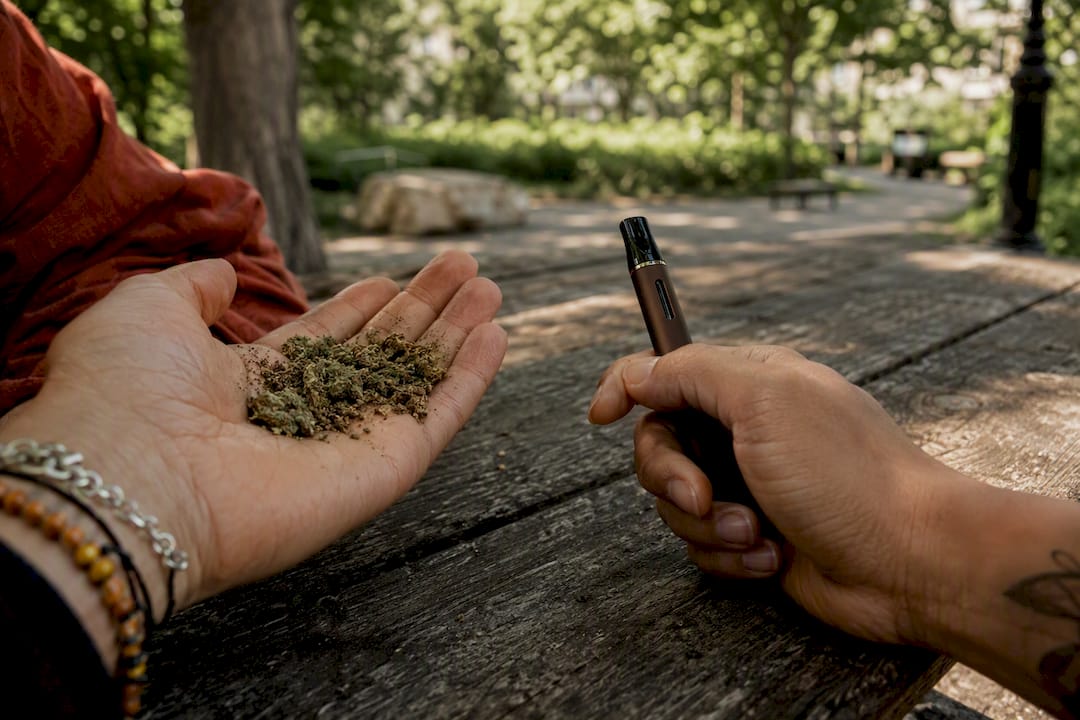
Vapes deliver more THC into your blood per dose and hit faster; flower delivers a fuller flavor profile and a slower, more ritual-driven experience. That’s the core tradeoff, backed by a Johns Hopkins comparison of vaporized and smoked THC at identical doses.
- Want potency and discretion? A cartridge or disposable vape wins on both counts.
- Want flavor and a slower, social ritual? Flower still delivers the most complete terpene experience.
- Want the lowest cost per session? Flower usually stretches further, though vapes waste less product per hit.
Neither format is risk-free. Combustion and vaping carry different tradeoffs for your lungs, which Health Canada’s guidance spells out in more detail below.
Key Takeaways
Vapes deliver higher blood THC per dose and more discretion, while flower delivers stronger flavor fidelity and a more complete cannabinoid profile at a lower cost per gram.
| Point | Details |
|---|---|
| Potency differs by delivery | Vaporizing 25 mg THC produced 14.4 ng/mL blood THC versus 10.2 ng/mL from smoking the same dose. |
| Neither is risk-free | Smoking introduces combustion byproducts; vaping avoids those but can expose users to contaminants. |
| Format shapes flavor | Live resin and dry-herb vaporizers preserve more terpenes than distillate cartridges or heavy combustion. |
| Match method to moment | Use vapes for discretion and microdosing, flower for slower, flavor-focused sessions. |
| Buy tested, not guessed | Highfashionsmokesandprints verifies age and stocks lab-tested flower and vapes with same-day NYC delivery. |
Primary Sources and Further Reading
- Johns Hopkins summary via CardioSmart: the blood THC comparison behind the potency claims.
- Health Canada pulmonary illness update: government warning on vape contaminants and lung risk.
- Health Canada device guidance: battery safety and vaping accessory practices.
- PMC respiratory review: peer-reviewed evidence on inhalation and lung outcomes.
- Healthline vaping vs. smoking overview: consumer-facing synthesis of the health tradeoffs.
Table of Contents
- Flower vs Vapes at a Glance
- How Flower and Vapes Actually Deliver Cannabinoids
- Effects, Potency, and How Fast You’ll Feel It
- Health Risks, Lung Effects, and Device Hazards
- The Formats You’ll Actually See on the Shelf
- Flavor, Ritual, Discretion, and What You’ll Actually Spend
- How to Choose Between Flower and Vapes
- Buying Safer Flower and Vapes
- What Actually Matters When You Pick a Method
- Get Both Formats, Tested and Delivered Same Day
- Frequently Asked Questions
- Sources
Flower vs Vapes at a Glance
Here’s how the two stack up across the factors that actually change your experience.
| Dimension | Flower | Vapes |
|---|---|---|
| Potency / THC delivery | Moderate, varies by strain | Higher blood THC per dose |
| Onset & duration | Slightly slower onset, similar duration | Fast onset, comparable duration |
| Health & lung risk | Combustion byproducts, tar | No combustion, but contaminant risk |
| Flavor / terpenes | Full-spectrum, most authentic | Depends on extraction (live resin vs distillate) |
| Discretion & odor | Strong, lingering smell | Low odor, easy to conceal |
| Cost & efficiency | Lower cost per gram, some waste | Higher upfront cost, less product waste |
| Ritual / social experience | Communal, session-based | Quick, solo-friendly |
| Device maintenance | None required | Charging, cleaning, cartridge checks |
The biggest gap most people feel immediately is discretion versus flavor. A vape pen disappears into a pocket with barely a scent trail; a joint or bowl announces itself to an entire room.
Pro Tip: If you’re traveling or stepping outside for a quick session, a vape pen with a low-temperature setting keeps things quiet and avoids the harsher throat hit that comes from pushing a device too hot.
How Flower and Vapes Actually Deliver Cannabinoids
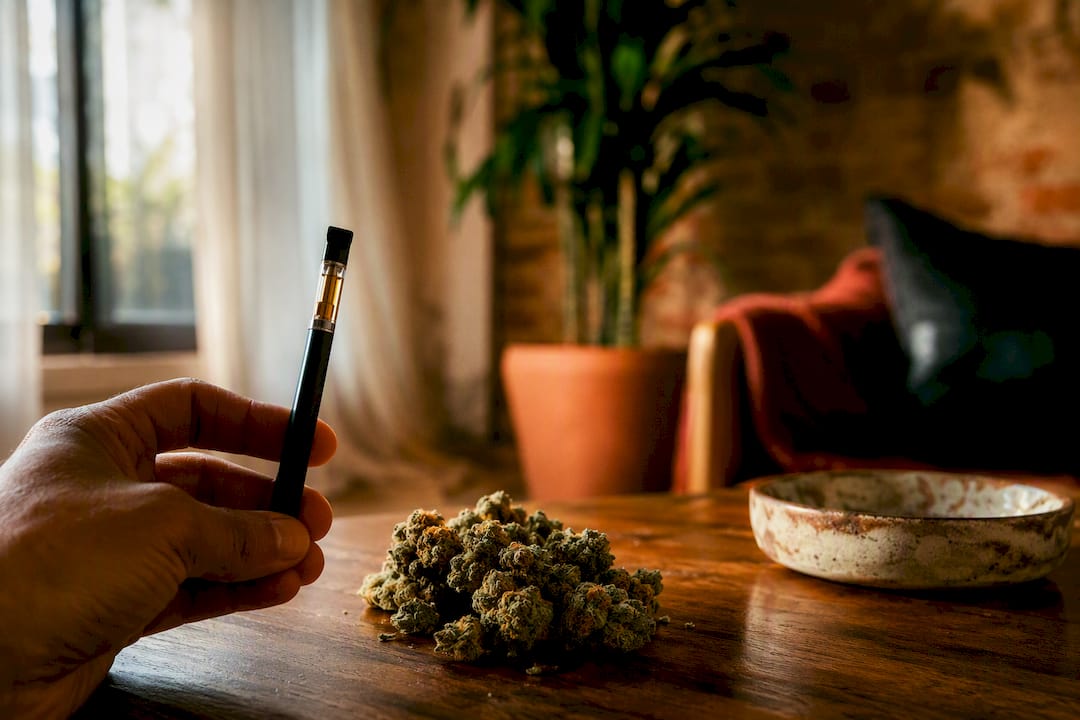
Flower is dried, cured cannabis plant material, smoked in a joint, pipe, or bong. “Vape” covers a wider category: prefilled cartridges (distillate or live resin), disposable pens, and dry-herb vaporizers that heat ground flower without burning it.
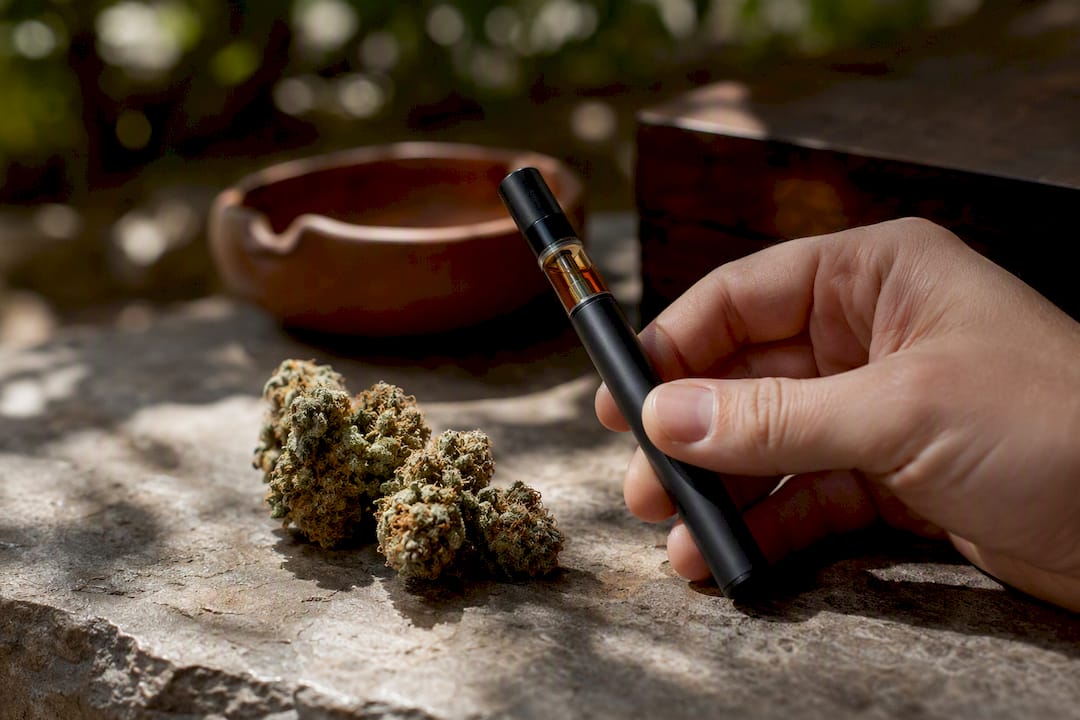
The difference comes down to temperature. Combustion burns plant material above 450°F, which creates smoke loaded with tar, carbon monoxide, and other byproducts nobody’s chasing. Vaporization heats cannabinoids and terpenes to the point they turn into vapor, typically between 315°F and 430°F, without setting the material on fire. That gap changes what ends up in your lungs and what ends up in your throat.
What each method preserves or destroys:
- Flower (combustion): Releases the full terpene profile instantly, but also produces smoke byproducts absent from vaporization.
- Cartridges and disposables: Preserve cannabinoids reliably, but flavor depends heavily on whether the extract is live resin (more terpenes) or distillate (more neutral, potency-focused).
- Dry-herb vaporizers: Can retain much of flower’s natural terpene profile with fewer combustion byproducts, though device design and how you draw on it change both flavor and effective dose.
- Device settings matter: Lower temperatures protect delicate aromatics; higher settings pull more cannabinoids but often at the cost of flavor fidelity, according to Weedmaps’ breakdown of vaping mechanics.
Effects, Potency, and How Fast You’ll Feel It
Vaping tends to deliver more THC into your bloodstream than smoking the same nominal dose. In the Johns Hopkins study, vaporizing 25 mg of THC produced blood THC levels of 14.4 ng/mL, compared with 10.2 ng/mL from smoking the identical 25 mg dose. Infrequent users in that study reported noticeably stronger subjective impairment after vaporizing than after smoking.
The numbers: Same dose, different delivery. Vaping pushed blood THC higher than smoking in this comparison, a gap that matters most for people who don’t consume often and have a lower tolerance built up.
What that means for onset and duration:
- Vapor tends to hit faster and can feel more intense at an equivalent labeled dose, especially for someone who doesn’t consume regularly.
- Flower’s onset is close behind but often feels marginally gentler, partly due to lower peak blood THC for the same nominal amount.
- Duration is roughly comparable between the two once the initial peak passes.
- Higher measured potency doesn’t automatically mean a better experience. Plenty of consumers prefer flower’s fuller, more dimensional effect, since full-spectrum terpenes and cannabinoids interact in ways a single percentage can’t capture.
Health Risks, Lung Effects, and Device Hazards
Neither method is risk-free, and the risks aren’t identical. Smoking flower introduces genuine combustion byproducts, including tar and carbon monoxide, that vaporization simply doesn’t produce. But vaping isn’t automatically the safer bet across the board.
Health Canada’s guidance warns that cannabis vape aerosols can carry contaminants, including heavy metals, and have been tied to cases of lung damage, even though vaping sidesteps combustion. That warning echoed the broader EVALI lessons from a few years back, when unregulated vape additives caused serious lung injuries in the U.S. and Canada. A peer-reviewed respiratory review backs up the general pattern: smoking is linked to chronic cough and bronchitis risk, while vaping’s long-term profile is still being studied.
Roughly the split you’d expect: combustion equals known, well-documented harms; vaping equals fewer combustion byproducts but its own contaminant and device risks, per Healthline’s review of the evidence.
A basic safety checklist before you buy or use either:
- Buy only lab-tested products from a licensed, verified retailer.
- Check the certificate of analysis for contaminants, not just potency.
- Skip anything from an unregulated or black-market source, full stop.
- Inspect batteries for damage and follow manufacturer charging instructions.
- Clean dry-herb vaporizers and cartridge connections regularly to avoid buildup.
Pro Tip: Never leave a cartridge or disposable charging unattended overnight. Battery failures are rare but almost always happen during unsupervised charging cycles, one reason Health Canada’s device guidance flags battery safety specifically.
The Formats You’ll Actually See on the Shelf
Walk into a dispensary menu and you’ll run into a handful of recurring formats, each with its own tradeoffs:
- Whole flower (pre-rolls or loose buds): Best terpene fidelity, lowest cost per gram, most hands-on.
- Dry-herb vaporizers: Heat ground flower without combustion, preserving more flavor than smoking with less harshness.
- Distillate cartridges: Consistent potency, more neutral flavor, generally the most affordable cart option.
- Live resin cartridges: Preserve more of the original strain’s terpenes, at a higher price point than distillate, according to The Highline’s breakdown of extract types.
- Disposable pens: Zero maintenance, lowest commitment, but the least cost-efficient per dose.
Flavor fidelity generally runs flower and live resin at the top, distillate in the middle, and combustion byproducts working against flower’s raw taste even as they deliver a fuller aromatic hit. Keep cartridges away from heat and light, and don’t let disposables sit unused for months. Cannabinoids degrade over time.
Flavor, Ritual, Discretion, and What You’ll Actually Spend
The practical stuff is usually what decides this for people, not the lab numbers.
- Flavor and terpene fidelity: Flower and live resin carts lead here; distillate and older vape oils lag behind.
- Ritual and social experience: Passing a joint or packing a bowl is a shared activity in a way that hitting a pen rarely is.
- Discretion and odor: Vapes win decisively. Flower’s smell lingers on clothes, in rooms, in cars.
- Dosing control: Vapes make microdosing easier hit by hit, though that convenience can raise your tolerance faster since frequent small hits add up quickly across a day.
- Cost per dose: Flower is usually cheaper by the gram, but a full joint session burns through more product than a couple of vape pulls might use.
Someone smoking a bowl with friends at home is optimizing for a different thing than someone taking two quick pulls from a vape pen before a walk. Match the format to the moment, not the other way around.
How to Choose Between Flower and Vapes
Run through this before you buy:
- Where will you use it? Public or shared spaces favor vapes for discretion; home sessions leave more room for flower.
- Potency or flavor first? If it’s potency and speed, lean vape. If it’s the full terpene experience, lean flower.
- What’s your budget per session? Flower generally costs less per gram; vapes cost less in wasted product.
- Concerned about lung health? Review the respiratory research and consider a non-inhalation option like tincture if inhalation itself is the concern.
- New to dosing? Start low with either format, wait at least 15 minutes before taking more, and track how you feel.
- What are you asking the budtender? THC percentage alone doesn’t tell the story. Ask about terpene profile, extraction method, and current lab results.
Try both formats in low-stakes settings before committing to one as your default. Travel days are a reasonable time to lean on vapes temporarily, even if flower is your regular preference.
Buying Safer Flower and Vapes
Quality control separates a good experience from a wasted one, sometimes a genuinely risky one.
Look for a certificate of analysis (COA) tied to the specific batch or lot number on your product, not a generic potency claim printed on the packaging. That COA should show both cannabinoid content and screening for contaminants like pesticides, heavy metals, and residual solvents. Walk away from any retailer that can’t produce recent lab results, uses vague ingredient lists on vape products, or advertises potency numbers that seem inflated compared to similar products on the market.
Highfashionsmokesandprints verifies age at checkout and stocks lab-tested flower, cartridges, and disposables across its day and night menus, which matters more than most buyers realize until they’ve dealt with an untested product. Pair that with basic device safety habits, like charging cartridges properly and inspecting batteries before use, and you’ve covered most of the real risk in either format.
What Actually Matters When You Pick a Method
The conventional advice treats this as a binary: vapes are modern and efficient, flower is traditional and full-flavored, pick your lane. That framing undersells how much your actual pattern of use should drive the decision, not vague loyalty to one format.
The Johns Hopkins data on blood THC levels gets cited constantly as proof vapes are “stronger,” and it’s accurate as far as it goes. But stronger delivery isn’t the same as a better experience, and plenty of frequent flower consumers report more consistent, more layered effects from full-spectrum smoke than from a single-cannabinoid-dominant vapor hit. The entourage effect isn’t marketing fluff. It’s a real, underexplored variable that a THC percentage on a label simply can’t capture.
Where I’d push back hardest on common advice: don’t pick a format because it sounds more sophisticated or more “clean.” Pick it because it matches how you actually plan to use it. If you’re microdosing through a workday, a vape’s discretion and control make sense. If you’re setting aside an evening to actually experience a strain’s character, flower still does something a cartridge can’t replicate. Buy tested product either way, and don’t assume the newer technology is automatically the safer one just because it skips combustion.
Get Both Formats, Tested and Delivered Same Day
Whichever way you lean, the harder problem is usually finding tested product from a source you actually trust, not deciding between a joint and a cart. Highfashionsmokesandprints solves that by stocking lab-verified flower, cartridges, disposables, and live resin carts side by side on one menu, so you’re comparing real options instead of guessing at a random storefront.
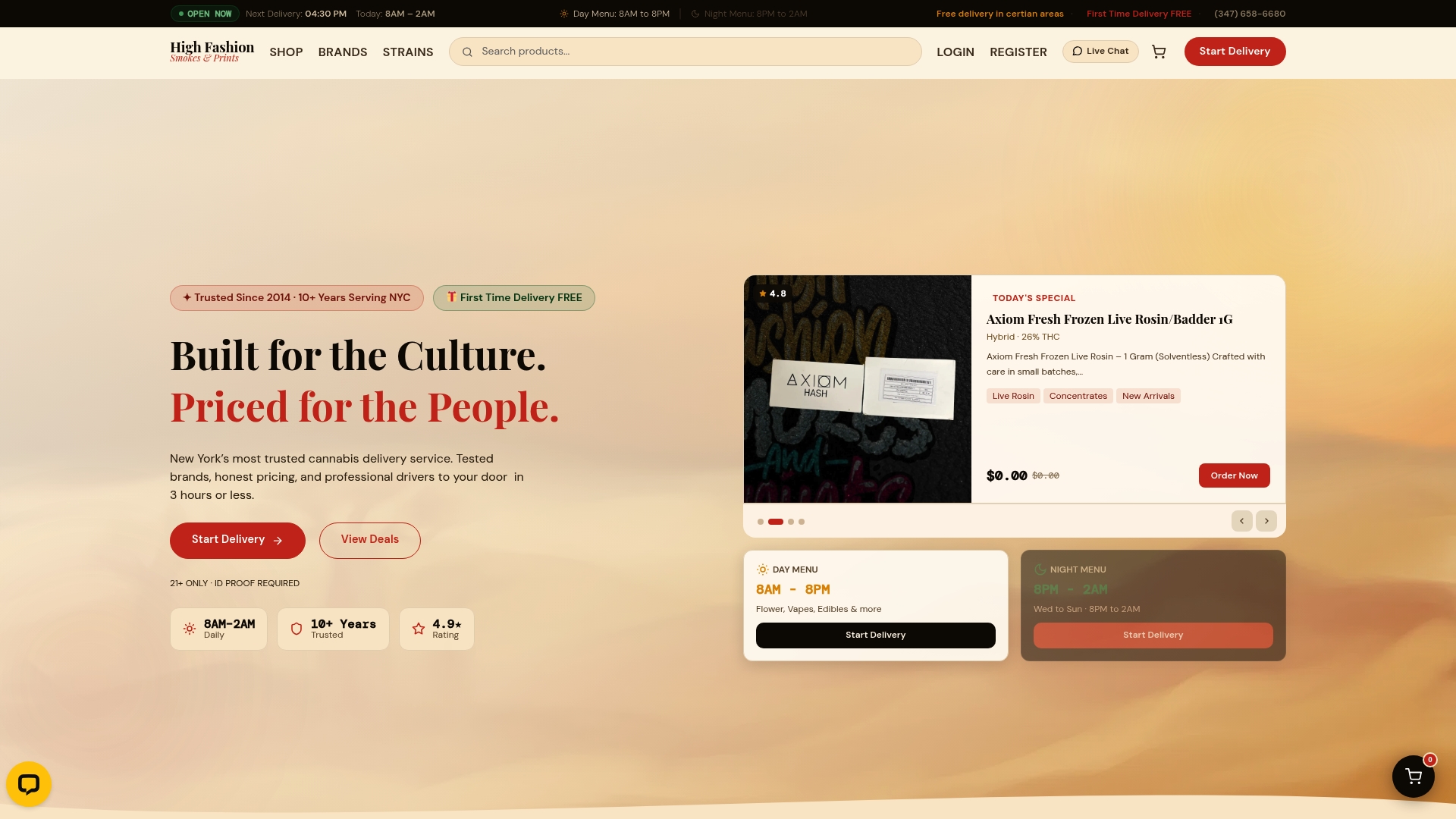
Every product listed carries verified lab results, and the site’s day and night menus mean you’re not stuck waiting until tomorrow to switch formats or restock. If you’re curious about extract quality, the breakdown of live resin versus distillate is worth a read before you order. New customers in NYC get an incentive on their first order, and same-day delivery means you can go from browsing the menu to holding tested product within one window. Place your order today and see which format actually fits your evening.
Frequently Asked Questions
Is vaping healthier than smoking flower?
Vaping avoids combustion byproducts like tar and carbon monoxide, but cannabis vape aerosols can carry their own contaminants, according to Health Canada. Neither method is risk-free.
Does vaping get you higher than smoking flower?
Often, yes, at an equivalent nominal dose. The Johns Hopkins comparison found vaporizing produced higher blood THC than smoking the same amount, with stronger subjective effects in infrequent users.
Which is cheaper, flower or vapes?
Flower usually costs less per gram, but vapes waste less product per session since you’re not burning off excess plant material. Your actual cost per dose depends on how often you use each format.
Can I switch between flower and vapes without issues?
Yes. Many consumers use both depending on the setting, choosing flower for home sessions and vapes for discretion or travel. Start low with either format if you’re trying something new.
What should I check before buying a vape cartridge?
Look for a current certificate of analysis showing both potency and contaminant screening, buy only from a licensed retailer, and check whether the cartridge uses live resin or distillate depending on your flavor preference.
This article is general information, not a substitute for advice from a qualified doctor. Consult a qualified healthcare professional about your own circumstances before acting on anything here.
Sources
- CardioSmart (Johns Hopkins summary)
- Health Canada information update on vaping-related pulmonary illness
- Health Canada: Accessories for inhalation and vaping guidance
- PMC review article on cannabis inhalation and respiratory effects
- Healthline: Vaping vs. smoking weed