Read our Google Birdeye Reviews
Pre-rolls are ready-to-smoke joints rolled in thin paper for a cleaner, consistent dose; blunts are rolled in a thicker tobacco or hemp wrap for a slower, heavier, more social smoke. That single difference drives almost every trade-off between the two formats. According to Verilife, pre-rolls are designed specifically to highlight strain terpene profiles and deliver predictable dosing, which makes them the go-to for beginners, medical consumers, and anyone who wants to know exactly what they’re getting.
The short selection rule: if you want clean strain flavor, controlled dosing, and portability, grab a pre-roll. If you want a longer, communal session with a heavier smoke, a blunt is built for that.
- Novice or medical consumer: A standard 0.5 g pre-roll with a labeled COA gives you the most predictable experience.
- Quick solo session: Pre-rolls win on convenience and discretion, no prep required.
- Social or long session: Blunts hold more flower (typically 1–3 g), burn slower, and pass more naturally in a group.
- Nicotine preference: Traditional tobacco-wrapped blunts add nicotine; hemp-wrapped blunts and pre-rolls do not.
Lab-tested products matter for both formats. A COA confirms actual THC potency and flags contaminants, so you’re not guessing on dose regardless of which format you choose.
Key Takeaways
Pre-rolls offer cleaner strain flavor and consistent dosing in thin rolling paper; blunts burn slower in thicker wraps and suit communal sessions, with tobacco wraps adding nicotine that hemp wraps and pre-rolls do not.
| Point | Details |
|---|---|
| Wrap material drives the experience | Thin paper preserves terpene clarity; thick tobacco or hemp wraps add flavor overlay and slow the burn. |
| Nicotine is the critical variable | Tobacco-wrapped blunts contain nicotine; hemp wraps and pre-rolls do not. Always read the label. |
| Size determines session length | Standard pre-rolls run 0.5–1 g; blunts typically hold 1–3 g, making them better suited for longer or group sessions. |
| Infused pre-rolls change the dosing math | Concentrates raise potency significantly; start with a few puffs and wait before continuing. |
| Highfashionsmokesandprints for NYC delivery | Lab-tested pre-rolls and hemp-wrapped blunts available for same-day delivery with COA verification. |
Table of Contents
- What exactly is a pre-roll?
- What exactly is a blunt?
- How do they compare side by side?
- How the differences shape what you actually feel
- Health and safety considerations
- How to choose the right format for your session
- An editorial perspective on what actually matters here
- Where to find lab-tested pre-rolls and blunts in NYC
- Sources
What exactly is a pre-roll?
A pre-rolled joint is ground cannabis flower packed into a thin rolling paper, typically made from hemp, rice, or flax, with a small filter (called a crutch) at the mouthpiece end. Most standard pre-rolls are typically sized for single-use consumption. King-size versions hold more flower and extend session time; micro pre-rolls (sometimes called “dogwalkers”) run as small as 0.35 g for a quick, low-dose hit.
Production matters here. Most commercial pre-rolls are filled on automated cone-filling lines, which creates consistent packing density and weight from unit to unit. That consistency is a genuine advantage for dosing.
Key pre-roll variants:
- Standard (0.5–1 g): The most common format, suited for solo or short sessions.
- King-size: More flower, longer burn, closer to a blunt in session length.
- Infused pre-rolls: Flower coated or mixed with concentrates like live resin, hash rosin, or distillate oil. Potency climbs significantly, so dosing adjustments are necessary.
- Hemp paper vs. rice paper: Hemp papers burn slightly slower and add a faint earthy note; rice papers are thinner and nearly flavorless, letting terpenes come through cleanly.
Pro Tip: Before lighting, gently roll the pre-roll between your fingers. If it feels hard and unyielding, airflow may be restricted. If it crinkles loosely, the flower is underpacked and may canoe. A slight give with even resistance means it’s packed right.
Overpacking or underpacking is the most common pre-roll complaint. Prairie Cannabis notes that a clogged pre-roll can usually be fixed by rolling it gently between your fingers to redistribute the flower, or using a thin tool to restore airflow at the tip.
What exactly is a blunt?
A blunt is cannabis flower rolled in a thicker wrap, traditionally a tobacco leaf or reconstituted cigar paper. That wrap is what separates it from a pre-roll at every sensory level. Hefestus Tech’s breakdown shows that typical blunt size usually holds significantly more flower than a standard pre-roll, often several times as much.
Wrap options and what they mean:
- Tobacco leaf wraps (traditional): Derived from cigar tobacco. These contain nicotine, add a distinct earthy-sweet flavor overlay, and burn slowly and evenly. Brands like Backwoods and Swisher Sweets fall here.
- Hemp wraps (tobacco-free): No nicotine, closer to a neutral flavor profile, and increasingly common in dispensaries. They burn slightly faster than tobacco wraps but still slower than rolling paper.
- Reconstituted tobacco paper (blunt wraps): Processed tobacco-based sheets, often flavored. Nicotine is present.
Reading the label is non-negotiable. “Hemp wrap” and “tobacco wrap” look similar on a shelf but carry completely different health implications.
Blunts are more often hand-rolled or produced in smaller batches than pre-rolls, which means more variability in wrap moisture, burn consistency, and shape. Premium blunt SKUs sometimes come in humidity-controlled packaging for this reason.
How do they compare side by side?
Aunt Mary’s NJ summarizes it well: pre-rolls deliver cleaner strain flavor and consistent dosing, blunts deliver a heavier, slower smoke, and infused pre-rolls raise potency considerably. The right choice depends on tolerance, flavor preference, and session goals.
| Dimension | Pre-Roll | Blunt |
|---|---|---|
| Wrap material | Thin rolling paper (hemp, rice, flax) | Thick tobacco leaf or hemp wrap |
| Nicotine present | No | Yes (tobacco wrap) / No (hemp wrap) |
| Terpene/flavor clarity | High — strain flavor comes through cleanly | Lower — wrap adds tobacco or leaf overlay |
| Burn rate | Faster (15–30 min typical) | Slower (30–60+ min for larger blunts) |
| Typical potency | Moderate (plain); high (infused) | Moderate to high depending on fill |
| Convenience | High — pre-made, consistent, portable | Lower — more prep, more variability |
| Health risk profile | Combustion smoke risks | Combustion smoke + nicotine (tobacco wrap) |
| Social/communal use | Solo or small group | Well-suited for group sessions |
The rows that most influence a real buying decision: nicotine presence, terpene clarity, and session length. Everything else is secondary.
How the differences shape what you actually feel
Thin rolling paper is nearly neutral. You taste the strain, not the wrap. A high-terpene cultivar like a citrusy Sativa or a piney OG comes through with full clarity in a pre-roll. Roll that same flower in a tobacco leaf and the wrap competes with those terpenes, adding its own sweetness and earthiness. Neither is wrong, but they’re genuinely different experiences.
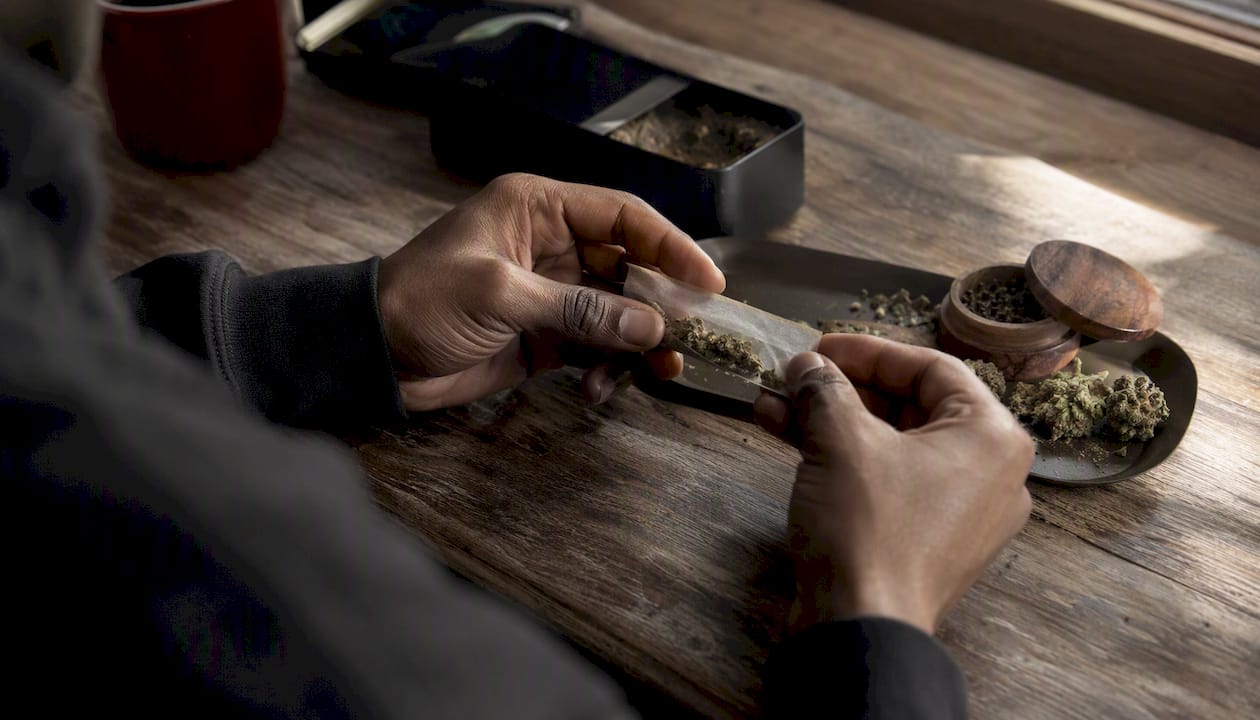
Harshness follows a similar pattern. Thicker wraps tend to produce a denser, heavier smoke. Some consumers find that smoother; others find it harsher on the throat, especially when combined with nicotine’s own irritation. Packing density in a pre-roll also affects smoothness: a well-packed cone draws evenly, while a loose one burns hot and uneven.
The nicotine factor deserves its own sentence. Tobacco-wrapped blunts deliver nicotine alongside THC, which produces a distinct head rush that some consumers seek and others want to avoid entirely. For anyone with nicotine sensitivity or a history of tobacco dependence, this is the most important variable in the comparison.

Session dynamics differ sharply too. A 0.5 g pre-roll is a 15–20 minute solo experience. A 2 g blunt passed among four people can run 45 minutes or longer. Rebelle notes that blunts are more social and indulgent by design, while pre-rolls suit single-person or discreet use.
Pro Tip: To extend a pre-roll session without losing flavor, take slower, longer draws and rest the pre-roll between puffs. Constant puffing overheats the cherry and burns off terpenes before they reach you.
Health and safety considerations
Both formats produce combustion smoke, and that smoke carries inhalation risks regardless of wrap type. Medizin Las Vegas confirms that tobacco-wrapped blunts add nicotine-related risks on top of standard combustion byproducts, and may trigger additional labeling or regulatory requirements in some jurisdictions.
Practical safety steps:
- Always read the wrap label. “Natural leaf” or “tobacco wrap” means nicotine is present.
- Space your puffs. Rapid successive draws increase combustion temperature and harshness.
- Stay hydrated. Smoke dries mucous membranes; water helps.
- Avoid combining tobacco-wrapped blunts with other nicotine products in the same session.
- Check the COA before buying. Lab-tested flower confirms potency and screens for pesticides, heavy metals, and residual solvents.
Lab testing is the single most reliable safety step available to consumers. A certificate of analysis (COA) from an accredited third-party lab tells you the actual THC and CBD percentages, confirms terpene content, and verifies the product is free of harmful contaminants. Without it, potency and purity are guesses. Always ask for it, and always check it.
For cannabinoid content and terpene profiles that affect flavor and potency, a COA is the authoritative source, not the packaging claim. If you have medical concerns about cannabis use or nicotine exposure, consult a clinician before choosing a format.
How to choose the right format for your session
Work through this checklist before you buy:
- How long do you want to smoke? Under 20 minutes: pre-roll. 30–60+ minutes or group setting: blunt.
- Do you want nicotine? If no, choose a pre-roll or a hemp-wrapped blunt. If yes, a tobacco-wrapped blunt delivers it.
- How important is strain flavor? High priority: pre-roll in rice or hemp paper. Lower priority or you enjoy the wrap flavor: blunt.
- What’s your tolerance? New or returning consumer: start with a 0.5 g pre-roll. Experienced consumer: king-size or infused pre-roll, or a blunt.
- Are you using for medical purposes? Pre-rolls with labeled potency and a COA give the most predictable dosing.
- Do you need portability? Pre-rolls travel better, stay consistent, and require no prep.
Dosing tips: Estimate your THC intake by multiplying the weight (in grams) by the labeled THC percentage. Infused pre-rolls can push potency much higher, so treat them as a separate category and start with a few puffs before committing to the full unit. For safe dosing principles that apply across formats, starting low and going slow is the consistent recommendation.
Store pre-rolls and blunts in an airtight container away from light and heat.
Pro Tip: New or returning consumers should try a micro pre-roll (0.35 g or less) first. Take two puffs, wait 10–15 minutes, and assess before continuing. This titration approach prevents overconsumption and lets you find your threshold without committing to a full unit.
An editorial perspective on what actually matters here
The pre-roll vs blunt debate gets framed as a preference question, but it’s really a risk management question dressed up as a lifestyle choice.
Most consumers focus on flavor and session length, which are real factors. What gets underweighted is the nicotine variable. A tobacco-wrapped blunt isn’t just a slower pre-roll. It’s a nicotine delivery device that also contains cannabis, and for consumers who don’t smoke cigarettes, that distinction matters more than any flavor comparison. The head rush feels like enhanced THC. It isn’t. It’s nicotine layered on top of THC, and regular exposure to tobacco wraps can create nicotine dependence in people who never intended to use nicotine at all.
Hemp wraps have genuinely changed this calculus. A quality hemp-wrapped blunt gives you the slow burn and communal format of a traditional blunt without the nicotine exposure. For social smokers who want the blunt experience without the tobacco risk, hemp wraps are the obvious answer, and they’re widely available now.
The other underweighted factor is COA verification. Format matters less than what’s actually in the product. A well-sourced, lab-tested pre-roll from a verified dispensary beats an unverified blunt every time, regardless of which format you prefer.
Where to find lab-tested pre-rolls and blunts in NYC
Highfashionsmokesandprints has been delivering lab-tested cannabis across New York City since 2011, with a product lineup that covers standard pre-rolls, infused options, and hemp-wrapped blunt alternatives. Every product on the menu comes with verified COA access, so you know the actual potency and purity before you order, not after.
Same-day delivery runs on both day and night menus, with age-verified checkout and discreet packaging. Whether you’re picking up a 0.5 g solo pre-roll or a larger infused option for a group session, the inventory is organized to make the choice straightforward. Browse the full menu to check current pre-roll and blunt SKUs, confirm COA details, and place your order for same-day NYC delivery.
Sources
- Pre Roll vs Blunt: What The Difference?
- Pre-Rolled Joints, Blunts, & Infused Pre-Rolls
- Blunt vs Preroll: What’s the Difference?
- How to Fix a Clogged Preroll: Tips and Tricks
- What is a Pre-Roll, or Pre-Rolled Joint