Read our Google Birdeye Reviews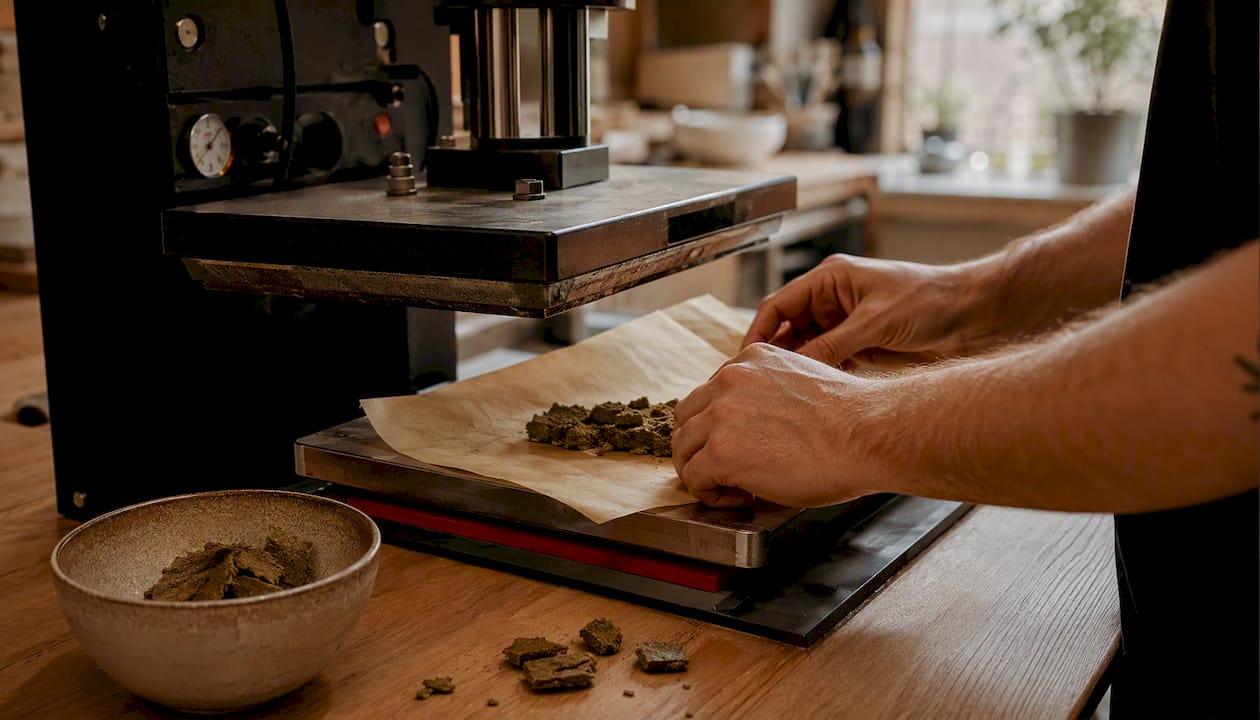
Hash rosin is a solventless cannabis concentrate made by pressing bubble hash or dry sift with heat and pressure until the resin releases on its own, no butane or CO2 involved… That two-step method, wash first, press second, is why it tends to taste closer to the actual plant than most other extracts and why connoisseurs pay a premium for it. This guide walks through how it’s made, the terms you’ll see on a jar label, how it stacks up against live rosin and solvent-based extracts, and what actually matters when you’re deciding what to buy or how to store what you’ve got.
Key Takeaways
Hash rosin is a solventless concentrate made by pressing bubble hash or dry sift, and its quality depends on wash micron grade, press temperature, and moisture control at every stage.
| Point | Details |
|---|---|
| Definition | Hash rosin is pressed from bubble hash or dry sift, no solvents involved, using heat and pressure alone. |
| Micron grades matter | 73u and 90u fractions typically produce the cleanest melt and strongest flavor retention. |
| Press temperature | Premium hash rosin presses cool, around 160 to 200°F, to protect terpenes from degrading. |
| Storage stability | Hash rosin generally stores better than live rosin due to lower moisture and fewer volatile terpenes. |
| Dosing | Start with a small dab and wait before redosing, given THC levels often reach 65 to 80%. |
Table of Contents
- What Is Hash Rosin, Exactly?
- How Is Hash Rosin Made, Step by Step?
- Live Hash Rosin, Full-Spectrum, and Micron Grades: What the Labels Mean
- Hash Rosin vs. Live Rosin vs. Solvent Extracts: How They Compare
- How Do You Use Hash Rosin, and What Should You Expect?
- What Should You Look For When Buying Hash Rosin?
- How Should You Store Hash Rosin to Keep It Fresh?
- What Are the Trade-Offs and Safety Basics to Know?
- Why We Take Hash Rosin Seriously at High Fashion Smokes & Prints
- Where to Learn More About Hash Rosin
- Frequently Asked Questions
- Sources
What Is Hash Rosin, Exactly?
Hash rosin starts as bubble hash or dry sift, then gets pressed. That’s the whole idea in one sentence, but the details are where quality lives or dies.
Bubble hash comes from agitating cannabis in ice water so the trichome heads, the resin glands that hold cannabinoids and terpenes, break off and sink. Dry sift skips the water and uses fine screens to shake trichomes loose from dried flower. Either way, you end up with a powder or paste of concentrated trichomes that then gets pressed between heated plates. The trichomes themselves are what carry the cannabinoids and terpenes that give the final product its potency and flavor, so everything upstream of the press is really about protecting and concentrating those tiny glands.
Once pressed, hash rosin shows up in a handful of textures depending on moisture content, terpene levels, and how it’s handled after extraction:
- Badder or batter: whipped, cake-frosting consistency, common with fresher or higher-moisture hash.
- Sugar: grainy, wet-looking crystals suspended in a sauce, one of the more popular formats for dabbing.
- Sap or sauce: runny and viscous, terpene-rich, often needs refrigeration to hold shape.
- Jam: soft, spreadable, and stable at room temperature, usually the result of controlled aging.
- Crystals or diamonds: separated THCA crystals sitting in a terpene-rich liquid, a more advanced processing step.
You’ll also see micron numbers like 73u or 90u printed on packaging. Those refer to the mesh size of the bags used during the ice-water wash, and they matter more than most buyers realize.
How Is Hash Rosin Made, Step by Step?
The production process is a two-stage job: separate the trichomes, then squeeze the resin out of them. Each stage has its own set of variables that separate a mediocre batch from a full-melt one.
- Wash the flower into bubble hash. Cannabis gets agitated in ice water, then filtered through a series of micron bags. Bags typically range from 25 to 220 microns, with tighter bags capturing the smallest, most degraded particles and looser bags catching bigger plant debris. The good material sits somewhere in the middle.
- Dry the hash. Wet hash needs to lose moisture before pressing, usually through freeze-drying or a slow, temperature-controlled air dry. Rush this step and you trap water in the final product, which shows up as instability and a shorter shelf life later.
- Prepare the bed. Dried hash gets broken down into a fine, even layer before it goes into the press. Uneven clumps mean uneven heat transfer.
- Press with heat and pressure. The prepared hash goes into micron filter bags and gets pressed at controlled temperature and pressure until the resin bleeds out.
Press temperatures for hash rosin generally run between 160°F and 200°F, noticeably cooler than what’s typical for flower rosin. Premium full-melt hash often releases at just 160 to 170°F, and that lower ceiling isn’t arbitrary. Terpenes start degrading as heat climbs, so a press operator working with exceptional starting material will run cooler and longer rather than blast heat to force a faster yield. Pressing at that range typically takes 60 to 180 seconds, using tight micron bags in the 25 to 37 micron range for the actual extraction filter, a different bag purpose than the wash bags used earlier.
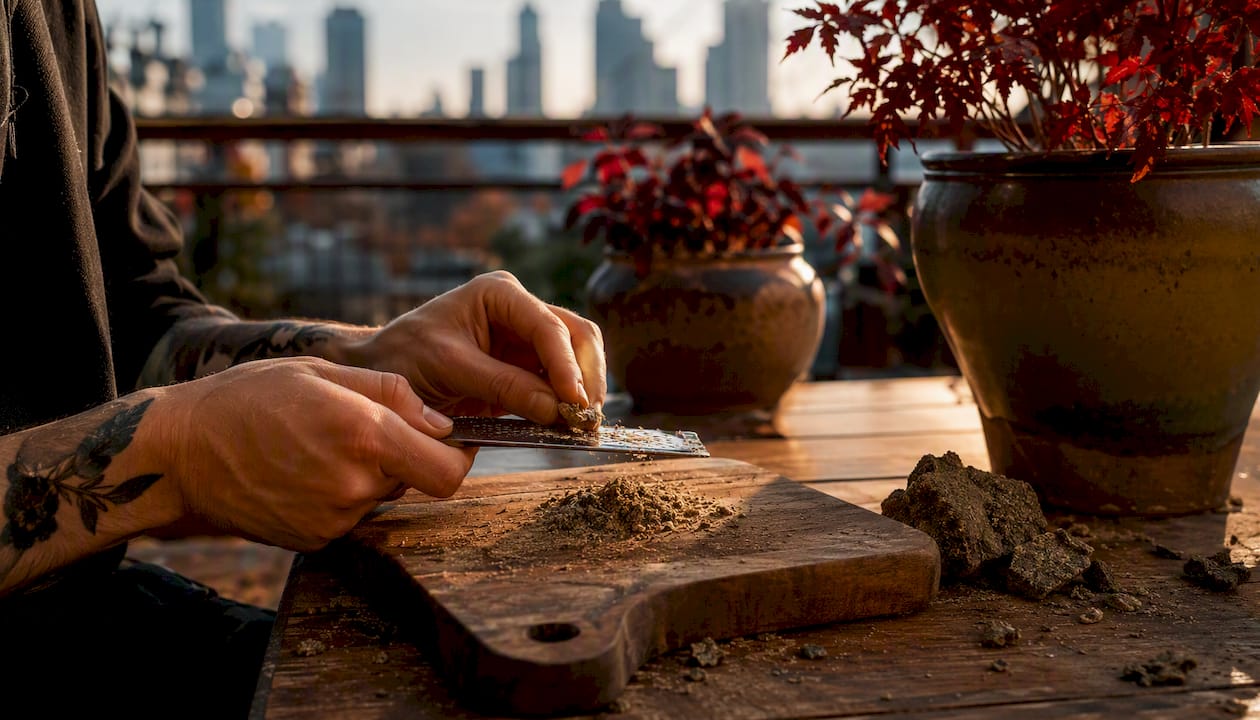
Pro Tip: Microplane your dried hash into a fine, even layer before it hits the press. Skip this step and you’ll get inconsistent melt across the bag, patchy yield, and a batch that looks unfinished even when the material was good going in.
Yield tells its own story here. Premium full-melt hash rosin can convert 60 to 80% of the input bubble hash weight into finished rosin, a dramatically higher recovery rate than flower rosin, which typically yields only 15 to 25% by weight. That gap explains a lot about why hash rosin costs what it does, even though the math isn’t quite that simple once you account for how much raw flower it takes to make the bubble hash in the first place.
Live Hash Rosin, Full-Spectrum, and Micron Grades: What the Labels Mean
Menus and jars throw around terms that sound similar but describe genuinely different products. Getting these straight will save you from paying premium prices for something that doesn’t match your expectations.
“Live” refers to the starting material, not the final product’s texture or color. Live hash rosin is pressed from bubble hash made using fresh-frozen cannabis rather than dried and cured flower. Because the plant never dries, more volatile terpenes survive the process, which is why live hash rosin often smells brighter and more “alive” than standard hash rosin made from cured material. Cured hash rosin isn’t inferior, it just leans toward deeper, earthier, sometimes more complex flavor profiles that curing tends to produce.
Micron ratings describe the mesh size of the wash bags, and they directly affect what makes it into your hash. Extractors consistently favor the 73u and 90u fractions because those sizes capture intact trichome heads, the glands that haven’t ruptured or degraded, which translates into cleaner melt and stronger flavor. Full-spectrum approaches sometimes blend a wider range, from 45u up to 159u, to capture more overall yield at some cost to purity.
| Micron rating | What it typically captures | Common result |
|---|---|---|
| 25u | Extremely fine, often overly fragmented material | Rarely used alone; can carry lipid contamination |
| 45u | Mixed particle sizes, broader capture | Often blended into full-spectrum batches |
| 73u | Intact, mid-size trichome heads | Prized fraction, high melt quality |
| 90u | Larger intact trichome heads | Prized fraction, strong flavor retention |
| 159u+ | Coarser plant material and debris | Usually discarded or reprocessed |
Texture also tells you something about process. Sugar and sap tend to come from wetter, terpene-heavier hash pressed with less aggressive drying. Batter and badder usually mean a slightly firmer starting hash whipped during or after the press. Jam is typically the product of intentional post-press aging, sometimes called “jar tech,” where the rosin is held at a controlled warm temperature to encourage crystallization into a soft, stable spread. Crystals or diamonds involve a further separation step where THCA is allowed to form solid structures within a terpene-rich liquid, an advanced technique most home pressers won’t attempt.
Hash Rosin vs. Live Rosin vs. Solvent Extracts: How They Compare
Every concentrate on a dispensary shelf is a trade-off between flavor, potency, cost, and how much labor went into making it. Here’s where hash rosin actually sits.
| Factor | Hash rosin | Live rosin | Solvent extracts (BHO, distillate) |
|---|---|---|---|
| Extraction method | Solventless, ice water + heat/pressure | Solventless, ice water on fresh-frozen flower + heat/pressure | Solvent-based, uses butane, propane, or CO2 |
| Flavor/terpene retention | Strong, often earthier and deeper | Often the strongest, brightest terpene profile | Variable, distillate strips most terpenes |
| Potency/cannabinoid profile | THC often in the 65 to 80% range, terpenes roughly 4 to 10% | Comparable or slightly higher THC and terpenes | Distillate can exceed 90% THC but with minimal terpenes |
| Texture/consistency | Sugar, sap, badder, jam, crystals | Similar range, often softer and stickier | Shatter, wax, or thin distillate oil |
| Yield and cost | Higher yield from hash input, generally expensive at retail | Lower yield, typically the most expensive category | Highest yield, generally the cheapest per gram |
| Storage stability | More stable, lower moisture and volatiles | Less stable, more prone to separation and degradation | Very stable, especially distillate |
For flavor-first buyers who still want good shelf stability, hash rosin often lands in the sweet spot. Live rosin wins on raw terpene intensity but demands more careful handling. If you’re after cleanup convenience or budget performance, solvent extracts like distillate hold their ground, though you’re trading away most of the plant’s natural terpene character. If you want a deeper technical breakdown of how live resin and rosin actually differ at the molecular level, that’s worth a separate read. For a look at how solventless options stack up against processed products like shatter, this rosin versus shatter comparison covers the handling and texture angle in more depth.
How Do You Use Hash Rosin, and What Should You Expect?
Dabbing is the most direct way to experience hash rosin, using a rig heated to a controlled temperature so the concentrate vaporizes rather than combusts. Low-temperature dabs, generally in the range most dab-focused sites recommend testing personally with your own rig’s thermometer, preserve more terpene flavor than high-temperature dabs, which sacrifice taste for a bigger visible cloud.
Beyond dabbing, hash rosin works well:
- Topped on flower in a bowl or joint, adding potency and flavor without switching devices.
- Loaded into a concentrate-compatible vape pen, for a more portable, lower-mess option.
- Infused into edibles, though heat during cooking needs to stay controlled to protect both potency and flavor; if you’re exploring that route, infusing concentrates into homemade edibles is a reasonable place to start.
Dosing deserves real attention here. Hash rosin is concentrated cannabis, often testing at 65 to 80% THC, which means a dab-sized dose delivers far more cannabinoid content than a bowl of flower ever will. Consumer guidance consistently recommends starting low and going slow, especially for anyone new to concentrates or returning after a break. A rice-grain-sized dab is a reasonable starting point, not the couple hundred milligrams some rigs can hold. Effects from a well-made hash rosin also tend to feel more layered than distillate, likely tied to the fuller terpene and cannabinoid profile riding along with the THC, an effect sometimes credited to terpenes like myrcene that also show up prominently in broader terpene research.
What Should You Look For When Buying Hash Rosin?
Judging quality at the counter or from a menu photo comes down to a handful of sensory and documented signals, and skipping this checklist is how people end up overpaying for mediocre product.
- Color: light gold to amber is typical of clean, well-processed hash rosin; unusually dark or green-tinted batches often signal lower-quality starting material or overheating during the press.
- Aroma: a strong, distinct terpene smell (citrus, gas, spice, whatever the strain promises) suggests good terpene retention; a flat or chemical smell is a red flag.
- Texture and melt: it should soften and bubble cleanly when dabbed, without leaving excessive dark residue behind, sometimes called “full melt.”
- Lab report (COA): check for THC/THCA percentage, terpene percentage, and a residual solvent panel, even though hash rosin shouldn’t contain solvents, a reputable producer tests anyway.
- Micron information: some labels list the wash micron range (73u, 90u) as a quality signal, though its absence doesn’t automatically mean poor quality.
Extractors interviewed by industry press consistently point to the 73u and 90u fractions as the ones that separate a genuinely full-melt product from an average one, because those sizes preserve intact trichome heads rather than fragmented debris.
Watch for red flags too: a missing or vague COA, unusually low pricing on something marketed as “full-melt,” or a lab report showing residual solvents despite solventless labeling, since that last one can indicate cross-contamination during processing or storage.
How Should You Store Hash Rosin to Keep It Fresh?
Storage conditions determine whether hash rosin holds its texture and flavor for months or degrades within weeks. Heat, light, and oxygen are the three enemies, and controlling all three is simpler than most people assume.
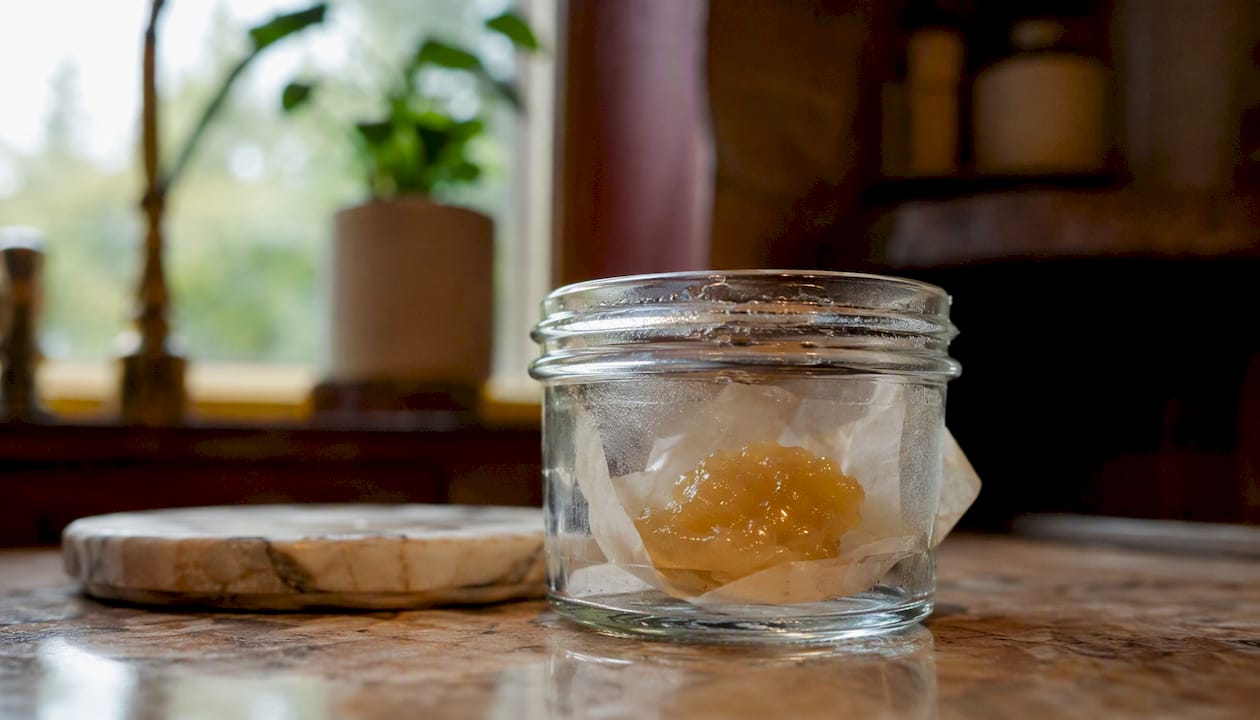
For short-term storage, a cool, dark drawer or cabinet works fine for a few weeks. For anything longer, refrigeration in an airtight, non-stick container (parchment-lined glass jars are standard) slows terpene loss and keeps texture from shifting. Freezing extends shelf life further for long-term stashes, though pulling frozen rosin out too quickly can introduce condensation, so let it come to room temperature gradually before opening the container.
Hash rosin generally holds up better in storage than live rosin, largely because the starting material is dried and cured rather than fresh-frozen, meaning lower residual moisture and fewer highly volatile terpenes that would otherwise evaporate or degrade over time. That lower-volatility profile is also why hash rosin tolerates standard refrigeration with less noticeable texture change than its live-rosin counterpart, which tends to separate or harden faster if temperature swings.
If your rosin has gone stiff or separated in the jar, gentle rework can revive it. A brief, low-heat warm-up (a warm water bath under the sealed container, never direct heat) can loosen texture enough to fold it back together without cooking off terpenes. Avoid microwaving or using anything above a gentle simmer’s worth of heat.
What Are the Trade-Offs and Safety Basics to Know?
Hash rosin earns its reputation, but it isn’t the right call for every situation or every budget. Weighing the honest trade-offs helps set realistic expectations before you buy.
On the plus side, hash rosin is solventless, meaning no residual butane or propane risk. It tends to preserve terpene flavor better than most solvent-based products, holds up well in storage, and is generally easier to handle than sticky live rosin sauce. On the downside, premium hash rosin commands a real price premium, the labor and equipment behind it are substantial, and yield math depends heavily on the quality of the starting hash, meaning inconsistent bubble hash produces inconsistent rosin no matter how good the press technique is.
A few safety basics apply regardless of experience level:
- Keep dab rig nails and bangers at safe, controlled temperatures, overheating destroys flavor and creates harsher, less pleasant smoke.
- Store concentrates well out of reach of children and pets, both for ingestion risk and because THC potency in concentrates is far higher than flower.
- Confirm local cannabis laws apply to your situation before purchasing or consuming, rules vary by state and country.
Every product sold through Highfashionsmokesandprints goes through lab testing and age verification before it reaches a customer, which matters most with concentrates given how much more potent they are than flower.
Why We Take Hash Rosin Seriously at High Fashion Smokes & Prints
Curating a solventless menu means tasting a lot of forgettable rosin before you find batches worth putting in front of customers. What stands out consistently isn’t just potency numbers on a COA, it’s whether the terpene profile survives from jar to dab, which almost always traces back to how carefully the hash was washed and how gently it was pressed. That’s why we lean toward vendors who talk openly about their micron fractions and press temperatures rather than just their THC percentage. If a producer can’t tell you what micron bags they washed with, that’s usually a sign they’re not paying attention to the details that actually separate great hash rosin from mediocre hash rosin.
Where to Learn More About Hash Rosin
- Hash Rosin Start-to-Finish | Hashtek: a detailed walkthrough of the wash-to-press process and micron bag ranges.
- Hash Rosin: How to Press Premium Rosin from Bubble Hash – WKU Consulting: technical SOP covering press temperatures, pressure calculation, and yield benchmarks.
- Hash Rosin 101: Lessons from Experienced Solventless Extractors | High Times: industry interviews on micron preferences and post-press techniques like jar tech.
- Live Rosin vs Hash Rosin | Resin Manual: a clear comparison of starting materials and how that changes terpene outcomes.
- What Is Hash Rosin? How To Use, Quality Tips & More | Herb: consumer-facing guidance on usage, dosing, and quality signals.
- Hemp enforcement | Agricultural Marketing Service (AMS): federal context on testing and enforcement frameworks relevant to producers.
Frequently Asked Questions
Is hash rosin the same as live rosin?
No. Both are solventless, but hash rosin starts from dried and cured flower processed into bubble hash, while live rosin starts from fresh-frozen flower, which generally preserves more volatile terpenes.
Is hash rosin safe to consume?
Reputable producers lab-test hash rosin for potency and residual contaminants, and since it’s solventless, there’s no butane or propane residue risk. As with any high-potency concentrate, cautious dosing matters more than with flower.
How strong is hash rosin compared to other concentrates?
THC in hash rosin commonly falls between 65 and 80%, with terpene content often in the 4 to 10% range, comparable to or slightly below live rosin and generally more flavorful than distillate.
What do micron numbers like 73u and 90u mean?
They refer to the mesh size of the bags used during the ice-water wash. The 73u and 90u fractions typically capture the most intact trichome heads, producing cleaner melt and stronger flavor.
How should I store hash rosin long-term?
Keep it in an airtight, non-stick container away from light and heat. Refrigeration works for weeks to months; freezing extends shelf life further, but let it warm gradually before opening to avoid condensation.
This article provides general educational information about hash rosin and is not a substitute for professional guidance on cannabis use, dosing, or local law. Confirm current regulations in your area and consult a qualified professional with specific health questions. If you’re in the New York City area and ready to explore lab-tested solventless concentrates, Brooklyn delivery is now available through Highfashionsmokesandprints, with day and night menus built for exactly this kind of browsing.
Sources
- Hash Rosin Start-to-Finish | Hashtek
- Hash Rosin: How to Press Premium Rosin from Bubble Hash – WKU Consulting
- Hash Rosin 101: Lessons from Experienced Solventless Extractors | High Times