Read our Google Birdeye Reviews
 Kief is the loose, powdery accumulation of detached trichome heads sifted from dried cannabis flower. Hash is that same material transformed into a denser, cohesive concentrate through pressing, ice-water washing, or hand-rubbing. That single processing step changes everything: texture, shelf life, dose control, and how the product burns.
Here’s the practical split:
- Choose kief when you want a quick, low-effort potency boost. Sprinkle it on a bowl, roll it into a joint, or press it yourself at home.
- Choose hash when you want easier dosing, longer shelf life, and a slower-burning product that often carries richer terpene character.
- Dose carefully with both. These concentrates are significantly stronger than flower. Always check a Certificate of Analysis (COA) when buying from a dispensary, and start with far less than you would with standard flower.
Key Takeaways
Kief is the loose trichome powder; hash is that same material pressed, washed, or rubbed into a denser concentrate, and the processing difference determines potency delivery, shelf life, and how you dose.
| Point | Details |
|---|---|
| Core distinction | Kief is loose sifted trichomes; hash is kief transformed by pressing, ice-water washing, or hand-rubbing. |
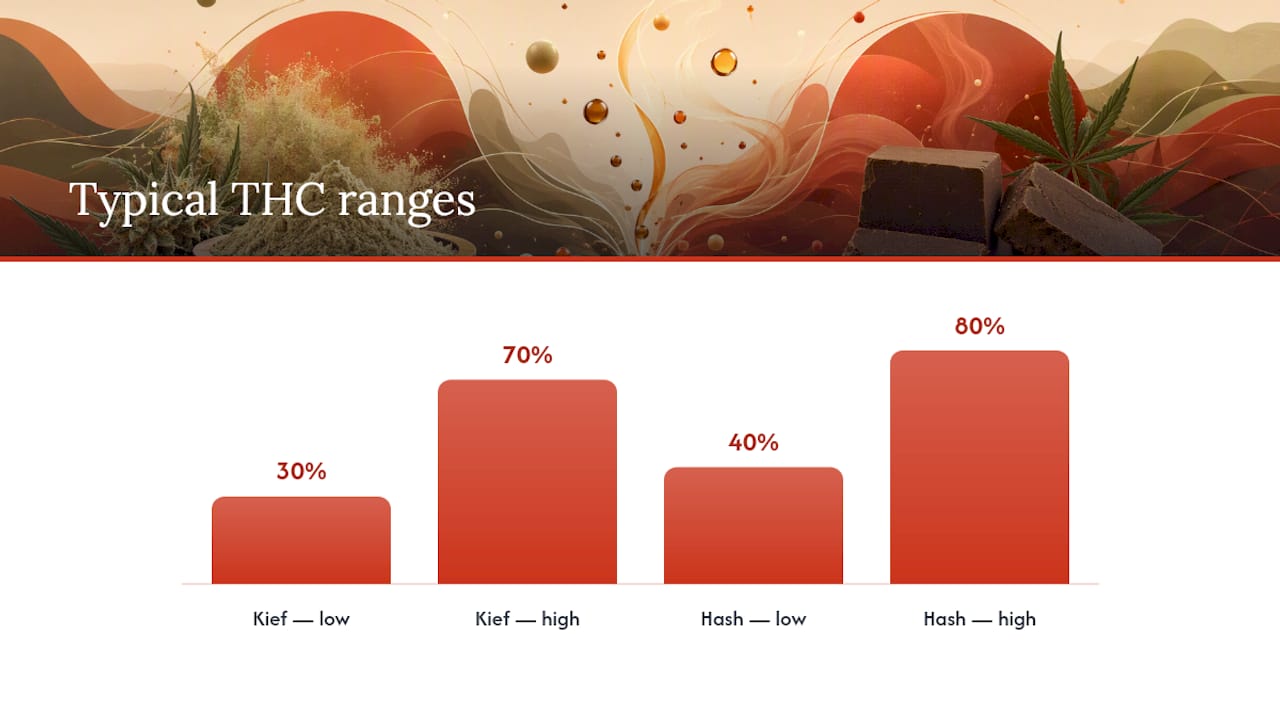
| Potency ranges | Kief typically tests 30–70% THC; quality bubble hash ranges 40–80% depending on method and starting material. |
| Dosing reality | Hash is denser, so the same weight delivers more cannabinoids per dose than loose kief. Start with a match-head-sized piece. |
| Storage and shelf life | Store kief in airtight glass away from light; pressed hash holds up longer but still needs cool, dark, low-humidity conditions. |
| Highfashionsmokesandprints | Offers lab-tested concentrates with COAs and same-day delivery across NYC for adult consumers. |
Table of Contents
- What is kief, and where does it come from?
- What hash is and how it’s made
- How kief and hash compare side by side
- Does hash hit harder than kief?
- How to use kief and hash safely and effectively
- Can you turn kief into hash at home?
- How to buy and store kief and hash in the U.S.
- What lab testing and safety research says about concentrates
- Why this comparison matters more than most people realize
- Lab-tested kief and hash, delivered same-day in NYC
- Sources
What is kief, and where does it come from?
Kief is the loose, detached trichome heads collected by sieving, grinding, or dry-sifting dried cannabis flower. Trichomes are the tiny resin glands that coat cannabis buds and leaves. They’re where cannabinoids and terpenes concentrate, which is why separating them from plant matter produces something dramatically more potent than the flower itself.
How consumers collect it:
- Grinder screens: Most three-chamber grinders include a fine mesh screen (commonly around 100–150 µm) that catches trichome heads as you grind. The kief accumulates in the bottom chamber.
- Kief boxes and pollen boxes: Flat-screen boxes that let you sift flower by hand over a collection tray.
- Dry-sift tumblers: Rotating mesh drums used commercially or by serious home processors to separate trichomes at scale.
Color tells you a lot about purity. Light blonde or tan kief means a cleaner sift with fewer plant fragments. Green kief has more chlorophyll and plant matter mixed in, which dilutes potency and adds a harsher taste. The cleaner the sift, the closer you get to pure trichome heads.
On a per-gram basis, kief concentrates cannabinoids to roughly 2–3× the level of the source flower. Depending on the strain and sift quality, kief commonly tests in the 30–70% THC range. That’s a wide band, and purity is the main variable. A grinder screen catching everything from trichome heads to fine plant dust will land toward the lower end. A careful multi-stage dry sift with progressively finer screens pushes toward the top.
Quick use cases for raw kief:
- Sprinkle over a packed bowl before lighting
- Roll the outside of a joint in kief (“moon rock” style)
- Decarboxylate at around 240°F for 40 minutes before folding into edibles (see our cannabis brownie guide for the full decarb process)
- Press into hash at home with heat and pressure
What hash is and how it’s made
Hash, short for hashish, is concentrated trichomes that have been transformed into a cohesive, denser product. The raw material is essentially kief. The difference is what happens next: compression, ice-water separation, or hand-rubbing binds those trichome heads into a unified mass with distinct physical properties.
Common hash styles and how each is produced:
- Dry-sift pressed hash: Kief is collected via dry-sifting, then pressed under heat and pressure into a puck or block. This is the most accessible form for home producers.
- Bubble hash (ice-water hash): Cannabis is agitated in ice water, which causes trichomes to break off and sink. The mixture is filtered through a series of mesh bags at progressively finer micron sizes. The collected material is dried and pressed or left as loose powder.
- Charas (hand-rubbed hash): A traditional South Asian method where fresh cannabis buds are rubbed between the palms. Resin accumulates on the hands and is scraped off into a dark, pliable ball. This is one of the oldest forms of cannabis concentrate.
- Machine-pressed pucks: Commercial operations use hydraulic or pneumatic presses to produce uniform, shelf-stable hash pucks at scale.
Processing changes the product in tangible ways. Hash is darker, denser, and slower to burn than loose kief. The compression also affects how terpenes behave: well-made bubble hash processed at low temperatures can preserve a richer aromatic profile than hot-pressed blocks, where heat drives off volatile terpenes. Storage is also simpler. A pressed block holds together, resists contamination, and doesn’t spill the way loose kief powder does.
How kief and hash compare side by side
Both start from trichomes. The rest is processing: dry-sifting produces kief; pressing or washing converts it into hash. That distinction shapes every practical difference between the two.
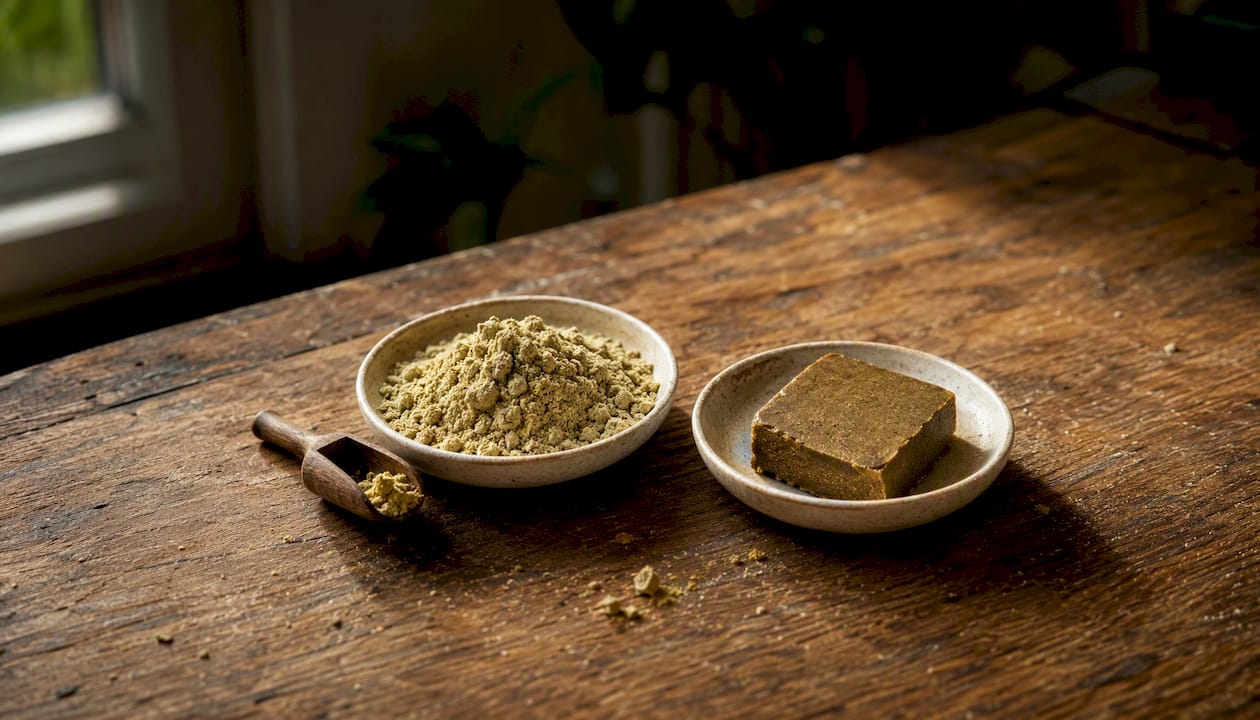
| Feature | Kief | Hash |
|---|---|---|
| Form / texture | Loose, fine powder; light blonde to green | Dense block, puck, or ball; tan to dark brown |
| How it’s made | Dry-sifting through screens (100–150 µm consumer grade) | Pressing kief with heat/pressure; ice-water extraction; hand-rubbing |
| Typical THC range | 30–70% depending on purity and sift quality | 40–80% for quality bubble hash; lower for basic pressed |
| Consumption methods | Bowl topping, joint rolling, vaporizer, edibles (decarbed) | Smoking in a pipe or joint, dabbing (bubble hash), rosin pressing |
| Shelf life & storage | Shorter; degrades faster when exposed to air and light | Longer; dense form resists oxidation better |
| What to check when buying | COA for THC%, terpene panel, contaminant tests | COA, solventless claim, micron grade (for bubble hash), moisture content |
After compression, the same weight of hash delivers more cannabinoids per measured dose than loose kief, simply because the material is denser. A gram of hash packs more trichome heads into a smaller physical volume than a gram of fluffy kief powder. That’s why hash can feel more potent per pinch even when its percentage on paper is similar or slightly lower.
Pro Tip: For dry-sift or bubble hash, processor guides consistently point to the 73–90 µm range as the sweet spot for full-melt quality. Consumer grinder screens at 100–150 µm catch more material but include more plant matter. If you’re buying commercially, ask whether the hash was made with a single-screen or multi-stage sift — the answer tells you a lot about quality.
Does hash hit harder than kief?
Neither is categorically stronger. Lab results depend on purity and method. Kief often tests higher by percentage because a clean sift is almost pure trichome heads. But compressed hash delivers more cannabinoids per measured dose because it’s denser. A pinch of hash and a pinch of kief are not the same amount of material.
Practical potency ranges from consumer-facing sources: kief commonly falls in the 30–70% THC range; quality bubble hash can reach 40–80% depending on technique and starting material. Both ranges overlap, and the real-world experience depends on more than a single THC number.
Key factors that shape the actual effect:
- Terpene retention: Bubble hash made at low temperatures preserves more terpenes than hot-pressed blocks. Research on cannabis chemistry identifies heat and oxygen exposure as primary drivers of terpene loss and THC oxidation into CBN. More terpenes generally means a more complex, nuanced effect profile.
- Dose control: Hash is physically easier to portion. You can cut or break a precise piece. Kief is harder to measure consistently.
- Onset and duration: Both hit faster than edibles and slower than vaping flower. Dabbing bubble hash produces near-immediate onset. Smoking either in a joint or bowl is slightly slower.
Pro Tip: If you’re new to concentrates, start with a single small sprinkle of kief on top of flower rather than a full kief bowl. For hash, a piece roughly the size of a match head is a reasonable starting point. Wait 15–20 minutes before deciding whether to consume more. Check our dosing guide for edibles if you plan to decarb either for cooking.
How to use kief and hash safely and effectively
Kief is easiest as a topping or roll-in. Hash is easiest to dose, smoke, or dab depending on its form. Both reward a measured approach.
Common methods:
- Bowl or pipe topping: Pack your flower, add a layer of kief or a small piece of crumbled hash on top. The flower acts as a base and prevents concentrate from falling through.
- Joint or spliff: Sprinkle kief along the length of the paper before rolling, or crumble hash into the mix. Hash burns more evenly when broken into small pieces rather than placed as a single chunk.
- Twaxing: Roll the outside of a finished joint in kief for a slow-burning, high-potency smoke.
- Vaporizer: Many dry-herb vaporizers accept kief in a concentrate pad or chamber insert. Bubble hash can be dabbed on a rig or e-nail at lower temperatures (around 315–450°F) to preserve terpenes.
- Hot-knife (hash): A traditional method where a small piece of hash is pressed between two heated knife blades and the vapor is inhaled. Less common now but still used.
- Rosin pressing: Kief or hash can be pressed between parchment paper under heat and pressure to produce solventless rosin, a clean and potent extract.
- Edibles: Decarboxylate kief or hash before adding to recipes. Raw concentrate won’t produce psychoactive effects without heat activation.
Safety notes worth keeping front of mind: start low, especially if you’re new to concentrates. Check for signs of age or moisture before using stored material. Never inhale extracts from unknown or unlabeled sources. For edibles, proper decarboxylation is the step most beginners skip, and skipping it means wasted product.
Can you turn kief into hash at home?
Yes. Pressing kief with heat and pressure converts it into hash. Quality depends on the purity of your starting material and how carefully you control the process.
Low-tech home pressing:
- Parchment paper and a warm iron: Wrap kief in parchment paper, fold it several times, and apply gentle heat from a clothes iron set to low. Apply firm, even pressure for 10–15 seconds, let it cool, and repeat. The result is a thin, pressed slab.
- Pollen press: A small cylindrical press that compacts kief into a coin-shaped puck using a screw mechanism. No heat required, though a brief warm water bath around the press can help bind the material.
- Bubble hash basics: Combine ice, water, and cannabis in a bucket. Agitate for several minutes, then pour through a series of mesh bags (bubble bags) at progressively finer micron sizes. Collect the material from each bag, dry it thoroughly on parchment, and press or use as loose powder.
Limitations to know: Home methods rarely produce the full-melt quality of commercial bubble hash. The starting material matters most. Kief collected from a standard grinder screen carries plant matter that affects the final product’s taste and melt quality. Moisture is the main hazard: hash that isn’t fully dried before storage can develop mold. Spread freshly made bubble hash on parchment in a cool, dry space and allow at least 24–48 hours of drying before sealing.
Pro Tip: Keep pressing temperatures below 220°F. Higher heat drives off terpenes quickly and can produce a harsher product. A brief, firm press at lower temperature preserves more aroma than a long press at high heat.
How to buy and store kief and hash in the U.S.
Buy from licensed dispensaries that publish COAs and lab results. That’s the baseline. Everything else builds on it.
What to check on a COA:
- THC and CBD percentages: Confirm these match what’s on the label.
- Terpene panel: Tells you about flavor and effect profile, not just potency.
- Pesticide screening: Concentrates amplify everything in the source material, including pesticide residues.
- Residual solvent test: Even solventless products should be tested; some processors use solvents in earlier stages.
- Heavy metals panel: Less common but worth requesting for concentrates.
- Date and lot number: Fresh product matters. Older material may show THC degradation.
Potency reporting and testing standards vary by state, and the same THC number on two COAs may reflect different lab methods or sample preparation. The Washington State Liquor and Cannabis Board provides public guidance on how THC concentration is measured and reported, which is useful context for understanding why numbers differ across state lines. When comparing products from different states, check the testing lab and the panel used, not just the headline percentage.
Storage:
- Kief: Airtight glass jar, cool and dark location. Kief is fragile and degrades faster than pressed hash when exposed to air, light, or heat.
- Hash: Airtight glass or silicone container, away from light and heat. Pressed hash holds up better over time than loose kief, but humidity is still a risk. A small humidity pack (around 58–62% RH) inside the container helps stabilize moisture for longer storage.
On the federal side, the 2018 Farm Bill distinguishes hemp from cannabis based on delta-9 THC concentration. If you’re buying kief or hash at a state-licensed dispensary, you’re buying cannabis-derived product under state law, not hemp law. Confirm your state’s possession limits before purchasing.
For Canadian consumers curious about how these products compare across markets, this overview of kief and hash for Canadian buyers covers production and purchasing differences worth knowing.
What lab testing and safety research says about concentrates
A COA is the reliable way to compare potency and safety across kief and hash. A single THC percentage tells you one thing. A full panel tells you whether the product is actually safe to consume.
Common contaminants and the tests that catch them:
- Pesticides: Concentrates can amplify pesticide levels from source flower. Pesticide screening is standard at licensed dispensaries.
- Heavy metals: Soil and water contamination can carry into plant material. Heavy metal panels check for lead, arsenic, cadmium, and mercury.
- Residual solvents: Even for solventless products, residual solvent testing confirms no solvents were used at any stage of processing.
- Microbial contamination: Mold and bacteria testing matters especially for hash that wasn’t fully dried before packaging.
- Mycotoxins: Some labs include mycotoxin panels for products with higher moisture risk.
Peer-reviewed research on cannabis trichomes and extracts confirms that trichomes are the primary site of cannabinoid and terpene concentration in the plant, and that extraction and handling conditions directly affect the final cannabinoid and terpene profile. How a product is made, stored, and transported changes what ends up in the consumer’s hands.
Terpenes are particularly vulnerable. Scientific analysis of cannabis chemistry identifies heat and oxygen as the main drivers of terpene loss and THC conversion to CBN over time. This is why cold-processed bubble hash often smells more complex than older pressed blocks: less heat exposure during production means more volatile terpenes survive.
On COA interpretation: The Washington State Liquor and Cannabis Board notes that potency reporting practices vary by state and that consumers should understand how their state’s testing labs measure and report THC concentration before comparing products across markets. A number without lab context is incomplete information. Always check the testing lab name, the date of the test, and whether the panel covers contaminants beyond cannabinoid percentages. Read the full guidance here.
Why this comparison matters more than most people realize
Most articles on kief vs hash treat the question as a potency contest. It isn’t. The more useful frame is processing transparency. Kief is the raw material; hash is the processed product. What happens between those two states, and how well it’s documented, is what separates a quality concentrate from an unknown one.
The consumers who get the most from either product are the ones who read COAs before buying, understand what “solventless” actually means in terms of production, and dose deliberately rather than by feel. Neither kief nor hash is inherently safer or more effective than the other. The starting material, the extraction method, and the storage conditions determine quality more than the product category.
For dispensary customers, the practical recommendation is straightforward: if you want flexibility and you’re comfortable with loose material, kief is a natural add-on to flower purchases. If you want something shelf-stable, easier to portion, and more consistent session to session, hash is the better fit. Premium bubble hash, in particular, offers a terpene-forward experience that rivals many other concentrates at a comparable price point.
Lab-tested kief and hash, delivered same-day in NYC
If you’re in New York City and want concentrates you can actually trust, Highfashionsmokesandprints carries lab-tested kief and hash with COAs you can review before ordering. No guesswork about what’s in the product, no unlabeled mystery material.
Every concentrate in the inventory is sourced from verified producers and tested for potency, pesticides, and contaminants. Same-day delivery runs on a day and night menu, so you can order when it works for you and receive it discreetly at your door. Age verification is built into checkout. For NYC adults who want quality concentrates without the dispensary line, browse the full menu at Highfashionsmokesandprints and check out the pros and cons of cannabis if you’re still weighing your options.
Sources
- Cannabisglossary
- Understanding THC concentration and potency | Washington State LCB
- PMC articles on cannabis constituents (trichome and extract analyses)
- Hash vs Kief: Whats the Difference? (2026 Guide)