Read our Google Birdeye Reviews
Terpenes are aromatic plant compounds that shape scent, flavor, and, by interacting with cannabinoids, part of how a cannabis product actually feels. They are not a marketing invention. Cannabis essential oils are primarily composed of terpenes, and they are the reason two products with identical THC percentages can feel completely different.
Three things worth knowing before you read further:
- Common terpenes to learn first: Myrcene, Limonene, and Linalool appear on more COAs than almost any others and cover the relaxing, uplifting, and calming ends of the spectrum.
- COAs beat strain names every time: The sativa/indica label on a package tells you almost nothing reliable about chemistry. A Certificate of Analysis with actual terpene percentages does.
- Heat and method matter: Combustion destroys many delicate terpenes before they reach you. Low-temperature vaping and sublingual tinctures preserve far more of a product’s native profile.
Key Takeaways
Terpenes are the compounds that make cannabis chemistry personal: the same cannabinoid profile paired with different terpenes produces a meaningfully different experience, which is why COA-based buying beats strain-name shopping every time.
| Point | Details |
|---|---|
| Terpenes shape the experience | Aromatic compounds in cannabis modulate scent, flavor, and how cannabinoids feel, not just how the product smells. |
| COAs over strain names | Individual terpene percentages on a lab report are the only reliable guide to a product’s actual chemical profile. |
| Top terpenes to know | Myrcene, Limonene, Linalool, β-Caryophyllene, and α-Pinene cover the most common effects consumers seek. |
| Heat destroys terpenes | Combustion degrades many delicate terpenes; low-temperature vaping and sublingual tinctures preserve more of the native profile. |
| Evidence is promising but limited | Preclinical antioxidant and anti-inflammatory data is strong; standardized human clinical trials for terpene-specific therapeutic outcomes are still limited. |
Table of Contents
- What are the most common cannabis terpenes?
- How do terpenes actually work in cannabis?
- How do you read a terpene COA correctly?
- How does consumption method change what terpenes you actually get?
- What are the safety risks and side effects of terpenes?
- Practical tips for buying cannabis by terpene profile
- What does the current research actually support?
- Why COA-driven buying is the only approach worth taking
- Sources
What are the most common cannabis terpenes?
The chart below covers the ten terpenes you will encounter most often on lab reports and product menus. Aroma descriptions and reported effects reflect commonly observed patterns; individual responses vary, and the evidence base ranges from robust preclinical data to early-stage human research. Use this as a starting point, not a guarantee.
| Terpene | Aroma | Commonly Reported Effects | Typical Consumer Use |
|---|---|---|---|
| Myrcene | Earthy, musky, herbal | Relaxing, sedating at higher concentrations | Evening wind-down, sleep support |
| Limonene | Citrus, lemon, orange peel | Uplifting, mood-brightening | Daytime use, stress relief |
| α-Pinene | Fresh pine, forest air | Alerting, may support focus; some research suggests it counters short-term memory effects of THC | Focus, outdoor activities |
| Linalool | Floral, lavender | Calming, may reduce anxiety | Evening relaxation, pre-sleep |
| β-Caryophyllene | Spicy, peppery, woody | May reduce discomfort; uniquely binds CB2 receptors directly | Pain management, anti-inflammatory interest |
| Terpinolene | Fresh, piney, floral, herbal | Often described as uplifting and slightly energizing | Creative work, social settings |
| Humulene | Earthy, hoppy, woody | Appetite-suppressing in some reports; mild anti-inflammatory interest | Wellness-focused use |
| Ocimene | Sweet, herbal, woody, citrus | Uplifting, decongestant properties noted in aromatherapy | Daytime, respiratory comfort |
| Geraniol | Rose, floral, fruity | Calming; studied for neuroprotective potential in preclinical models | Relaxation, wellness |
| Eucalyptol (1,8-cineole) | Cool, minty, camphor-like | Alerting, may support respiratory comfort | Focus, morning use |

A few things the chart does not show: terpene concentrations vary widely by cultivar, growing conditions, and how the product was processed. Advanced GC×GC-TOFMS profiling has detected 146 distinct terpenes and terpenoids across just six cannabis strains, which explains why two products labeled the same strain can smell and feel nothing alike.
Pro Tip: Use this chart by matching your desired outcome to a terpene, then pull up the COA for any product you are considering and check whether that terpene appears in the top three by percentage. If the COA does not list individual terpene percentages, that is a red flag worth noting.
For a deeper look at myrcene specifically, including which strains tend to carry the highest concentrations, see myrcene content in cannabis.
How do terpenes actually work in cannabis?
The chemistry behind the scent
Terpenes are built from five-carbon isoprene units. Stack two together and you get a monoterpene (C10), like limonene or linalool. Three units produce a sesquiterpene (C15), like beta-caryophyllene or humulene. Four units yield a diterpene (C20). Cannabis synthesizes these compounds through two biosynthetic pathways: the MEP pathway (methylerythritol phosphate, active in plastids) and the MEV pathway (mevalonate, active in the cytosol). The practical upshot is that terpene production is sensitive to light, temperature, soil, and stress during cultivation, which is why the same cultivar grown in different conditions produces measurably different profiles.
Cannabis terpenes often account for 3–5% of the dry mass of the flower, and researchers have cataloged over 200 distinct terpene structures in the plant. That diversity is not random. Terpenes evolved as part of the plant’s defensive chemistry: repelling pests, deterring herbivores, attracting pollinators. Their potency in those roles is exactly what makes them interesting pharmacologically.
The entourage effect: what the evidence actually says
The entourage effect is the idea that cannabinoids and terpenes work together to produce effects neither compound achieves alone. In vitro and animal studies support the concept. Terpenes appear to modulate how cannabinoids bind to receptors, influence neurotransmitter activity, and affect how compounds cross the blood-brain barrier. Beta-caryophyllene is the clearest example: it binds directly to CB2 receptors, making it technically a cannabinoid by function even though it is classified as a terpene by structure.
The honest caveat is that robust human clinical trials specifically isolating terpene contributions to therapeutic outcomes are still limited. The preclinical signal is promising. The human evidence is growing but not yet at the level where standardized dosing recommendations exist. Buying by COA and terpene profile is the practical consumer response to that gap, not a workaround for it.
How do you read a terpene COA correctly?
A Certificate of Analysis is a lab report issued by a third-party testing facility. It is the only document that tells you what is actually in a product rather than what the label claims. Terpene data typically appears in its own panel, separate from cannabinoid potency and pesticide results.
What to look for on a COA:
- Units: Terpene concentrations are usually reported as a percentage by weight (% w/w) or as mg/g. A reading of 0.5% equals 5 mg/g. Some labs use parts per million (ppm) for trace compounds.
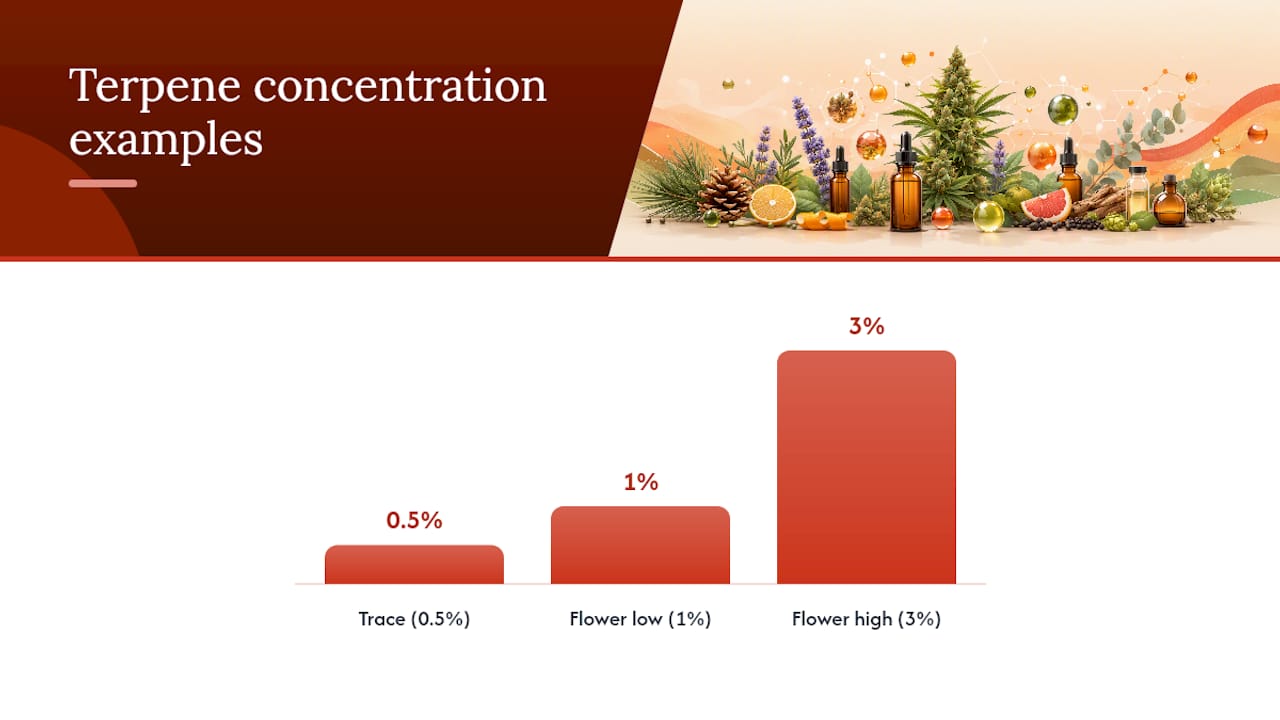
- Total terpene percentage: A well-tested flower product often shows a total terpene content between 1% and 3%. Concentrates vary widely.
- Individual terpene breakdown: The most useful COAs list each detected terpene with its own percentage, not just a total. If you only see “Total Terpenes: 1.2%” with no breakdown, you cannot match the product to your target profile.
- Lab accreditation: The testing facility should hold ISO/IEC 17025 accreditation or equivalent state-level certification. In New York, labs must be licensed by the Office of Cannabis Management.
- Harvest and analysis dates: Terpenes degrade over time. A COA dated more than 12 months before your purchase is worth treating with skepticism, especially for flower.
- Pesticide and residual solvent panels: A COA that covers only potency and skips safety panels is incomplete. Full-panel testing is the standard for reputable products.
Terpene concentrations and profiles differ by cultivar, growing conditions, and processing method, which means a COA from one batch does not automatically apply to the next. Always check that the batch number on the COA matches the batch number on the product packaging.
One more thing: marketing copy that references terpene profiles without linking to a COA is not evidence. Any brand can claim a product is “rich in linalool.” Only a lab report with a date and a batch number means anything.
How does consumption method change what terpenes you actually get?
Terpenes are volatile. Many begin to evaporate or degrade well before a product reaches combustion temperature, and the method you choose determines how much of the original profile survives to affect your experience.
Method-by-method breakdown:
- Combustion (smoking flower or pre-rolls): Temperatures in a burning joint or bowl reach well above 400°F. Many delicate monoterpenes, including limonene and linalool, volatilize and degrade at those temperatures. You get some terpene exposure in the early part of a session, but a significant portion is destroyed before inhalation.
- Low-temperature vaporization: Vaping at lower temperature settings (roughly 315°F–375°F for many common monoterpenes) preserves considerably more of the native profile. The tradeoff is that some cannabinoids require higher temperatures to fully volatilize, so there is a balance to find. Terpenes are heat-sensitive, and low-temp vaping is the most practical way to preserve them during inhalation.
- Concentrates (live resin, rosin, distillate): This is where processing matters enormously. Live resin is extracted from fresh-frozen plant material, which preserves a broader terpene spectrum. Distillate is typically stripped of terpenes during processing; terpenes are sometimes added back afterward, but those are often botanical or synthetic rather than native cannabis terpenes. For a full breakdown of how extraction affects terpene retention, see live resin vs. distillate.
- Edibles: Terpenes in edibles do not reach you through inhalation at all. Some survive the digestion process and may contribute to flavor, but the volatile aromatic compounds that drive inhalation-based terpene effects are largely absent. The experience of an edible is driven primarily by cannabinoid metabolism, not terpene profile. For dosing guidance, edibles safety basics covers the key points.
- Tinctures and sublingual products: Sublingual delivery bypasses combustion entirely. Terpenes present in a full-spectrum tincture reach the bloodstream without heat degradation, making this one of the better routes for preserving a product’s native terpene character. See cannabis tincture benefits for more on sublingual delivery.
Pro Tip: If you are buying a vape cartridge specifically for its terpene profile, check whether the product uses live resin or a full-spectrum oil rather than distillate with added terpenes. The COA will often indicate the source material. Highfashionsmokesandprints carries terpene-forward cartridges with lab documentation available.
Storage degrades terpenes even before you open a product. Light, heat, and oxygen are the main culprits. Keep flower and concentrates in a cool, dark, airtight container. A sealed glass jar in a drawer beats a plastic bag on a sunny counter every time.
What are the safety risks and side effects of terpenes?
This section is general information, not medical advice. If you take prescription medications, are pregnant or breastfeeding, or have a respiratory condition, consult a healthcare provider before using terpene-forward cannabis products.
Terpenes are naturally occurring compounds found in foods, plants, and cosmetics, and most people encounter them daily without incident. That said, concentrated exposure through cannabis products carries specific considerations worth knowing.
Key safety signals for cannabis terpene use:
Certain terpenes, particularly at higher concentrations, can trigger anxiety or dysphoria in sensitive individuals. Limonene and pinene are generally considered uplifting, but high-dose terpene exposure can feel overstimulating for some people. Linalool and myrcene tend toward sedation, which can compound the effects of other depressants. Start with lower-terpene products if you are new to terpene-forward cannabis.
Main risks to know:
- Anxiety and dysphoria: Some terpenes, especially in combination with high-THC products, can amplify anxiety. If you are prone to cannabis-induced anxiety, terpenes and anxiety relief covers which profiles tend to be better tolerated.
- Allergic reactions and contact dermatitis: Terpenes are common allergens in fragrances and cosmetics. Linalool and limonene, in particular, are listed among the most frequent fragrance allergens in dermatology literature. Inhaled exposure is different from skin contact, but individuals with known fragrance allergies should exercise caution.
- Drug interactions via CYP enzyme pathways: Some terpenes may influence cytochrome P450 enzymes, which are responsible for metabolizing many prescription drugs. Beta-caryophyllene and eucalyptol have both been studied in this context. The NCCIH guidance on cannabis and cannabinoids recommends discussing cannabis use with a clinician if you take medications with a narrow therapeutic window.
- Respiratory irritation: Inhaling any combusted or vaporized material carries respiratory risk. Terpenes themselves, at high concentrations in vapor, can be irritating to airways.
- Pregnancy and breastfeeding: No safe level of cannabis use during pregnancy or breastfeeding has been established. This applies to terpene-forward products as much as to any other cannabis product.
- Lack of standardized dosing: Unlike pharmaceutical compounds, there are no established therapeutic doses for individual terpenes in cannabis products. “More terpenes” does not mean “better effect,” and dose-response relationships are highly individual.
Practical tips for buying cannabis by terpene profile
The goal here is simple: stop buying by strain name and start buying by chemistry. Here is how to do it.
Shopping checklist:
- Request or download the COA before purchasing, not after. Reputable dispensaries make batch-specific COAs available on request or on their website.
- Check the harvest and analysis date. For flower, fresher is better. Terpenes degrade with age, so a product tested six months ago may have a meaningfully different profile today.
- Look for individual terpene percentages, not just a total. A product listing “Total Terpenes: 1.8%” without a breakdown gives you nothing to work with.
- Prioritize the top two or three terpenes by percentage. Those dominate the profile. Minor terpenes at 0.05% or below contribute less to the overall effect.
- Match the profile to your goal. High myrcene for evening relaxation. High limonene or terpinolene for daytime energy. High linalool or beta-caryophyllene for stress and discomfort. Then adjust based on your own response.
- Start low with any new terpene-forward product, especially if you are new to cannabis or trying a new cultivar. Individual variability is real, and the same terpene profile can feel different depending on the cannabinoid context.
- Ask about packaging. Nitrogen-flushed or vacuum-sealed packaging slows terpene degradation significantly compared to standard packaging.
Pro Tip: Store your cannabis in a sealed glass jar away from light and heat. Humidity packs (like Boveda 62%) help maintain the moisture level that keeps terpenes from drying out and volatilizing before you use the product.
The sativa/indica label is a poor predictor of terpene chemistry. Two products labeled “indica” can have completely different terpene profiles. The COA is the only reliable guide.
What does the current research actually support?
The honest summary: preclinical evidence for terpene bioactivity is strong and growing. Human clinical evidence for specific terpene-driven therapeutic outcomes is limited.
What the research supports:
- Terpenes show antioxidant activity in preclinical studies across multiple disease models, including oxidative stress conditions. This is one of the more consistent findings across the literature.
- Anti-inflammatory activity has been documented for several cannabis terpenes, including beta-caryophyllene and humulene, in cell and animal studies.
- GC×GC-TOFMS profiling has revealed that cannabis contains far more terpene diversity than older one-dimensional chromatography methods captured. The 146 compounds detected across six strains in one study included several previously unreported in cannabis. This partly explains why COA data varies so much between labs and products.
- The entourage effect has a plausible mechanistic basis in preclinical research, but controlled human trials that isolate terpene contributions to specific outcomes are still scarce. Researchers consistently call for standardized trials to establish dosing, bioavailability, and long-term safety.
- Cannabis-related therapeutic claims broadly are still characterized by the NCCIH as having emerging evidence, with significant uncertainty remaining.
The practical consumer takeaway from all of this: use COAs to understand what you are buying, treat reported effects as tendencies rather than certainties, and stay current with the research as it develops. The science is moving quickly.
Why COA-driven buying is the only approach worth taking
The cannabis industry has a marketing problem. Strain names are trademarked, inconsistently applied, and chemically meaningless across different cultivars and growing operations. A product called “Blue Dream” from one producer can have a completely different terpene profile from a product with the same name from another. The name tells you nothing.
What a COA tells you is what is actually in the product you are holding. Terpene percentages, cannabinoid ratios, pesticide results, residual solvents, and the date the analysis was run. That is the information that determines your experience, not the label.
At Highfashionsmokesandprints, every product we carry goes through lab testing before it reaches our menu. If you want to see the COA for a specific product, reach out to our customer service team directly. We can pull batch-specific lab reports for any item in our inventory. For readers who want to explore terpene-forward vape options with documented profiles, our current cartridge selection includes products with full terpene breakdowns available.

The broader point is this: the more you understand about terpene profiles, the harder it becomes to be satisfied with products that do not provide that information. COA transparency is not a nice feature. It is the baseline for knowing what you are putting in your body.
Sources
- The Cannabis Terpenes
- Secondary Terpenes in Cannabis sativa L.: Synthesis and Synergy – PMC
- Terpene compounds in nature: a review of their potential antioxidant activity
- Cannabis, marijuana, and cannabinoids: what you need to know
This article is general information, not a substitute for advice from a qualified doctor. Consult a qualified healthcare professional about your own circumstances before acting on anything here.